An essay about patriotism, grief, and what it means to love a country that also breaks your heart.
Mexico 2, Ecuador 0.
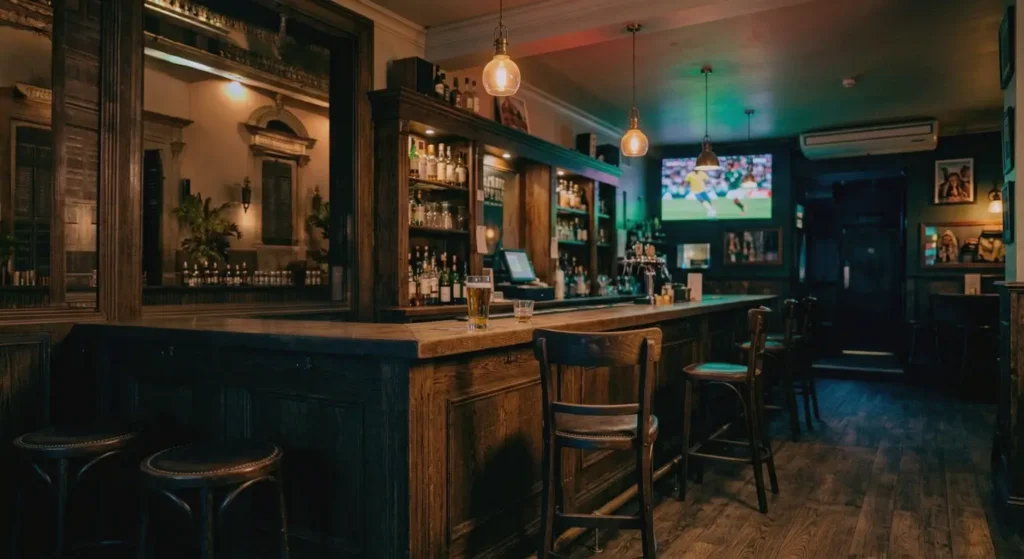
If you’ve read me before, you already know I’m Mexican but I don’t really live anywhere, that I’ve spent four years wandering the world. I watched the Mexico-Ecuador match in an Irish bar tucked into a corner of Cusco, facing the beautiful Plaza de Armas, in Peru. I sat at the bar, a foreigner, glancing around, scanning the crowd packed into that little place, looking for someone more familiar, more, well, Mexican. There wasn’t anyone.
People kept pouring in, men and women from everywhere in the world, drunk on football fever. Around me swirled an unintelligible echo of languages, but not one of them carried that Mexican Spanish that makes me so happy to hear whenever I cross the border. People from all over wore the green jersey with pride. I don’t know if any of them had ever set foot in Mexico. Probably some had. But surely none of them had ever run barefoot out of the house to flag down the elote guy before he rounded the corner, or burned their tongue on a bowl of pozole just handed over by a grandma who swears it isn’t spicy, or waited in the sun for a bus that was supposed to come in ten minutes and didn’t come for forty.
Beside me, a group from Taiwan chanted along with the collective roar: “Mexico! Mexico!” Behind me, some Americans argued with a Frenchman: “Ecuador doesn’t stand a chance.” When the first goal dropped, the whole bar shook, strangers hugging strangers, everyone there, celebrating something that felt more mine than anyone else’s in that room.
It wasn’t the goal. It was watching Mexico held in the arms of people who never had to love it through anything. It was my country becoming, for ninety minutes in a city not my own, the whole world’s celebration. I went to sleep with a smile on my face.
The next morning I woke up still buzzing and grabbed my phone: the Angel of Independence in Mexico City lit up like a candle, a million people swaying the flag, Reforma street turned into an endless river of joy. I liked everything, and an overwhelming homesickness washed over me.
Two posts later, everything went dark.
The effervescence
In Mexico, the euphoria swept over all of us, even those of us who can barely follow the sport. It got in through the door, the windows, the drains. We’re not in this for a ball or for eleven players. We shout “¡Viva México!” because for one night we are something together, we recognize ourselves in each other, we exist on the world map for something that doesn’t hurt. The celebration hands us back a sense of belonging. We stop being woman, man, girl, mother, migrant. You’re Mexican, and that’s it.
We need this so badly. In a country where it’s so hard to find anything in common that doesn’t weigh on us, the national team is one of the few things that can still get the whole country humming on the same wavelength, that makes us feel the same thing at the same time. And I don’t mean to take that away from anyone, not even from myself, but there are two sides to the coin, and ignoring the other one would be a kind of negligence.
The French sociologist Émile Durkheim called it collective effervescence: that electricity that sparks when a group gathers around something shared, an emotion amplified in one another that no one would have felt alone. It’s extraordinary. And it’s the very same force that, turned up a notch, becomes something else entirely.
Effervescence doesn’t tell joy apart from fury. When you dissolve into the crowd, your restraint, your shame, your sense of responsibility dissolve right along with you; psychologists call it deindividuation, the feeling that among a multitude, no one has to answer for anything. The same crowd that hugs over a goal can be the one that crushes itself breathless, the same one that drags a man from his car and beats him to death.
The party and the tragedy of that night were not two separate things: they came from the same place.
What the celebration doesn’t justify
At least four people died in Mexico celebrating a World Cup match. Some by asphyxiation, crushed by that same crowd: a man of 44, a woman of 48, a girl of 19. Nineteen.
One of them arrived at the hospital with no ID. They recognized him hours later from a photo going around online, from the tattoos, from a name inked on his skin that someone, out there, was still searching for.
Nearly fourteen hundred more injured.
Then a crowd dragged a man out of his car after he’d run over several fans and beat him right there, on the ground, all of them at once, with that collective fury that has no single owner, which is why they believe no one has to answer for it. He died days later in intensive care. His name was Roberto. He had two daughters.
None of these deaths were inevitable. No one anticipated the crush, no one managed the crowd, no one could do anything for the people around them, for the nineteen-year-old girl. They died of the same thing so many people in this country die of: because it’s no one’s job. That neglect so uniquely ours that we don’t even name it anymore because it’s become routine. It isn’t bad luck, it’s abandonment.
The same euphoria I was celebrating thousands of kilometers away, a beer in my hand and my chest full with joy, was turning into grief on the other side. And those deaths are only the surface of something far deeper, something that doesn’t begin or end with the World Cup.
The searching mothers
The same day the World Cup kicked off, while the whole planet’s cameras pointed at the stadiums, there were women outside. Mothers with their missing children’s faces printed on shirts and banners, planted at the edges, seizing the fact that the world was finally looking at Mexico to shout the only thing they have left to say. The collectives called on football fans directly, knowing that the only way to be heard in this country is to hang onto the noise of the party.
These are mothers who learned to read bones. Who studied law, who became forensic experts, who bought their own shovels, who spend their weekends clawing at the earth in search of a child the state and the rest of the country have already forgotten. Nearly all of them have suffered some form of violence for doing it. Their pain is daily, constant, endless; but for the rest of us it only seems to exist when it interrupts the match.
On March 5, 2025, the collective Guerreros Buscadores de Jalisco walked into a ranch in Teuchitlán, an hour outside Guadalajara. They’d gotten an anonymous tip. Inside, at the Izaguirre ranch, they found an extermination and forced-recruitment camp run by organized crime: charred bone fragments, what looked like ovens, heaped clothing, and more than four hundred pairs of shoes, so many that more than one searching mother’s legs gave out when she recognized, in the pile, the ones she believed were her child’s. The most obscene part is that the authorities had already “secured” the place back in September 2024, and had said they found nothing. It had to be the mothers, with their own hands, who uncovered the hell.
That ranch is in Jalisco. The same Jalisco that dressed up this summer for the World Cup, that showed off its tequila and its mariachi to the planet and let itself be called “the most Mexican host city” of the tournament. The same state that has led, for years, the list of bodies pulled from clandestine graves in the country. Two faces of the same ground: above, the lit-up party; below, the earth that hides the missing ones.
The numbers just won’t fit in my head. More than one hundred thirty-three thousand missing people, according to the official registry, a figure that climbed more than ten percent in a single year. More than seventy-two thousand unidentified bodies, stacked in a forensic limbo, waiting for a name. We’re not talking about case files or statistics. They’re one hundred thirty-three thousand empty chairs at the table, one hundred thirty-three thousand phones someone still dials in case, one day, by some miracle, a voice answers on the other end.
“The government isn’t interested in finding them,” one of them says, and the words sink somewhere behind my ribs. And what if one day it were me who went missing? Maybe it would be one of these women who’d find my body, if they don’t disappear them first. Because, yes, they kill them too, for searching. Between 2010 and 2025, the Fundación para la Justicia counted twenty-two women searchers murdered and two more disappeared; fifteen were mothers. In 2026 alone, the count is already at least five. In this country, going out to look for your child with a shovel and a photo can cost you your life, and still, they don’t miss one day.
That’s where the beer and the goal and the “mexican pride” knot in my throat. Because I realize the people crushed in the celebration and the child a mother digs for with a shovel are part of the same system, the system of a country that got used to life being worth little and to looking the other way. The same crowd that dissolves to celebrate without responsibility is the one that, the next day, walks right past a mother clawing at the dirt. Collective euphoria, collective indifference, what’s the difference?
I’m not trying to point fingers from the outside. I write this from the unease that lives between the grief and the pride that being Mexican stirs in me. I write it because the comfortable thing would be to just celebrate, but looking away is a choice too, and the one form of resistance left to us is to refuse to let it brush over what’s in plain sight. To name it. To not let indifference settle in as part of the scenery.
It’s not shame, it’s pain
I’m proud to be Mexican. But not because of a flag, or an anthem, or a government, and certainly not because of eleven men chasing a ball.
I’m proud of the women who march every March 8 even when they’re tear-gassed and called crazy, of those who get up at four in the morning and work themselves to the bone so their kids can eat, of those who bend over in the fields for a few cents, betting on a life they may never live to see, of those who see what’s wrong and speak up, even though in Mexico speaking up is frightening, even though sometimes it costs you your life. I’m proud of the civilizations that were here long before us, of the traditions we refuse to let go of, of the hands that press out a warm tortilla by hand, of a cuisine unlike any other on earth, and of the fact that every time I set foot in a foreign country, people greet me with a smile the moment they learn I’m Mexican.
I’ll admit I understood it late. I had to leave to learn to look at it differently. And anyone who’s left will tell you the same: being away from Mexico hurts. You miss it in your body and your heart.
But sometimes, being from Mexico hurts more.
It hurts to watch the mothers dig with a shovel and a photo, and to have no idea where they find the strength, that the government won’t answer them, that it treats them like a nuisance, that it leaves them alone out there pulling strangers’ bodies from the ground. It hurts to watch people mock them, people who don’t understand what’s at stake, that crime swallows everything whole, that a full week’s work barely keeps you alive, that so many spend a lifetime swimming against the current and never gain an inch.
And I think that pain comes from love. It only cuts this deep because I care this much.
The kind of ‘patriotism’ that asks me to look away doesn’t fit me, that wants the dead kept quiet so the party doesn’t lose steam and wants the green jersey but none of the hard questions, that calls it love when you clap without asking why, and calls you a traitor to your own, the moment you point at something broken. The kind that shouts there’s nowhere like Mexico and, in the same breath, shouts down anyone who points out it could be better.
I want a different kind of care, one that fits in the same mouth that celebrates a goal and names the missing out loud. That’s what caring for Mexico from a distance feels like: holding both at once, always. Bragging about the food and calling out the damaged pieces in the same breath.
Mexico won’t let go
It won’t let go, and I mean that in the most stubborn sense of the word. Mexico doesn’t release you, and it refuses to be forgotten. It won’t stay behind, no matter how many borders you put between your body and the ground you were born on. When I left, I figured distance would shrink it, make it easier to hold, that Mexico would get smaller in the rearview until it fit on a postcard. The opposite happened. From far away it looks bigger. Whole. Both its faces pressed together, impossible to separate, and harder still to ignore.
Mexico comes with me whether I pack it or not.
And it won’t let go in the other sense, either: it refuses to be beaten. The mothers who keep digging after everyone told them to stop, they refuse. The people who march and demand better knowing exactly it can cost them their life, they refuse. The ones who get up before dawn to build a country that keeps giving them nothing back, they refuse.
That night in Cusco, when the whole bar shook for a goal scored five thousand kilometers away, I wasn’t cheering for a team. I was cheering for that: the beautiful, bullheaded refusal of a country that, with everything it carries, still makes the whole world shout its name.
Even though it hurts. Especially because it hurts.
And if you left too, if you also care for your country through a screen from the other side of the world, then you get it.
I still don’t know how you make peace with loving a place that eats you alive. But here I am, anyway.
Did Mexico win?
It depends on what counts as winning. The way I see it, Mexico wins the day enough of us refuse to let the pain become just another thing we’ve gotten used to.