I lived in San Pedro for a month, and in that month the lake stopped being a destination and became, for a little while, my home; I found my fav cafés, ordered the same dishes a thousand times, and learned which streets to avoid at midday. I built myself a tiny routine and discovered that San Pedro has two faces, one down by the water, and another one up the hill that almost no tourist ever sees.
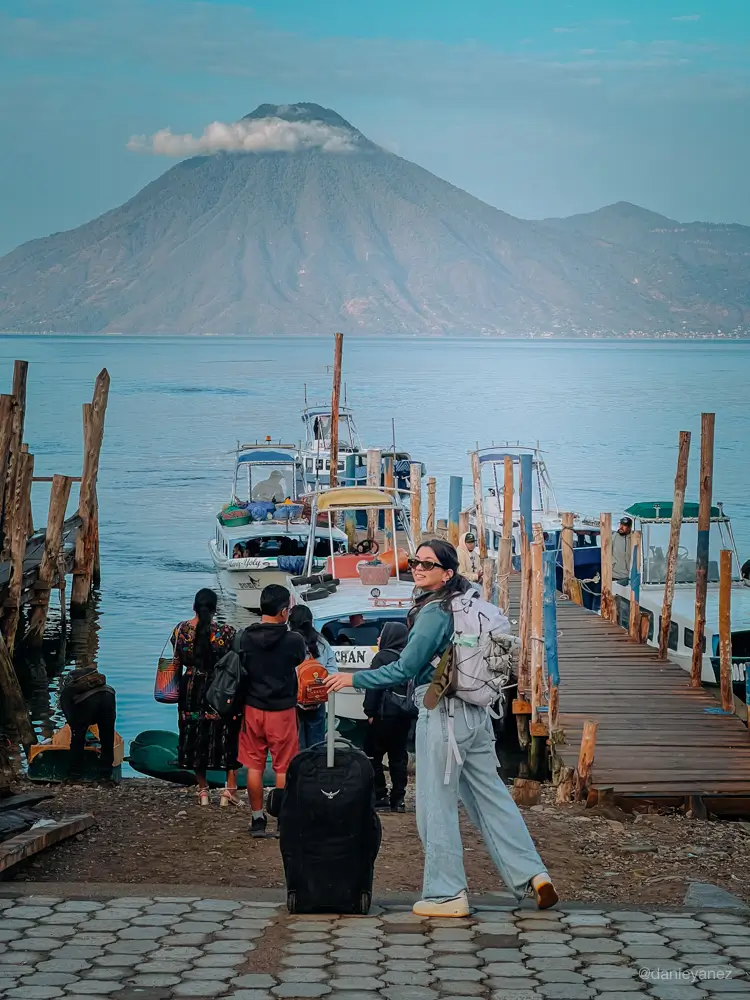
I ended up in San Pedro La Laguna by chance, I didn’t really do much research but a friend was going to be around, she knew another friend, also named Dani, who’s originally from San Pedro. And just like that, with barely any planning, I landed in this town on the shore of Lake Atitlán. What was supposed to be a quick meetup turned into a whole month.
Thanks to Dani I found out, once I was already there, that we’d arrived in Guatemala right in the middle of Semana Santa (Holy Week), the biggest celebration in the country. It was pure luck, because instead of watching it from Antigua surrounded by crowds of tourists, I got a much more authentic version. The classic sawdust carpets and processions but with local families, and me feeling like the only foreigner on the street most of the time. (I’ll dedicate a full article to it later, but I’ll say now that it was one of the most special parts of my whole time at the lake.)
Hi! I’m Danitza, a writer, traveler and photographer. I’ve spent more than four years going around the world as a digital nomad, with no fixed home, traveling slowly and writing about it. Welcome to my blog, where you’ll find practical info about the places I’ve been, what it actually feels like to be in them, how to navigate the nomad / slowmad life and other articles about whatever is on my mind.
This is for anyone thinking about staying in San Pedro. Whether you’re a digital nomad looking for a base in Central America, a slow traveler, or just someone who wants to understand the lake beyond the postcard. I’m going to tell you why I chose to stay in San Pedro instead of the other villages, what it’s like to live here as a digital nomad (power outages and all), where to eat incredibly well (plant based), what to do, and my final verdict on whether it’s worth it as a long-term base.
Let’s go!
Why San Pedro La Laguna? (and not the other villages)
Honestly, I didn’t pick San Pedro after any careful research. I went because my friend was going to be there and because Dani, who’s from here, welcomed us with open arms. The original plan was to spend a week in San Pedro, but once we settled in, and after getting to know several of the other villages around the lake, I realized I’d stumbled by sheer luck into one of the best possible bases in Atitlán.
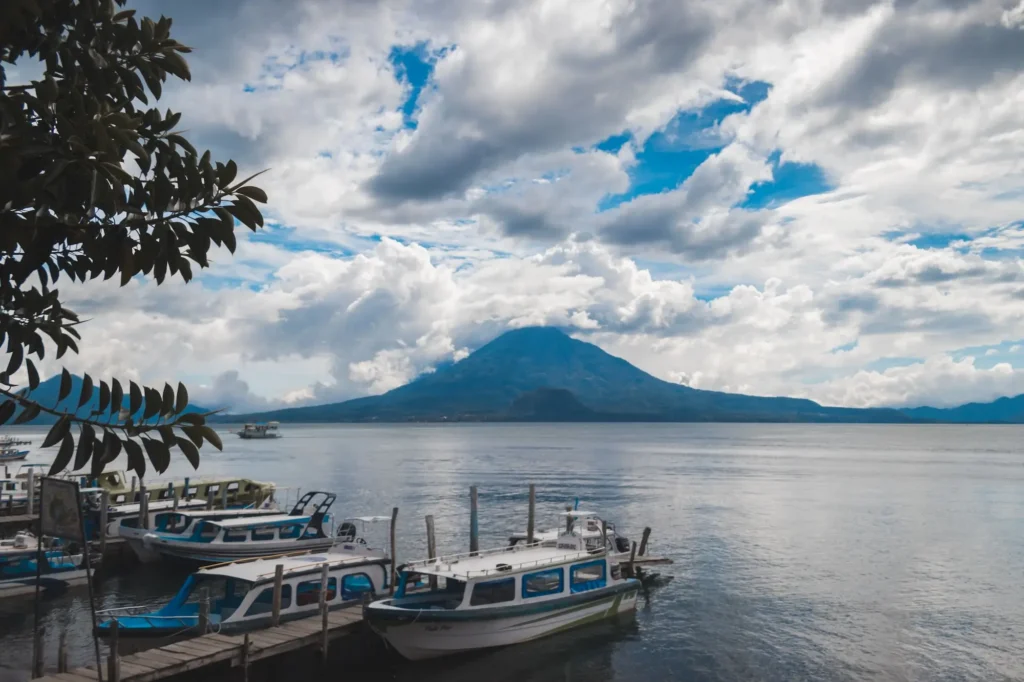
San Pedro sits in a strategic corner of the lake, with boats running constantly in every direction, which makes it a great spot for getting to the other villages without any hassle. Panajachel, where most people land by default, is the lake’s gateway. It’s bigger and has more services, but that’s exactly why it feels more like a small city and less like a village. San Pedro, even though it’s the second biggest, still has that village scale where you start recognizing faces within a week.
Should you stay in San Pedro or San Marcos La Laguna?
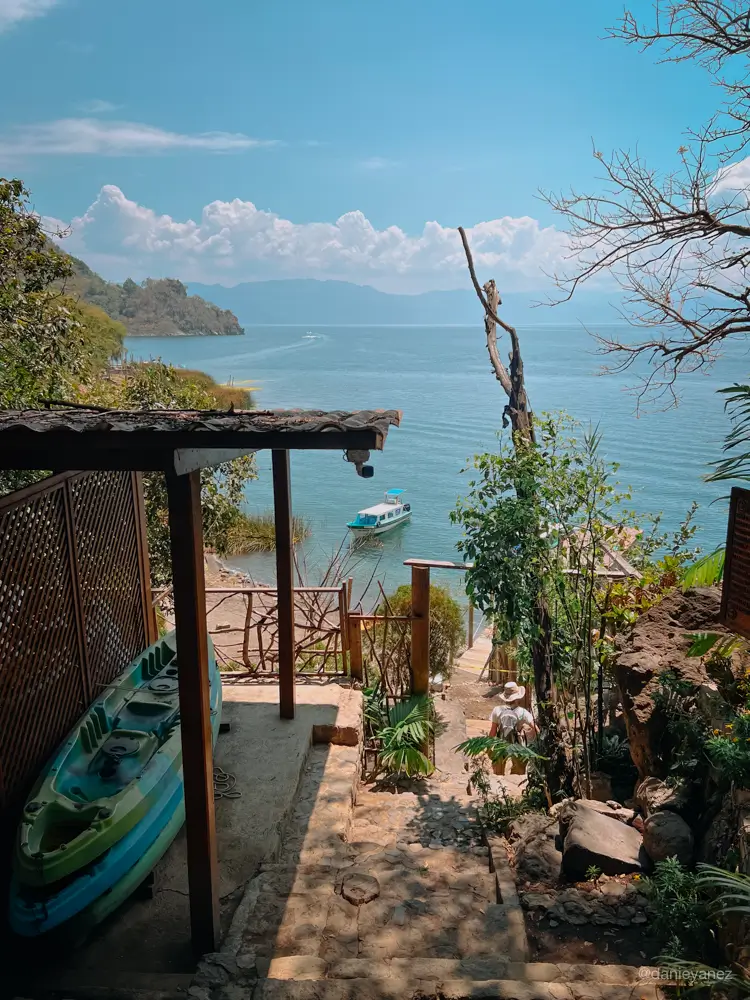
San Marcos is beautiful for a day trip. It’s the yoga and wellness village of the lake, but the idea of staying there long term felt to me like living inside a gentrified bubble. Pretty, sure, but it’s a version of the lake built for foreigners, not actual Guatemala. It’s also much smaller and quite a bit more expensive. In my opinion it’s perfect for a visit, not so much for living.
The two faces of San Pedro La Laguna
San Pedro, on the other hand, gives you both things: enough infrastructure to work and live comfortably (cafés, restaurants, boats, tuk-tuks) while still being a place with its own local life. It has a reputation as a backpacker party town, and yeah, that part exists. But reducing it to that means staying, quite literally, on the shore. Because San Pedro has two faces, and this is where it gets good, because you won’t find this in most digital nomad guides to San Pedro La Laguna.
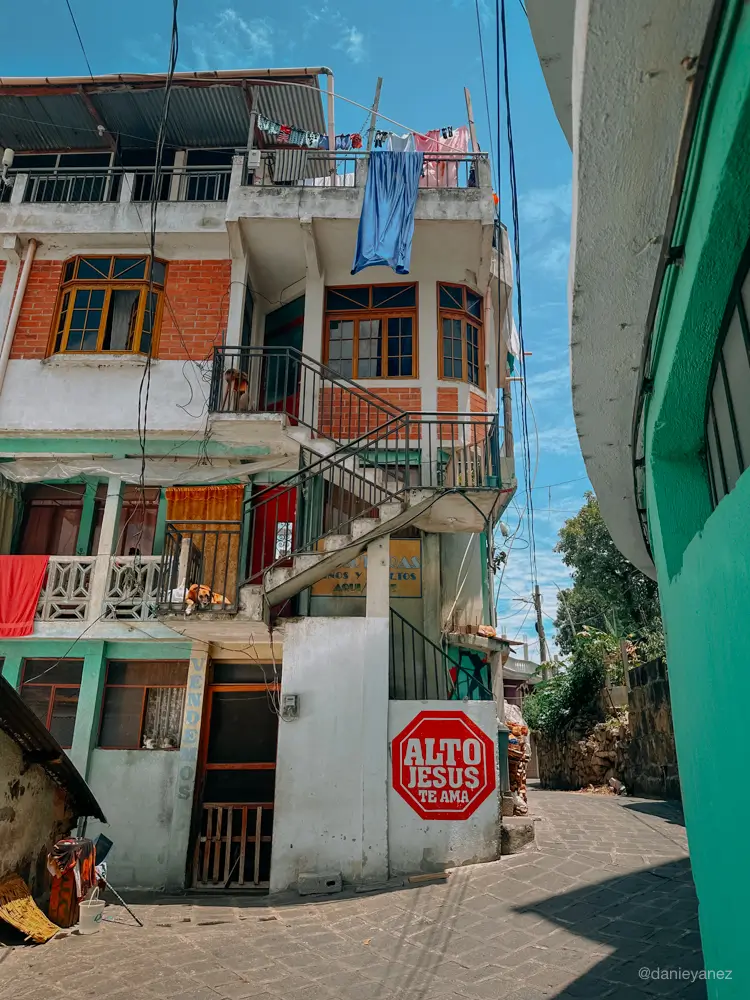
The lower face is the one everyone knows: the dock area, the chaotic, buzzing tourist center. It’s great to walk through if you’re heading to a bar or out to eat, because there’s so much energy, it’s lined with famous hostels, cafés with lake views, people from all over the world. But being right on that street (the one leading to the dock) for very long is too much, in my opinion. You’ll run into drunk tourists stumbling off their boat trip, tuk-tuks flying past two centimeters from your body, people selling tours, or someone grilling right on the street and turning the whole walkway into a cloud of smoke. Fun in small doses, pretty exhausting long term.
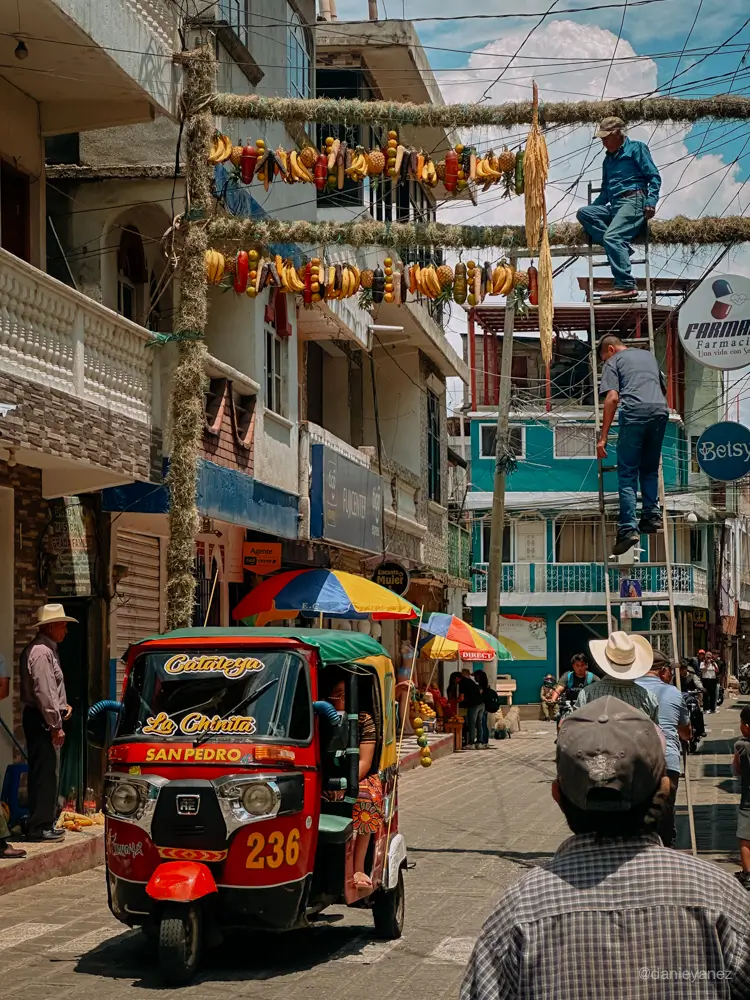
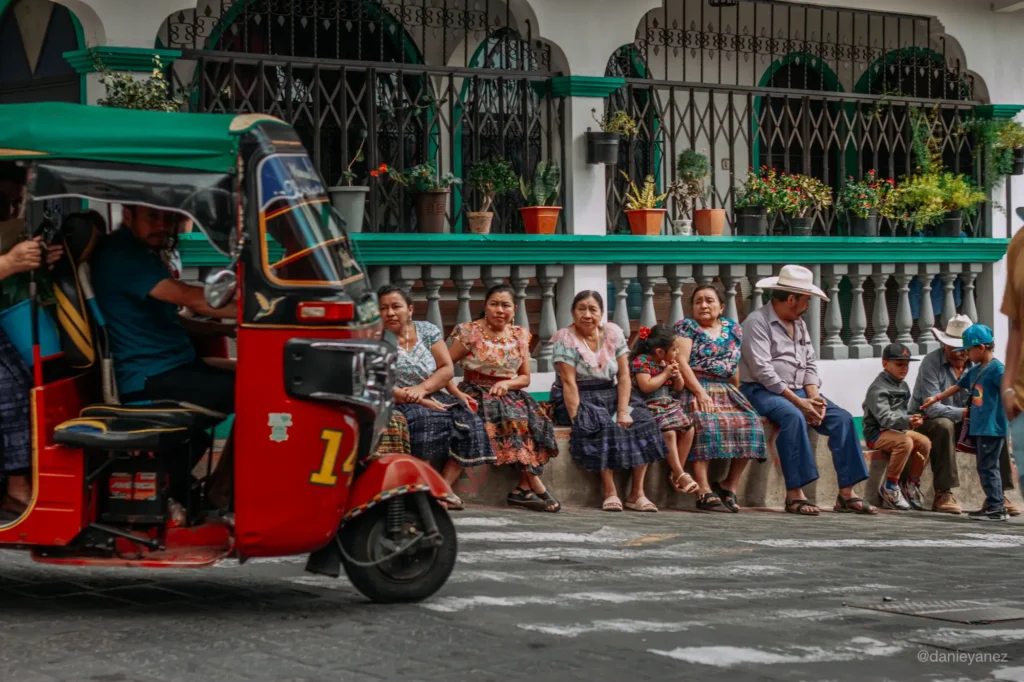
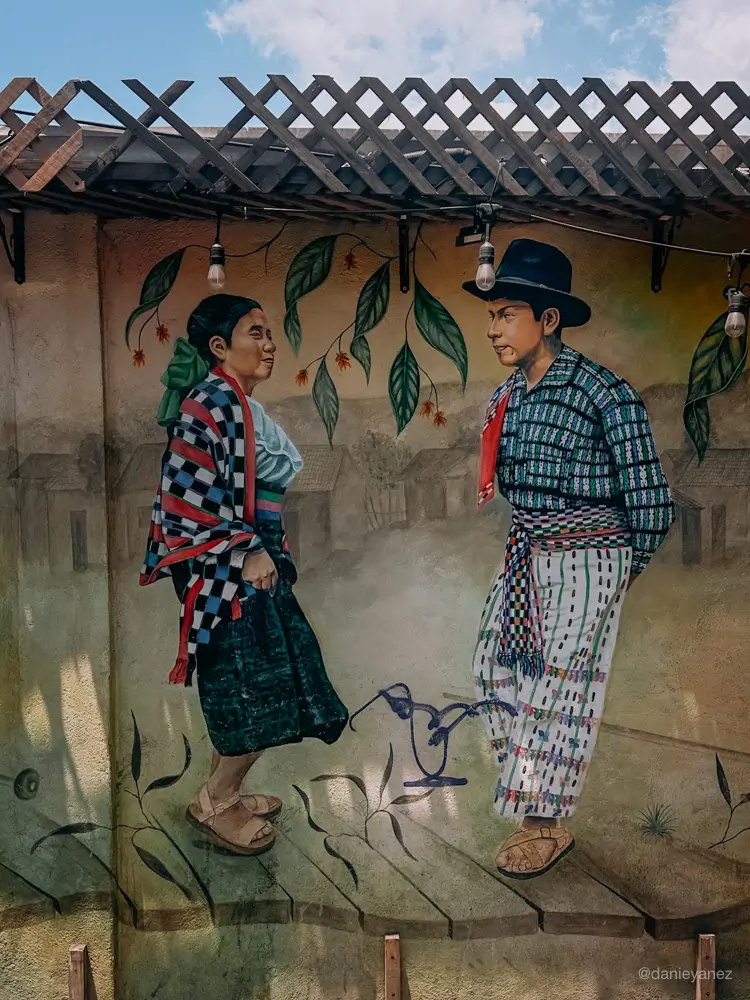
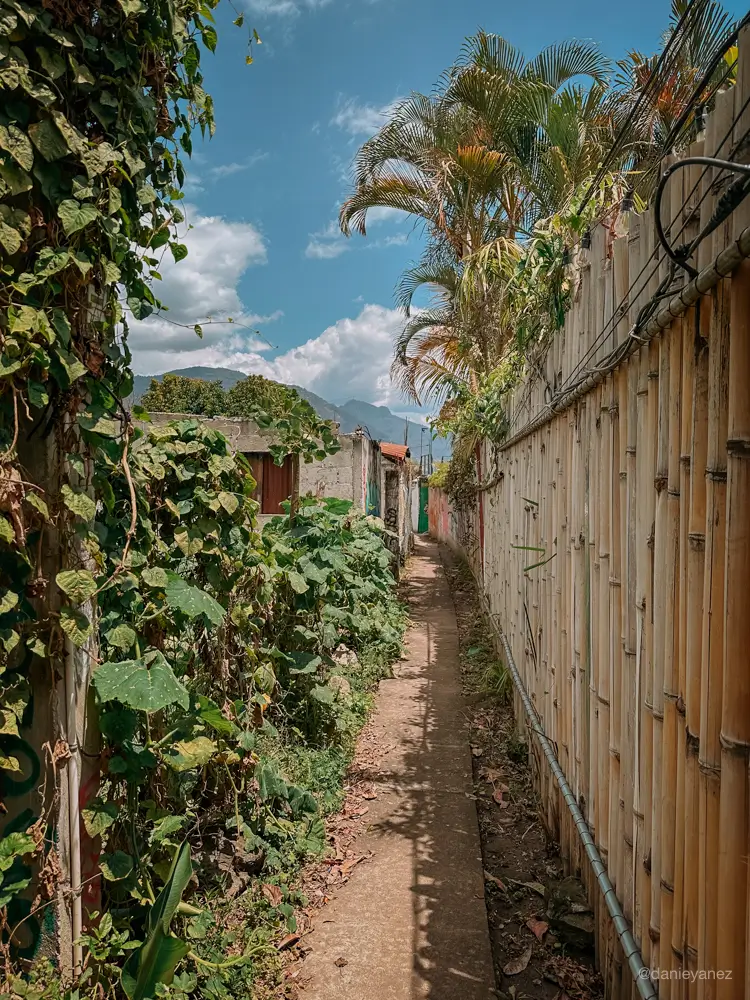
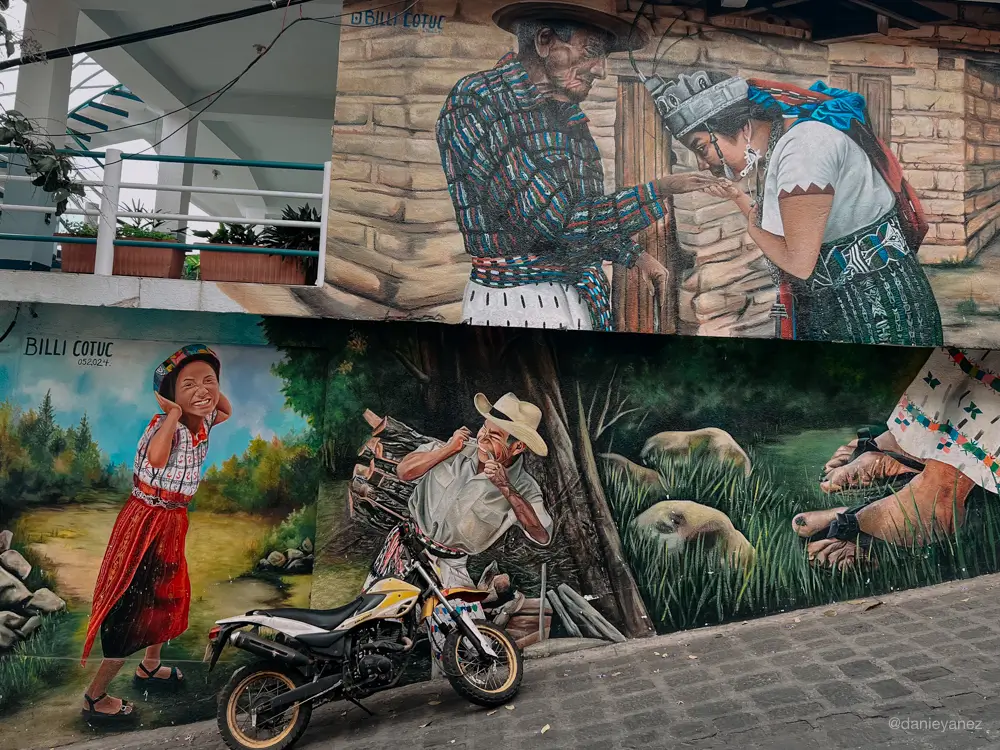
The upper face is a completely different story. Walk just a little way up the hill and the shift in energy is enormous. The drunk tourists disappear and suddenly there’s a church with a little garden, surrounded by local shops and people in traditional dress. This is the real San Pedro. Full of color, culture, and people who are actually from here. Schools, kids chasing a soccer ball, women in traditional huipiles carrying vegetables home, older men sitting on the curb in hats and button-downs, watching life go by. Up there, we were often the only foreigners around. And at the food stalls that pop up at night behind the church (Dani took us after a procession), I ate potato tacos with red salsa that felt more like San Pedro than any plate of hummus down by the water ever could.
In my opinion, that’s the real reason to choose San Pedro La Laguna and, more importantly, to stay. Because the version you take home depends entirely on how far up you’re willing to walk. The postcard is down below, the town is up the hill.
Who is San Pedro for?
For slow travelers, laid-back nomads looking for a well-connected base in Atitlán, and anyone curious enough to look past the dock. But if you’re after luxury, total retreat-level silence, or flawless wifi for ten video calls a day, there are probably better places for you (more on that in a bit).
The villages of Atitlán and their personalities
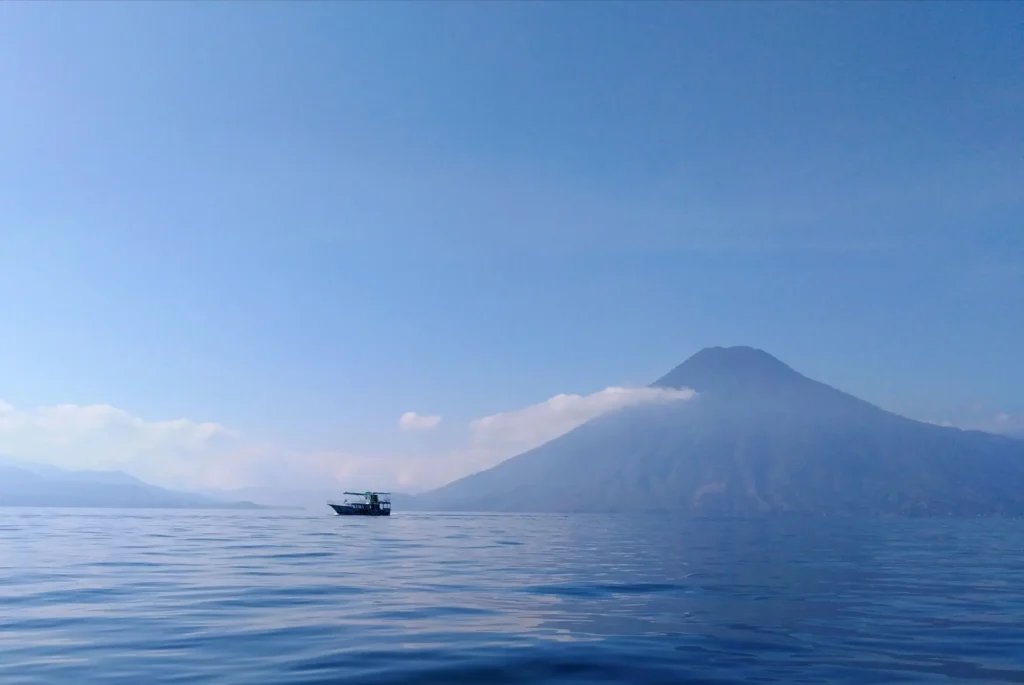
Lake Atitlán is a volcanic lake in the Guatemalan highlands, surrounded by three volcanoes (San Pedro, Tolimán and Atitlán) and by a dozen villages, each with its own personality and vibe. Making the mistake of thinking you “know the lake” because you saw one village is like saying you know Mexico because you went to Cancún.
Almost all of these villages are Mayan, mainly tz’utujil but also kaqchikel, and local people still live, dress and speak from that heritage. Tourists come and go; Mayan life at this lake has been here for centuries. Keeping that in mind completely changes the way you experience the place.
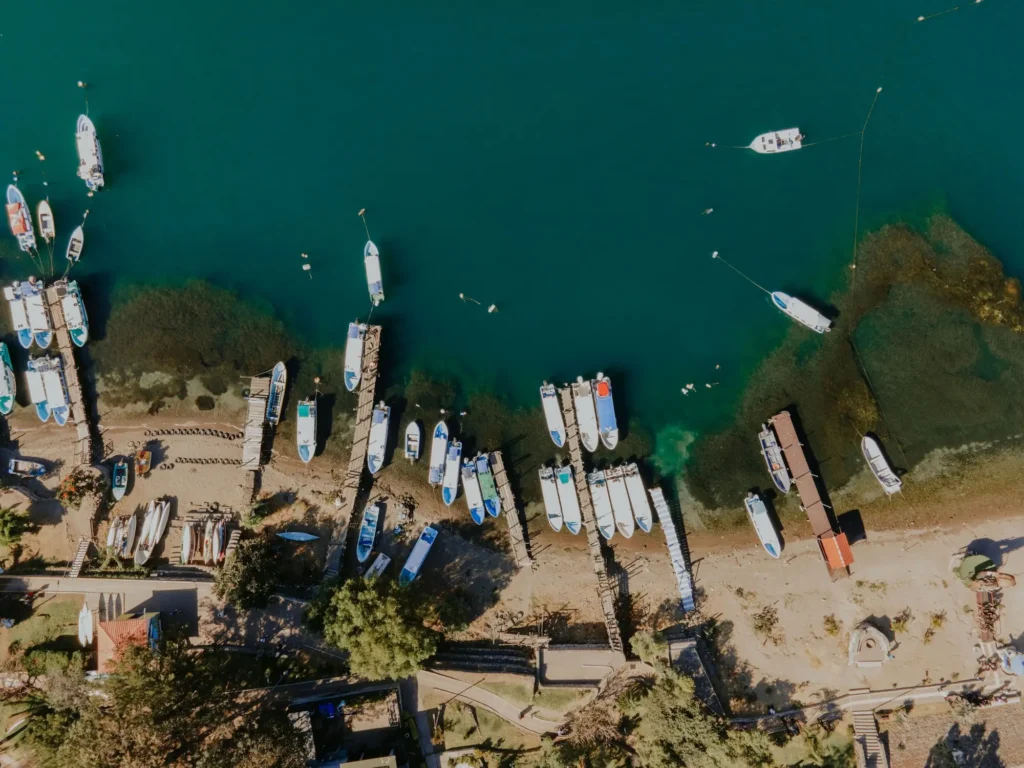
The way to move between villages is by boat (practical details further down), and although there are more than a dozen, these are the touristic ones:
San Pedro La Laguna: known as the most backpacker-heavy, party-friendly village on the lake, but with plenty of room for quieter trips, and where I stayed for a month. Compared to villages like San Marcos it’s more affordable (though I wouldn’t go so far as to call it “cheap”), with a good variety of cafés, restaurants and a bit of nightlife (which ends at 10 p.m., by the way, so yes, party town, but nobody’s raving until sunrise). And I think its location is unbeatable for hopping around the villages nearby.
Panajachel (“Pana”): Pana is the gateway to Lake Atitlán. It’s where most shuttles arrive (though you can also get directly to other villages from Antigua) and where almost everything departs from, so it’s the lake’s logistics hub. It’s the biggest village with the most services, which makes it practical, but also the one that feels least like a village. If you need more reliable wifi and creature comforts, Pana is the safe bet.
San Marcos La Laguna: the yoga, wellness and spiritual village. Beautiful for a day trip, home to the Cerro Tzankujil reserve with the best swimming water on the lake and a cliff-jumping platform that’s worth visiting even if you don’t jump. There are vegan cafés everywhere and no shortage of spiritual retreats. But in my opinion, staying there long term means living in a gentrified bubble, pricier and smaller, built for foreigners. Ideal to visit, less so to live (unless you’re specifically here for the spiritual side of things).
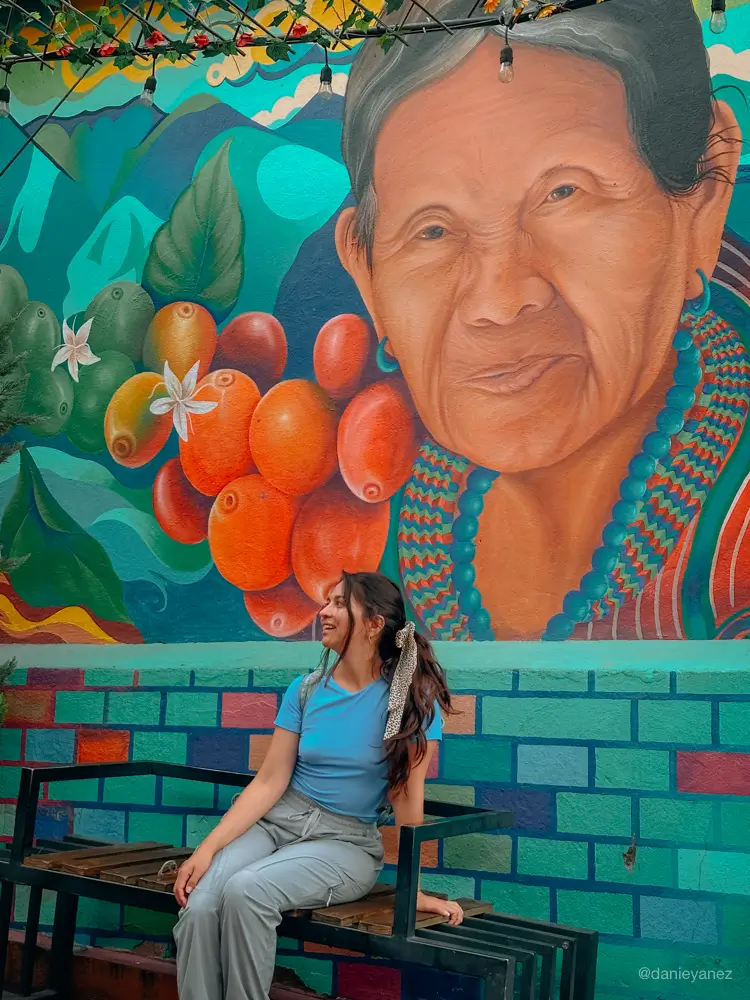
San Juan La Laguna: San Pedro’s neighbor, and perfect for a wander. It’s a tz’utujil village of artists: women’s cooperatives weaving textiles dyed with natural pigments, colorful murals down every street, coffee and cacao tours, and a much calmer rhythm. It’s rising as an option for nomads and expats, with cheaper rent and lovely little cafés. Five minutes by boat from San Pedro, it’s the perfect complement. This would be my second choice for staying when I go back to Atitlán.
| Village | Personality | Best for | Price |
|---|---|---|---|
San Pedro La Laguna |
Backpacker-friendly and affordable, with local life hidden up the hill | Slow travelersNomads | $ |
Panajachel |
The gateway; biggest village with the most services | ComfortsNomads | $$ |
San Marcos La Laguna |
Yoga, wellness and spiritual; heavily geared toward foreigners | Retreats and wellnessDay trip | $$$ |
San Juan La Laguna |
Art, hand-dyed textiles, coffee and cacao; tz’utujil and calm | Art and cultureNomads | $ |
Santiago Atitlán |
The biggest and most traditional; heart of tz’utujil culture | Art and cultureDay trip | $ |
Santa Cruz La Laguna |
Right on the water, swimming docks, a mix of mid-range and luxury | Lakeside relaxingBoutique and luxury | $$ |
Jaibalito |
Tiny, tucked between cliffs, no road access; extremely chill | Total disconnectionBoutique and luxury | $$$ |
Tzununá |
Quiet and alternative, with an off-grid permaculture community | Total quietAlternative living | $$ |
Santa Catarina Palopó |
East shore, famous for its blue-painted houses | Day tripBoutique and luxury | $$$ |
San Antonio Palopó |
Traditional, known for ceramics, textiles and painted houses | Art and cultureDay trip | $ |
San Lucas Tolimán |
A working town, barely touristy and very local | Off the tourist trail | $ |
San Pablo La Laguna |
One of the least touristy; 100% local life | Off the tourist trail | $ |
Is San Pedro La Laguna a good base for digital nomads?
Short answer: yes, but it comes with a disclaimer, so let’s get the big “buts” (pun intended) out of the way before you show up expecting Bali-style coworking and, well, that’s not what this is.
Let’s start with the basics, electricity and internet, because this is a big thing to consider if you’re planning to go to San Pedro as a digital nomad.
The truth is that the day we arrived there was no electricity in the entire town 😬 and we were literally standing there like, okay, now what? Luckily, some cafés know the drill and have a generator, like Sababa, so you can go work there when the power drops everywhere else. It’s inconvenient, and yes, it made me question whether to stay. Dani (who’s from there) told us it wasn’t that common… although it happened more than once during our stay. Even so, we decided to extend to a month, and here’s why, plus how we handled it so it didn’t wreck our work.
Let me explain my perspective with something that happened to us right there in San Pedro. Andrew, my boyfriend and travel partner, was in the middle of an online Spanish lesson with his teacher, who lives in Venezuela, when the power went out. Once it came back, he reconnected and messaged her to apologize. She replied: “this is the first time you’re the one who lost power,” because it happens to her constantly. He explained we were in a little town in Guatemala, and her answer sums up exactly what I’m trying to tell you: “LOL welcome to Latin America.” It cracked me up, because it’s the plain truth.
And yeah, it is part of the reality of traveling around Latin America (or “developing” countries), though obviously it may happen more or less times depending on where you are. Honestly, it’s happened to me far worse (longer outages, way more inconvenient) in cities that are supposedly much more developed and nomad-friendly, like Cancún or Playa del Carmen in Mexico.
Is the wifi in San Pedro La Laguna good enough to work?
Now, the truth is that most of the time we had internet good enough to work comfortably on normal things (we do web development and design). The wifi in San Pedro does tend to slow down in the afternoons, but for us it was never a serious problem. My honest recommendation: San Pedro is a good base if you have flexible work or light hours. If you depend on back-to-back video calls all day, or you have heavy connection needs, you’re going to get frustrated. For that profile, Panajachel is probably more reliable, or honestly, a different city altogether.
Where to work in San Pedro La Laguna as a digital nomad
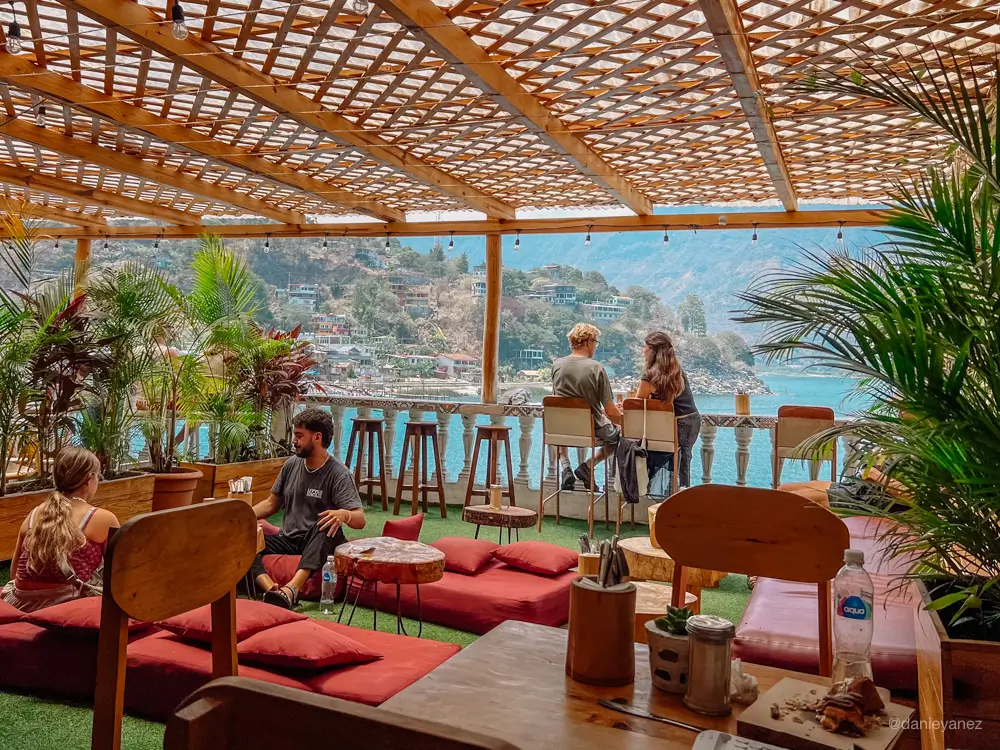
My routine was a mix of breakfast at home, then off to a café with a lake view, or one of the pretty ones with a garden. I loved Tornado’s, though the wifi can slow down at peak hours, so I’d switch to my phone’s data there. The best option for lake views plus solid internet is Sababa Bakery, which also has a generator, so that’s where I’d head when the power failed. Another spot I loved isn’t exactly a coworking space, it’s more of a really comfortable restaurant with a lake view, great food, and zero issue with us showing up with laptops is Maria’s. We spent a lot of hours there and I loved it.
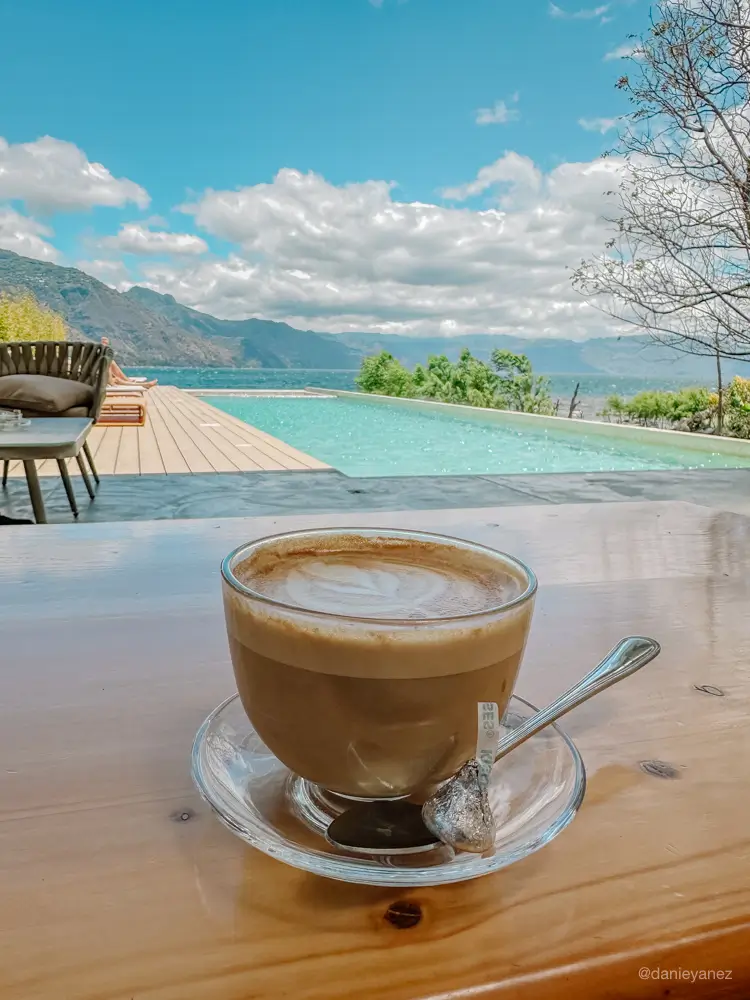
Not every place is great for working, even when it looks like it should. The restaurant at Zoola, for example, has a gorgeous pool overlooking the lake… but the internet there never worked once, so I only went to relax and eat, never to work.
How much does it cost to live in San Pedro La Laguna as a digital nomad?
Maybe I arrived kinda spoiled from my time in Vietnam, but it didn’t feel as cheap as I expected. It’s true that San Pedro is among the most affordable spots on the lake, but I wouldn’t call it “cheap”, though it depends a lot on where you stay and what you eat.
That said, if you’re coming as a digital nomad you can live in San Pedro on somewhere between $1,000 and $1,500 USD a month, and you can sit at the low end of that range especially if you cook at home and eat at local comedores.
I paid for my place by the month, negotiating directly with the owner, and it came out to roughly $45 USD a night with the monthly discount, for a simple little apartment with a bed, bathroom and kitchen. I think my price may have run a bit higher than it normally would for what it was because it was Semana Santa, but generally Airbnb prices were running between 200 and 350 GTQ (quetzales), about $26 to $45 USD.
I’m sure hostels are much cheaper, but if you’re a digital nomad like me, I’m guessing that’s not really your setup.
On food we averaged about $10 to $15 USD per person at tourist restaurants, and also we cooked at home pretty often.
Is there a nomad community in San Pedro La Laguna?
Honestly, not much of one. There are nomads passing through and the community is growing, but San Pedro is much, MUCH smaller than places like Canggu. What there is plenty of: people passing through, Spanish schools full of travelers staying a week or several, and that backpacker village life that makes it easy to strike up a conversation in a café or a bar. If you want coworking spaces with networking events, this isn’t your place. If you want more casual, human connections, it’s perfect. And yes, plenty of people do stay longer than a day or two, usually to learn Spanish.
San Pedro La Laguna for digital nomads: yes or no?
Yes, if you have flexible or creative work, you travel slowly, you want an affordable base in Atitlán with real village life, and are okay improvising when the power outages happen.
Think twice if you depend on heavy, stable connection all day, you need your routine intact with no surprises, or uncertainty stresses you out. In that case, come for a few days as a visit and base yourself in Pana, or even Antigua, if you’ve got serious work to do.
For me, with the kind of work I do, San Pedro was a beautiful base for a month. But I learned quickly that the lake runs on its own rhythm, and part of living here is accepting that.
How to get to San Pedro La Laguna
San Pedro sits on the southwest shore of Lake Atitlán, and like every village on the lake, you don’t just drive up to the front door. It’s almost always a combination of shuttle and, often, boat. Here’s the breakdown of the most common routes depending on where you’re coming from.
From Guatemala City (La Aurora airport)
This is the most common entry point if you’re flying in. You’ve got two options: a shared tourist shuttle (the most practical and affordable) or a private transfer. The trip takes around 6 hours. Some shuttles go directly to San Pedro for about $40 USD; others drop you in Panajachel, where you take a 40 min boat across the lake for 30 GTQ (about $4 USD).
From Antigua
Antigua is pretty much a mandatory stop, especially if you’re doing Acatenango (I wrote a whole article about that, in case you want to take a look). There are shuttles running constantly from Antigua to the lake. It’s the most traveled route, so you’ll find departures at almost any hour and at a good price. Same as above, confirm whether your shuttle goes directly to San Pedro or drops you in Pana to cross by boat. I took one that dropped me straight in San Pedro and paid 175 GTQ (about $23 USD).
From San Cristóbal de las Casas (Mexico)
If you’re coming down from Chiapas, there are direct shuttles to the lake. It’s a long trip, easily 10 to 12+ hours including the border crossing, and it’s heavily used on the backpacker route between Mexico and Guatemala. Honestly though, I wouldn’t take it myself, since I’m not clear on how the safety situation is along that stretch.
What to know about the boat ride to San Pedro
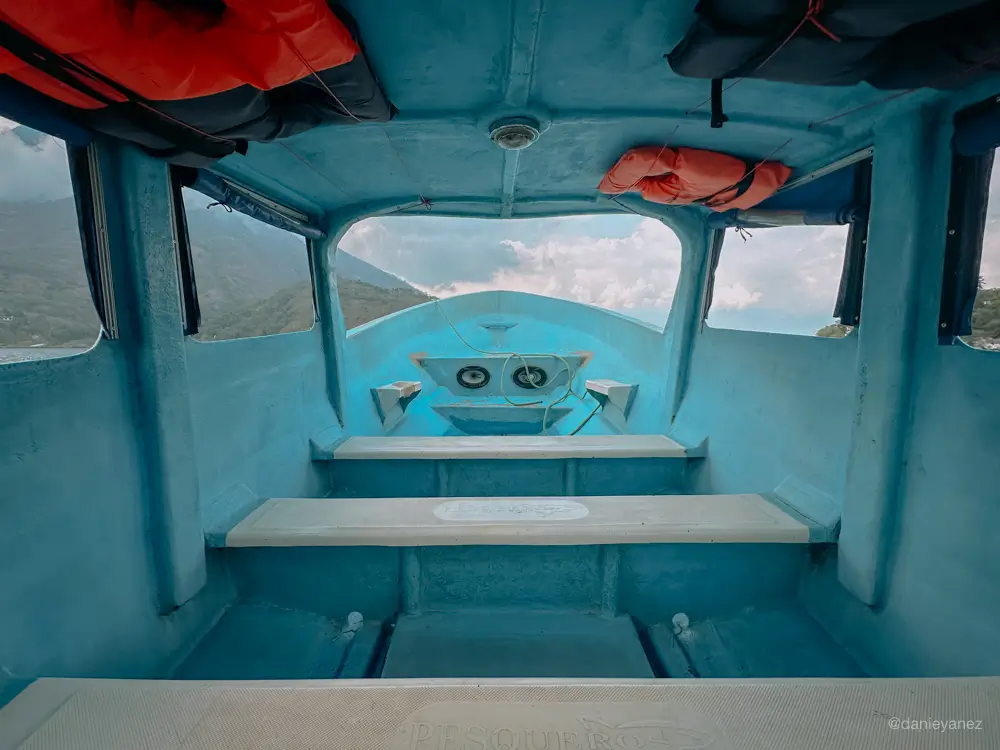
If your transport drops you in Panajachel (the lake’s entry village), the last stretch to San Pedro is on a public boat, a ride of about 40 to 45 minutes with spectacular views. If your shuttle goes directly to San Pedro by land, you skip the boat, but the road route is longer and windier. Neither option is “better,” it depends on your tolerance for curves versus how much of a rush you’re in.
A few tips for taking the boat:
- Bring small bills in quetzales (foreigners get charged around 20 to 30 GTQ depending on the route, and there’s rarely change for big bills).
- Keep in mind that the boats stop running fairly early, around 5:30 p.m., so if your flight or shuttle arrives late, you might be better off sleeping in Pana and crossing the next day instead of getting stranded at the dock.
- Book your shuttle in advance (especially in high season and during Semana Santa), and if you can, arrive at the lake in daylight. Not just for safety and boat schedules, but because seeing Atitlán for the first time with the sun hitting the volcanoes is a welcome you don’t want to miss in the dark.
- If you’ve got a big suitcase, know that they’ll put it on the roof of the boat AND THEY DON’T STRAP IT DOWN WITH ANYTHING. If it’s windy and the boat is rocking hard, I’d recommend going by land instead, because SUITCASES HAVE ABSOLUTELY GONE INTO THE LAKE. The driver will tell you it’s fine, and if the water is calm, that’s true. But if it’s choppy, I wouldn’t risk it.
Where to stay in San Pedro La Laguna
One of the most useful things someone who actually lived in a place can tell you is which area to stay in, because San Pedro isn’t one uniform block. It changes enormously depending on where you set up. Here they are, from most party-heavy to most peaceful:
The main street
This is San Pedro’s backpacker heart, the street climbing up from the main dock, packed with life. This is where the famous hostels are, like Mr. Mullet’s and Los Amigos, restaurants like Sababa and Alma, and bars like Sublime. It’s lined with souvenir shops, people from everywhere, tuk-tuks flying past and movement at all hours. If you’re here to socialize, you’re young and you’re passing through for a few days, this is where the action is and you’ll meet people effortlessly. The trade-off: it’s loud, and staying right on that street for very long becomes too much. Ideal for short stays and a party mindset, less so for working or resting.
One step off the main street (still in the tourist zone)
This is, in my opinion, the sweet spot for a longer stay. You’re still close to all the good stuff (cafés, restaurants, the dock) but just outside the chaos, so you drop the noise without losing the convenience. This is the area where the café Coctun Mayan is, for example. For nomads or slow travelers who want to work, eat well and still have life nearby without sleeping above a bar, this zone is a solid choice.
The new boardwalk (toward the Cueva del Cangrejo)
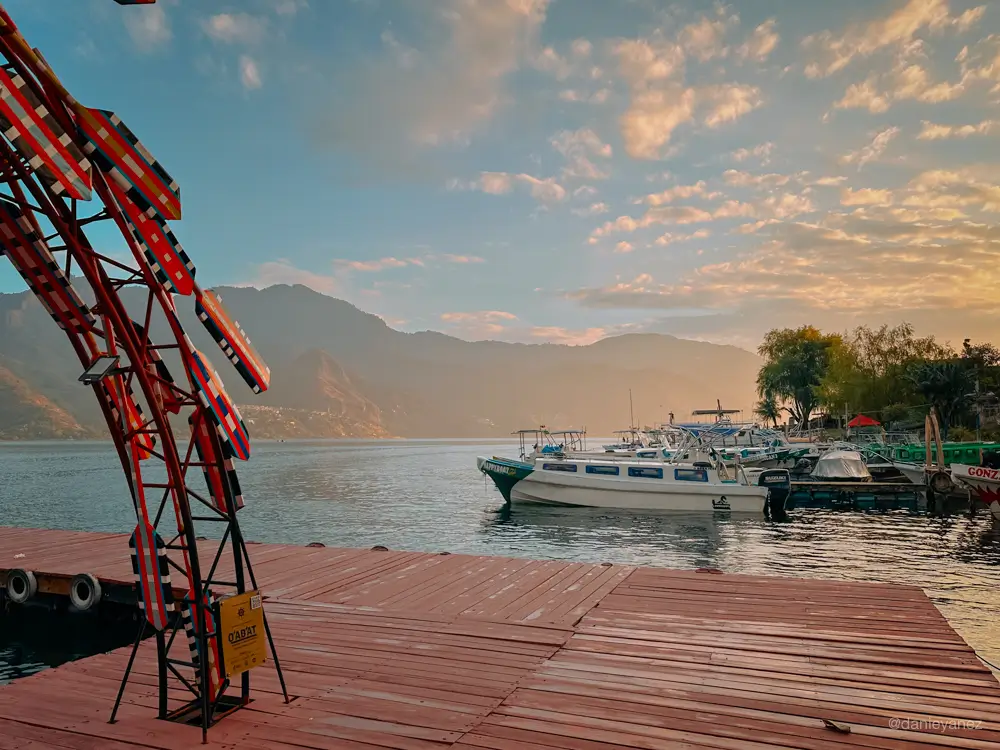
If you walk right along the shore from the main dock, you reach the newest part of town: a boardwalk connecting to the new dock and to the Cueva del Cangrejo, a themed lookout built around a giant crab structure. In fact, while I was there they held the actual inauguration concert for that stretch, so I watched it come to life. It’s a short strip with colorful decorations, touristy little shops and a handful of small hotels nearby. You can tell they want it to grow, but for now it’s not very busy. The upside? Quieter. The downside? It’s a bit removed from most of the restaurants and things to do, so if you stay here, count on walking a little further to reach the center of the action.
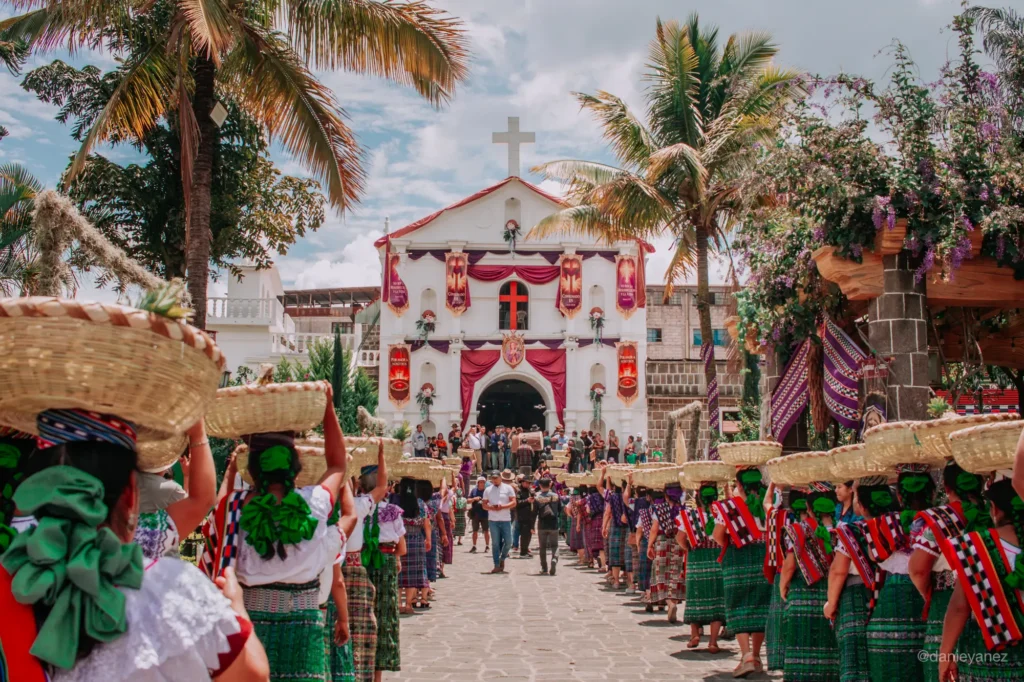
Up the hill (the 100% local San Pedro, near the church)
If you stay up top, near the church, you drop yourself into the most real San Pedro. Local shops, people in traditional dress, kids playing soccer, actual village life. It’s the most authentic, cheapest and least touristy option. You’re further from the dock, the walk is uphill (though very mild), and it’s a slightly deeper cultural immersion, with fewer English speakers and fewer comforts designed for travelers.
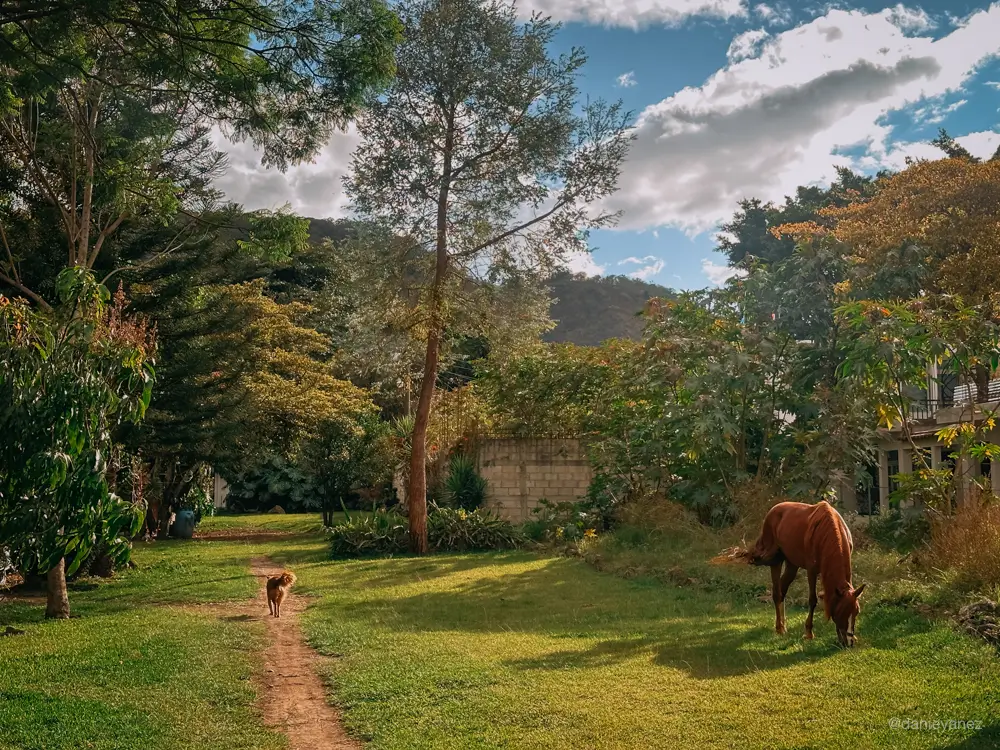
The back shore of the lake
This is where I stayed, and I loved it. It’s a super quiet area, very little noise, and where I was, tuk-tuks didn’t even come through, so it was pretty chill.
From my place to the dock was under a 10 minute walk, so, peaceful without being isolated. What I didn’t love is that whenever it rained, the whole area filled up with frogs or toads (whatever they were).
Minor detail, but I’m telling you because I have a phobia and Andrew had to go out and shoo them away before I could walk anywhere 🐸. For anyone who wants real rest, with nature and silence, but without giving up being close to the center, this zone is one of my favorites.
On booking (and a tip that saved me money)
What we did was arrive in San Pedro and stay two days somewhere temporary while we hunted for our place for the month. We found an apartment and negotiated it monthly, directly with the owner, which almost always comes out cheaper than the nightly rate on the platforms.
For short stays, or to lock something in before you arrive, you can check options in booking. Just keep the internet thing in mind: if you’re going to work, ask the host directly about the actual wifi speed.
Getting around San Pedro and Lake Atitlán
Getting around Atitlán is part of the experience, and once you get the hang of it, it’s easy. There are basically three ways: walking within the town, by tuk-tuk for anything further out, and by boat for everything else on the lake.

Walking (within San Pedro)
San Pedro is small and extremely walkable. From the dock to the cafés, the restaurants, your place… everything is close, even the cafés out on the edges. A lot of people assume walking up to the upper part is brutal, and the truth is it’s pretty mild. It only gets tougher if you pick somewhere well past the church. But overall, you can do everything on foot.
Tuk-tuks
These are the little three-wheelers you’ll see everywhere, the fastest way to move when you don’t feel like walking, or to get up the hill without breaking a sweat. Within town, short rides cost around Q5 per person; for longer stretches it goes up to Q10 or more. There’s no meter, so agree on the price before you climb in.
Tuk-tuks are also handy for getting to San Juan, the village next door, and they save you when the boats have stopped running. We used them for exactly that, coming back one night after the boat service had ended. One thing worth knowing: each tuk-tuk belongs to its own village, and it seems they can’t enter the neighboring one. When we took one from San Juan, they dropped us on the outskirts of San Pedro, not in the center. Just so it doesn’t catch you off guard.
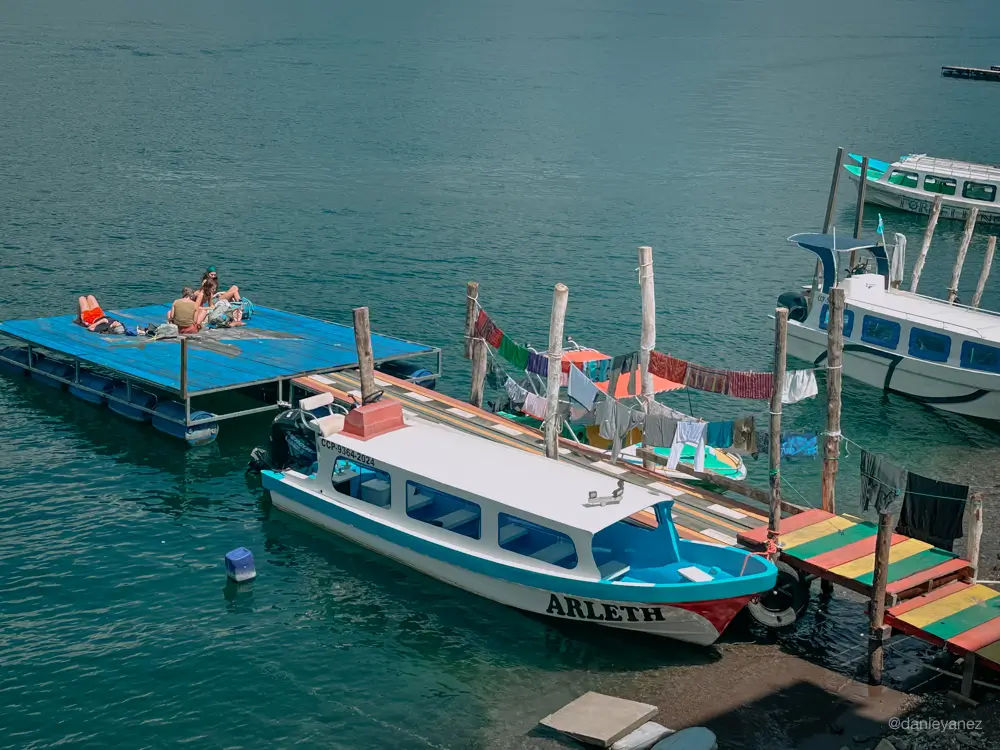
Boats (for getting between villages)
This is the lake’s real transport system. The villages of Atitlán are connected by public boats (shared lanchas) that leave the dock when they fill up, not on a fixed schedule. You pay before boarding, and you can buy one-way or round-trip. Round-trip is cheaper and they give you a ticket to use on the way back. One important detail: not all the boats belong to the same company, so if you bought round-trip, you may have to wait for your company’s boat to come by.
San Pedro to San Juan: about 5 minutes (a tuk-tuk might even be cheaper/faster).
San Pedro to San Marcos: around 20 to 30 minutes.
San Pedro to Panajachel: about 30 to 45 minutes, crossing the lake.
San Pedro to Santiago Atitlán: boats to Santiago leave from a different dock (here).
- Always carry small bills in quetzales. Tourists get charged between Q15 and Q30 depending on the route, and they may not have change for big bills. (And yes, there’s a tourist rate, even if you’re not a gringo.)
- The boats stop early. Service winds down between 5:30 and 7 p.m., depending on the route and the season. If you’re doing a day trip, do the math on the last boat back, because getting stuck on the other side means an expensive private water taxi… or a tuk-tuk, if that village is connected by land.
- And like I said before, if you’re traveling with a big suitcase they’ll put it on the roof of the boat without strapping it down. If it’s windy and the lake gets choppy, the boat rocks a lot, and suitcases have gone into the water. The driver will tell you it’s fine, and if the lake is calm, it is. But if it’s rough, I wouldn’t risk it.
Village hopping
San Pedro’s big advantage is its location, which lets you hop from village to village without any hassle. One day you go to San Juan for the textiles, the next you cross to San Marcos to swim, another you venture out to Santiago. All by boat, all cheap, all with volcano views included. (I’ll cover the best day trips in the next section.)
Things to do in San Pedro La Laguna
San Pedro has that rare mix where you can fill your days with adventure or do absolutely nothing, and both feel right.
Watch the sunrise from the Mayan Face (Indian Nose)
This is the iconic hike of the lake. You climb before dawn to the Mayan Face lookout (more info here), also known as Indian Nose, to watch the sun come up over Atitlán with the volcanoes cut out against the sky. It’s guided, starts around 4 a.m. and runs about Q100 depending on the tour.
I’ll be honest, I didn’t do it. I chose to spend my free time on the Semana Santa processions instead, and besides, I always like leaving something undone for when I come back to a place I loved. So I can’t tell you about it firsthand, but it’s one of the most recommended activities on the lake, and if you’re a sunrise person, it’s probably worth every minute of lost sleep.
Climb San Pedro Volcano
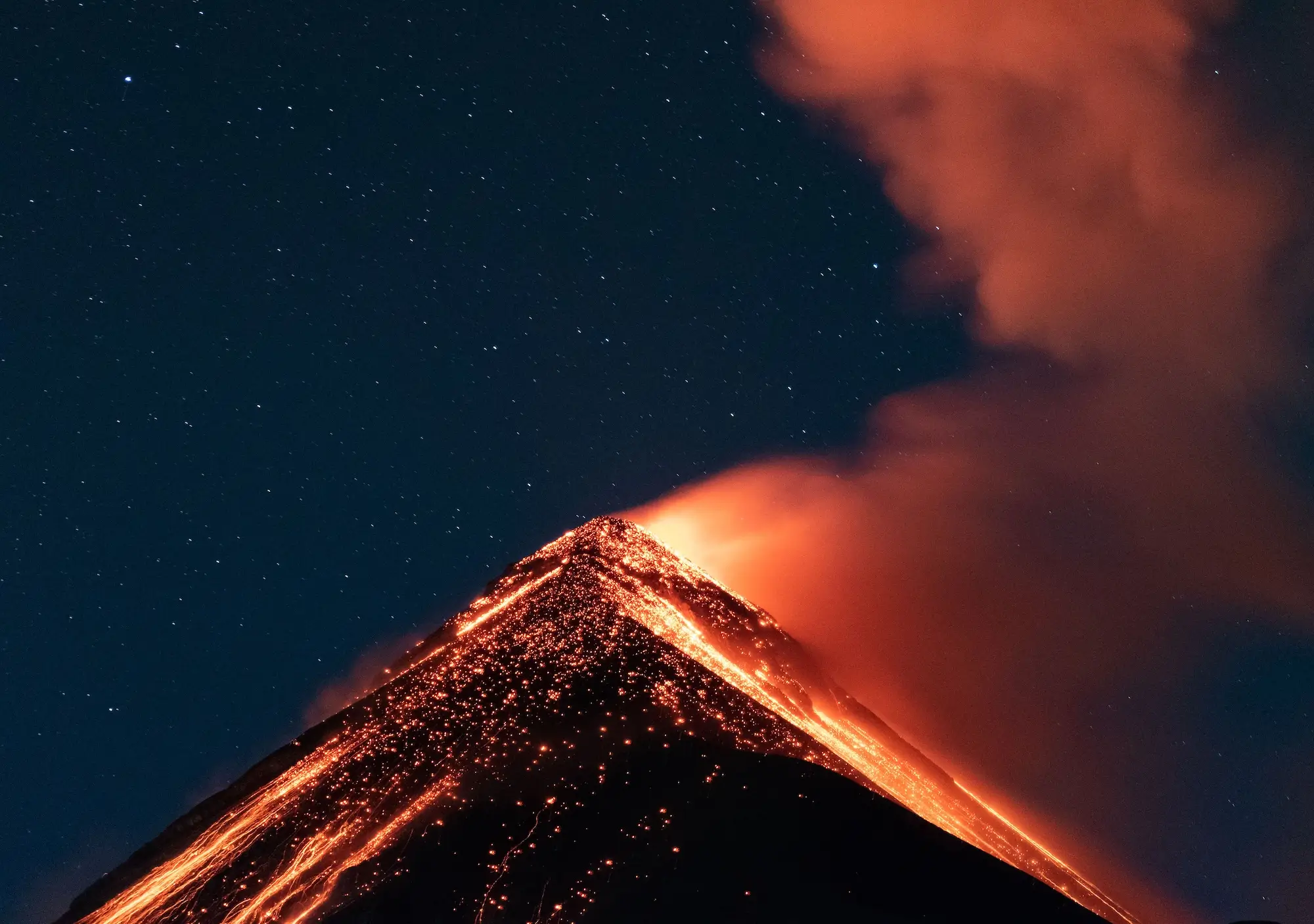
For anyone wanting something tougher, San Pedro Volcano can be climbed on a guided hike of several hours, with spectacular views of the lake from the top. It’s a real hike, steep and long, so come prepared with proper shoes, water and stamina. I didn’t do it, honestly I’d just come from Acatenango and had zero battery left for another mountain (iykyk), but my friend did climb it and it looks stunning. If you like mountains, this is your plan.
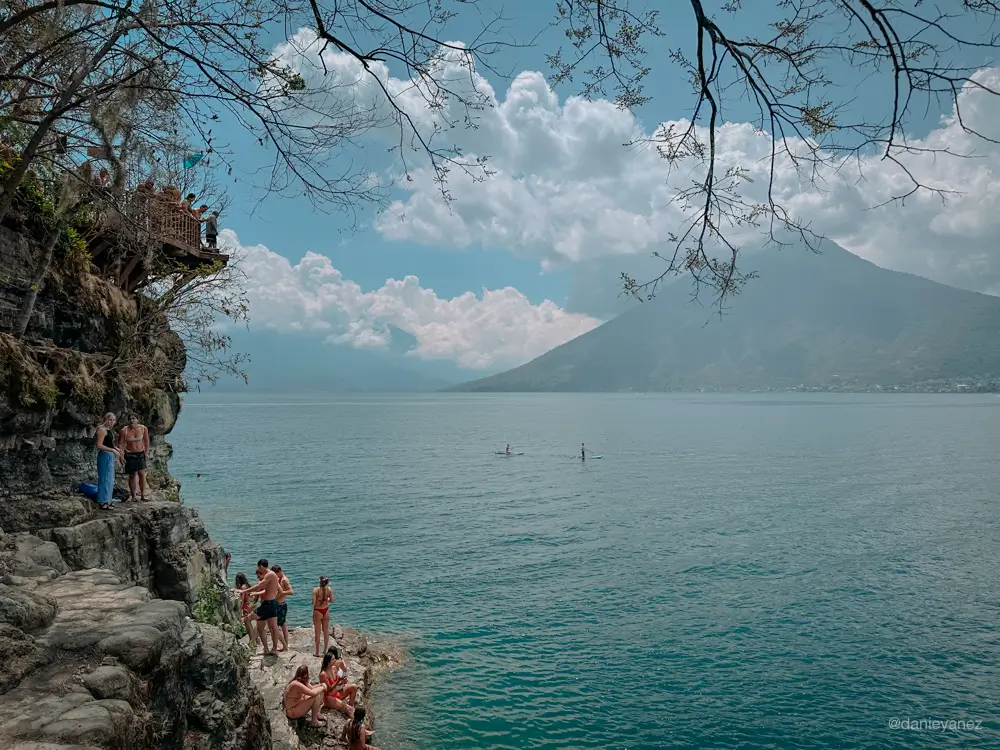
Getting in the water: kayak, SUP and a pool with a view
The lake is the main character here, so at some point you’re going to want to get in but I don’t recommend swimming directly from San Pedro. The water around this area can be contaminated. In the mornings there are women washing clothes right in the lake, plus a constant stream of boats coming in and out of the dock. If what you want is to swim, the move is crossing to San Marcos, which has the best swimming water on the lake (I get into it in the day trips section).
What is a great option from San Pedro is renting a kayak or a SUP board and paddling with the volcanoes in the background, ideally in the morning, when the water is calmest (it gets choppy in the afternoon). And if relaxing is more your speed than paddling, the pool at Zoola is very cool when the weather cooperates, for a day pass of about Q50 you can get in, swim with a lake view, and stay for a meal. Super relaxing.
A night out: a beer and some dancing
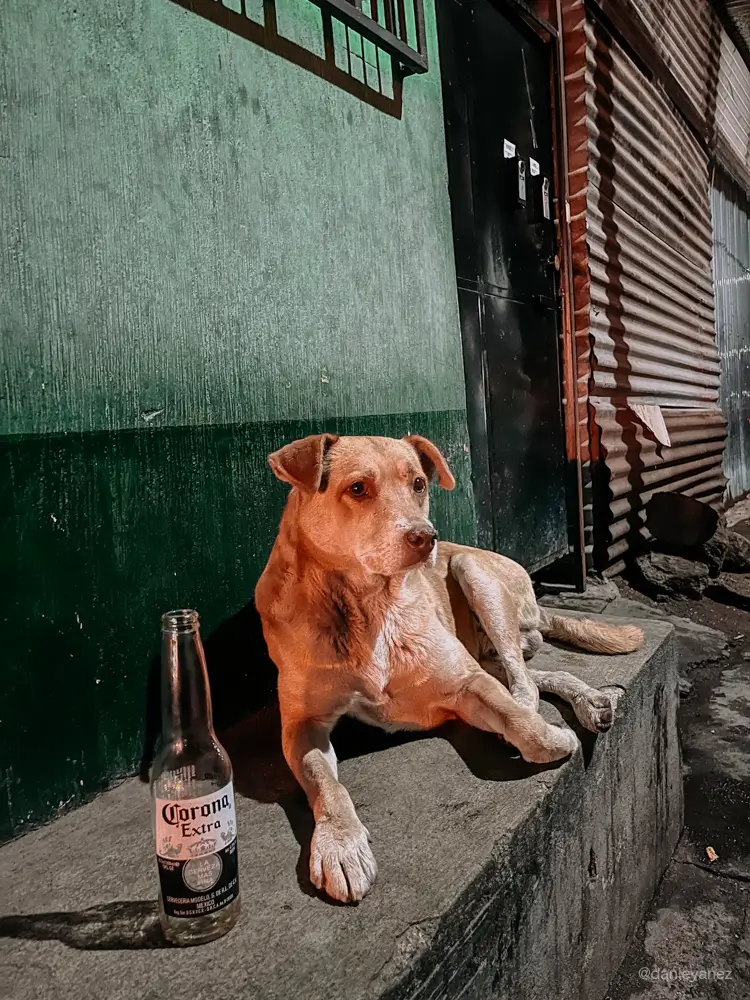
Nightlife in San Pedro is chill but it delivers. Sublime is where most of the party concentrates: you can go eat (their veggie skewers with Indonesian peanut sauce are great), grab a beer, or show up in the evening to dance. They play different music every night (if I’m not mistaken Saturdays are Latin nights, which is when the vibe peaks). And if you’d rather something quieter, El Giro is a tiny LGBT bar with a really relaxed feel.
The weekly events (boat party, pub crawl and more)
If your vibe is more party-oriented than mine, San Pedro has you covered. There are fixed events every week, and the most famous is the boat party thrown by Mr. Mullet’s. Once a week people pile onto a boat to get absolutely wrecked out on the lake. I didn’t go (you’ve probably picked up by now that San Pedro was a completely different vibe for me, heh), but people say it’s a great time. There are also pub crawls and other weekly events you can join even if you’re not staying at that hostel, or you can just drop by their bar for a drink and some beer pong. In San Pedro, the party finds you if you go looking.
Doing nothing
And this is maybe my favorite recommendation. San Pedro isn’t a place to check off a list, it’s a place to inhabit. One of the best plans is sitting at a café with a lake view and watching life go by, tuk-tuks brushing past you, the lake changing color as the hours pass. When you travel slowly, doing nothing counts as doing something. And in San Pedro, it’s done incredibly well.
Day trips from San Pedro La Laguna
San Marcos La Laguna: swimming and wellness vibes
If you want to get in the lake, San Marcos is where to go. This is where you’ll find the Cerro Tzankujil reserve, with the best swimming water on the lake and a platform people jump off into the water. It’s also Atitlán’s yoga and wellness village, so after your swim you can take a yoga class, grab a coffee and have a very zen afternoon. As a day trip it’s ideal.
Santiago Atitlán: the tz’utujil heart
Santiago is the most traditional village on the lake, and it feels different from the second you step off the boat. More local, with a fiercely strong tz’utujil identity, a market, crafts, and a life of its own that doesn’t revolve around tourism. Watch the boats though, because the ones going to Santiago leave from a different part of town and take longer to fill up, so plan your trip out and back carefully.
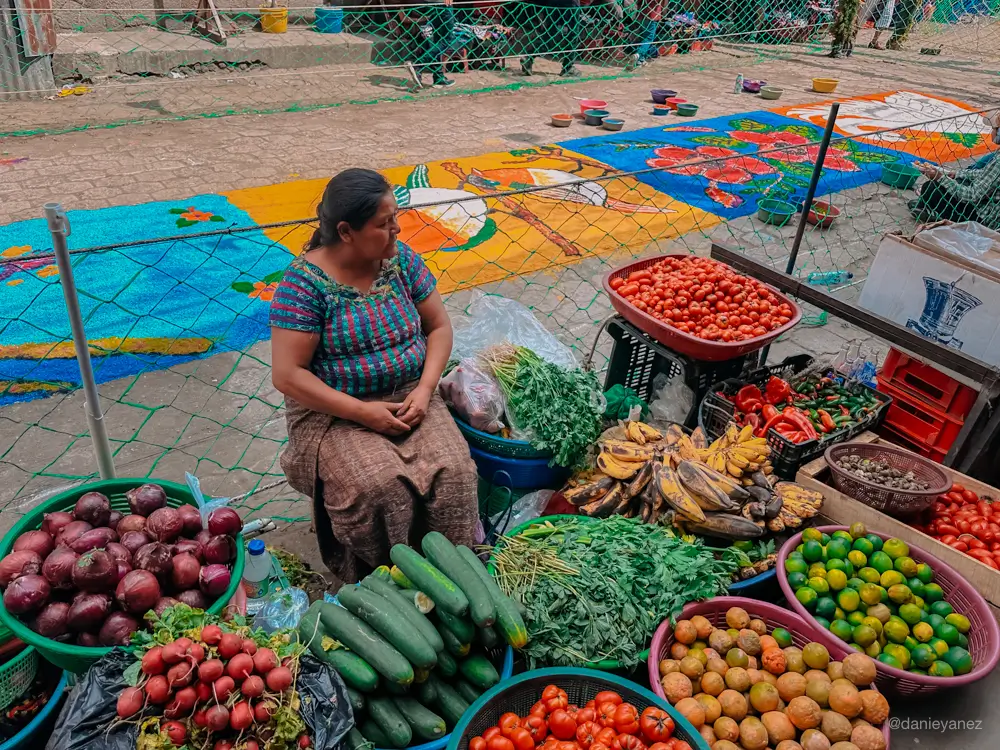
For me, Santiago was special for one reason: Semana Santa. I got lucky enough to be at the lake during Guatemala’s biggest celebration, and seeing the sawdust carpets and the traditions here, in their most authentic form, among local families instead of crowds of tourists, was one of the most striking things in my whole time in Atitlán. I’m going to dedicate a full article to it, but if you’re around the lake during those dates, don’t miss it.
San Juan La Laguna: art, textiles and coffee
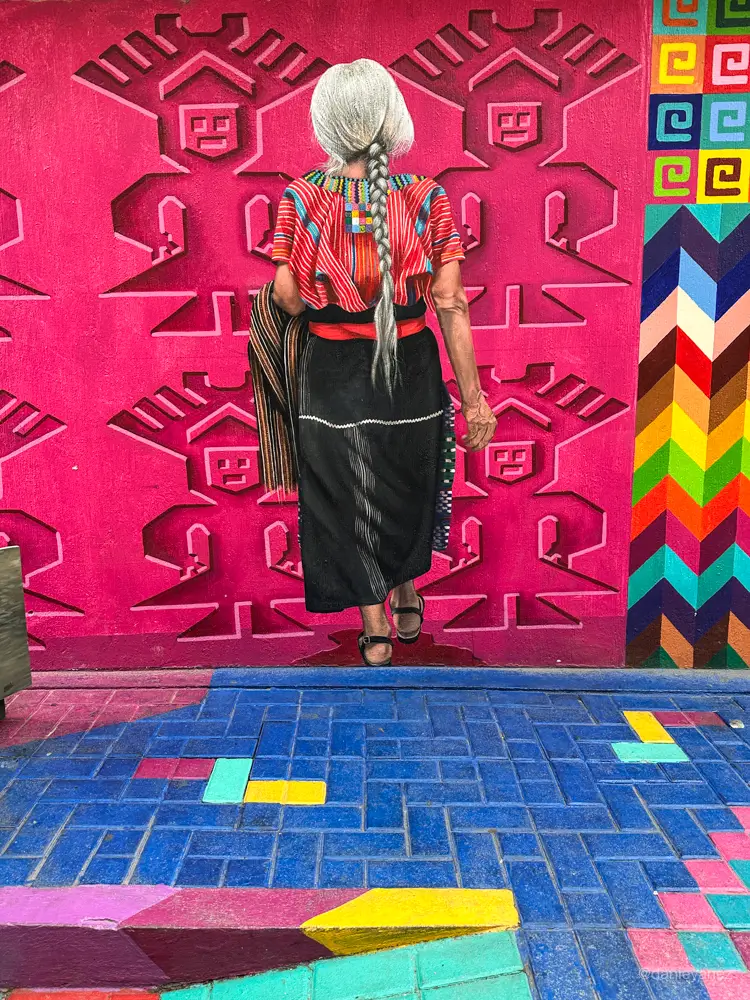
San Pedro’s neighbor, a few minutes away by boat (or tuk-tuk), San Juan is a tz’utujil village of artists. Streets covered in colorful murals, women’s cooperatives dyeing textiles with natural pigments, galleries, and a much calmer, more curated vibe than San Pedro’s. It’s the perfect day trip for a slow, beautiful day.
Panajachel: the gateway
Pana is the biggest and most commercial village on the lake, and although a lot of people only pass through (myself included, I honestly only went there to catch a bus), it has its merits as a day trip.
Its Calle Santander is packed with craft shops, restaurants and stalls, and it’s the best place on the lake for shopping or sorting out practical things that are scarce in the smaller villages.
Beyond the lake: Tikal, Semuc Champey and the rest of Guatemala
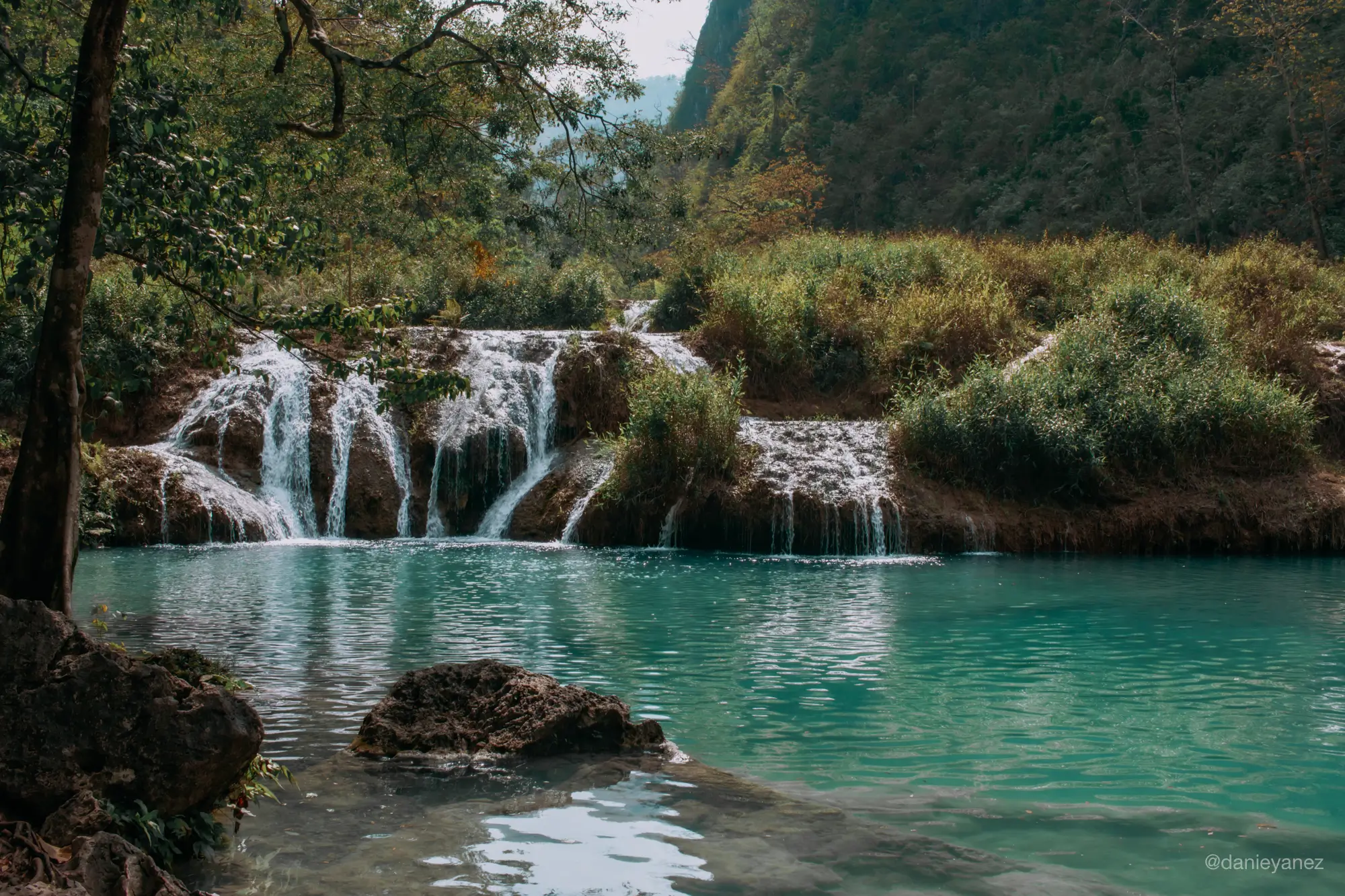
If you have time, Atitlán is also a great launching point for exploring more of Guatemala. On my route, after the lake I headed to Semuc Champey (more info here) and then used Flores as a base to see Tikal (more info here), the incredible Maya ruins in the Petén jungle.
These aren’t day trips, they involve long transport and at least two or three nights away, but if you’re putting together a Guatemala trip, they’re absolutely worth it.
Where to eat vegan in San Pedro La Laguna
I don’t eat animal products. So stick around if you’re wondering whether you’ll be able to eat well in a little Guatemalan town. San Pedro has a surprisingly decent vegan scene for its size, and these are the places I went back to over and over during my month there.
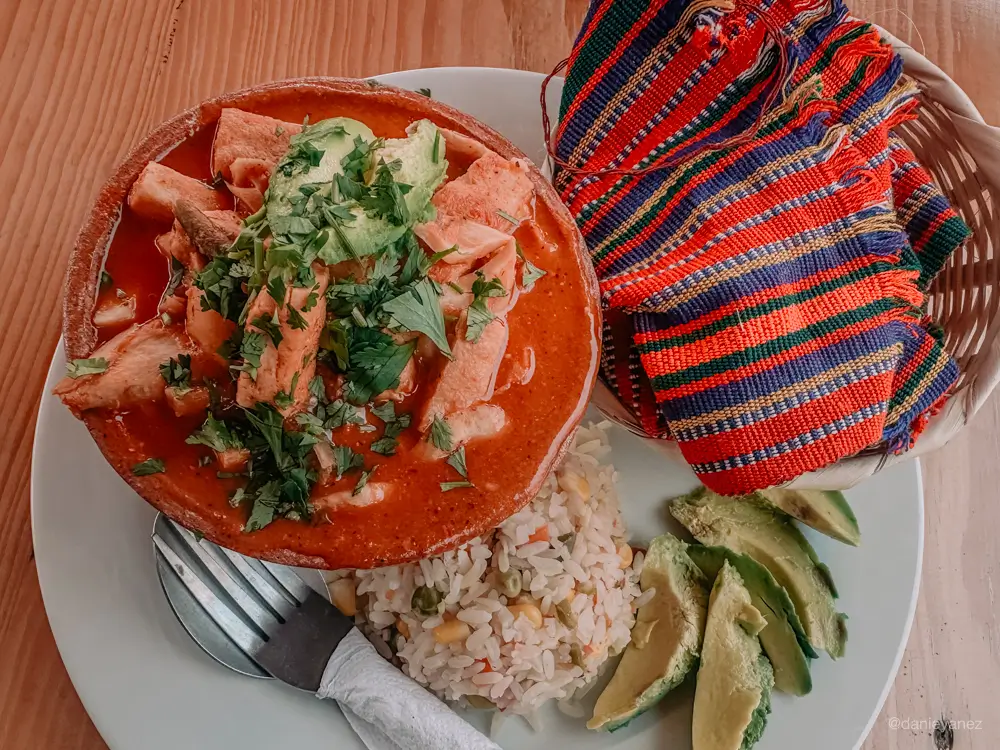
María’s (formerly Fifth Dimension) and the vegan pepián
María’s (previously called Fifth Dimension, in case you look it up under the old name) has a special place in my heart because of one single dish: their vegan pepián. Pepián is one of Guatemala’s most traditional dishes, and here they make a vegan version. Here, it normally comes with mushrooms, but order it with extra tofu and it’s absurdly good. I came back for this plate roughly a thousand times, no exaggeration. If you want to try real Guatemalan food without giving up plant-based, this is the spot.
Salud Para Vida
This one was my place. Salud Para Vida is both a restaurant and a health food store, and I loved it for both. The food is incredible and a lot of their dishes come loaded with vegan protein, so you leave actually full (none of that sad little salad situation). Every day they put out fresh bagels that are delicious. And the store is gold if you cook at home: tofu, vegan cheeses, vegan butter, different kinds of protein, seitan burgers and a bunch of things you would not expect to find in a town this size. If you’re staying a while and want to cook, this place becomes your pantry.
Mike’s
Mike’s is another spot with tons of vegan options, all of them really good. It’s one of those reliable places you can return to without thinking when you’re in that area.
Zoola (for the pool and the hummus)
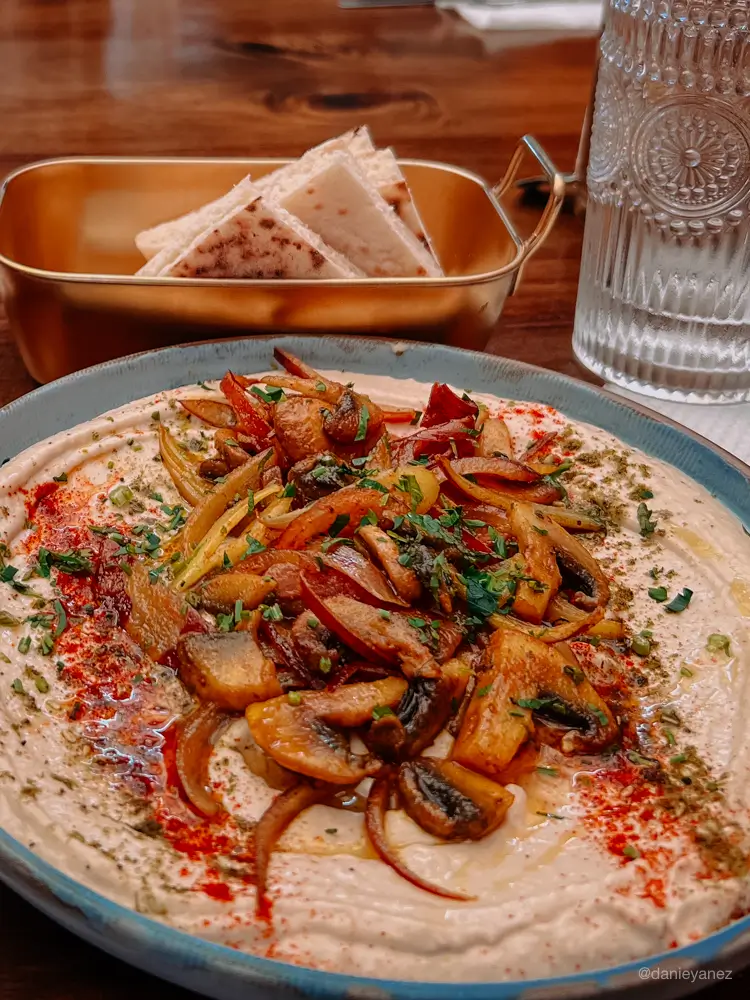
Zoola is more a place to hang out than a vegan restaurant as such, but it earns its spot on the list. It has that pool overlooking the lake (day pass around Q50) and, while it doesn’t have many plant-based options, its mushroom hummus is excellent. Ideal for a relaxed afternoon: get in the pool, pick at something, watch the lake.
Sublime (to eat and to dance)
I mentioned it in the nightlife section, but it deserves a spot here too – the veggie skewers with peanut sauce at Sublime are great. It’s one of those places that works at any hour, whether you go eat early or show up at night for a beer and stay to dance. Good food and good atmosphere in the same place.
Sababa (restaurant and bakery)
On the main street, Sababa has a restaurant plus a bakery café next door, and both have something for vegans. At the restaurant the options are limited but they exist: scrambled tofu and a couple of other dishes. And at the bakery you can get your coffee with plant milk, plus they had exactly one vegan apple muffin, which was pretty good. It’s not the place with the widest plant-based variety in town, but it does the job, and the bakery is a great spot for a quiet breakfast or for working with a lake view.
The truth about eating vegan in San Pedro
Outside of these places, being honest, a lot of the vegan options in town are going to repeat between hummus and falafel… which, to be clear, I’m not complaining at all. Between the spots I just gave you, plus the option of cooking at home with what you find at Salud Para Vida, San Pedro is somewhere a vegan lives easily and eats well. And if you cross over to San Marcos, the plant-based offering grows even more (it’s the wellness village of the lake, after all), so between the two you’ve got plenty.
Practical tips for San Pedro La Laguna
Little things worth knowing before you arrive, learned during the month I lived there:
Bring cash (seriously)
This is probably the most important tip. There are only two ATMs in all of San Pedro, and you might get unlucky and find them out of cash. If that happens, your only alternative is crossing to Panajachel by boat, which is a very long trip just to withdraw money. So arrive in town with quetzales in hand. You can pay by card in a decent number of places, which helps, but don’t count on it. At the end of the day it’s a small town, and plenty of things (boats, tuk-tuks, market stalls, comedores) are cash only.
Connectivity
For mobile internet, my honest advice is to skip the drama and use an eSIM. I bought a local Claro SIM at a shop in town, but Andrew got sold a one-month package and they actually loaded him something else that ran out in two days, and dealing with the vendor was a mess (he never fixed it, and we have no idea whether it was deliberate or an accident). With an eSIM you arrive with data from minute one and skip that whole situation. Take a look at Airalo for one less thing to worry about when you land. If you do, use code DIANA88674 for $3 USD off your first purchase.
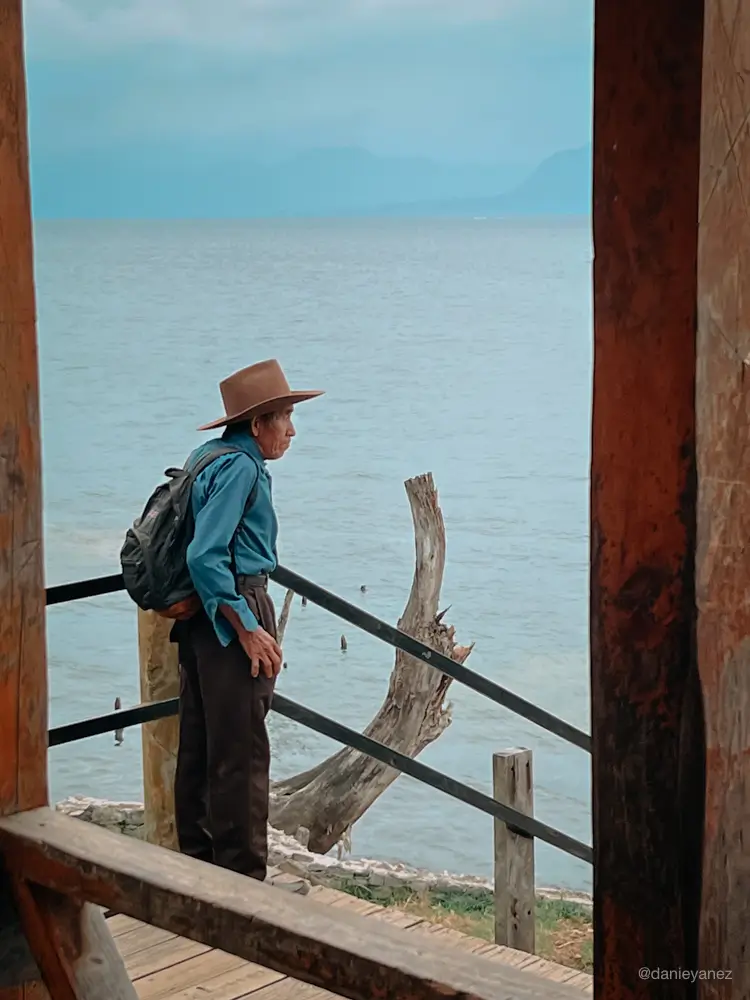
If you’d still rather use a physical SIM, the two big carriers in Guatemala are Claro and Tigo, and it seems Tigo connects better in the hills and more remote spots. I had Claro and lost signal in several places around San Pedro, while my friend had Tigo and had reception up on the volcano.
Be ready for power cuts
I already covered this in the nomad section, but it goes here too because it’s practical info: power cuts happen, sometimes across the whole town at once. It’s not constant, but during my stay it happened more than once. If you work online, find a couple of cafés with generators early on and keep a power bank charged. I travel with a little lamp that also came in very handy.
Best time to visit
Guatemala has a dry season (roughly November to April) and a rainy season (May to October). For the lake, the dry season gives you clearer skies, better volcano views and more comfortable days for getting around by boat. The coolest, clearest months tend to be December through February. If you can line it up with Semana Santa, you’ll have an incredible time (like I did), just keep in mind there are more people around and it’s worth booking accommodation well in advance.
Safety
San Pedro feels calm and it’s a very well-traveled destination, but the usual common sense applies: watch your things, don’t walk alone at night through dark or isolated areas, and go easy on the alcohol if you’re going out (especially on the boat parties).
Travel insurance
Between the boats, the volcanoes, the hikes and how unpredictable travel is, I wouldn’t go through life without travel insurance. If you’re doing adventure activities (like climbing San Pedro Volcano or the Mayan Face before dawn), check that your policy covers them. I recommend Genki, specifically for digital nomads. They offer two different plans depending on what you need: Genki Native if you don’t have insurance in your home country and want something more complete, or Genki Traveler if you already have coverage and just need additional travel protection.
VPN
A VPN is especially useful for digital nomads. Connecting to public networks can expose your private information (even a “private, password-protected network” that a ton of people have access to, like a café or a hotel).
My card details got stolen while shopping online once, and dealing with that is a nightmare. Now I just use my VPN any time I’m on a network I don’t control (which is always, lol). The VPN I’ve used since I started traveling is Surfshark, get a free month with this link.
If you want the full rundown on what to bring as a digital nomad, check out my article on everything I carry in my bag.
San Pedro La Laguna: is it worth it for nomads?
If you made it this far, you’ve probably figured out that I think San Pedro isn’t a place to check off a list and move on. It’s a place to stay, even just a little longer than you’d planned.
I arrived almost by accident, because of a friend, and ended up staying a whole month. In that time I understood that the lake has two rhythms the one belonging to the tourist who crosses through in two days and leaves with the postcard, and the one belonging to whoever stays, finds their cafés, reorders their favorite dishes, learns what time the boats stop running, and discovers that the real San Pedro is up the hill. I’m not going to lie to you about the uncomfortable parts (the power cuts, the wifi dropping, the frogs when it rains), but none of that overshadowed what San Pedro gave to me, a small temporary home, with a lot of soul, a small community, and a version of Guatemala that isn’t entirely built for foreigners, but simply is.
Is it for everyone? No. If you need flawless wifi, luxury or certainty, it’s probably not your place. But if you travel slowly, you want an affordable, well-connected base in Central America, and you’re curious enough to look past the dock, San Pedro La Laguna might be exactly what you didn’t know you were looking for. It was for me.
And if you decide to go, do me a favor, walk up the hill, order the vegan pepián with extra tofu, and spend one afternoon doing nothing but watching the lake change color. That, to me, was the real San Pedro.
Are you headed to Atitlán or putting together your Guatemala trip? Tell me about it, and if you want to follow my slow travels around the world, or you have questions about San Pedro, I’ll be over on Instagram @danieyanez. See you there 🌋