
I was nineteen, sitting on the hot ground of a public square with a camera around my neck, waiting for a kid to run.
This was San Miguel de Allende, one of my first solo trips. It was ten days, which today would feel like an express trip and which back then felt like an eternity away from home. That afternoon I went out with my camera and no plan, nothing to see at any particular hour. I just wanted to know the town.
I ended up in one of those little squares you find all over Mexico, a statue in the middle, a church across the street, pigeons everywhere. An older woman sat on the ledge around the statue tossing crumbs, and further off there was a kid running around, just playing by himself.
I looked at the two of them and thought “at some point that kid is going to run straight through those pigeons.”
So I sat down on the ground a few meters in front of her and waited.
The stone was burning my legs and every five minutes I had to shift position. People walked past and some ignored me, some gave me a look. And there I was, aiming a camera at apparently nothing at all.
The kid came and went. He’d run one way, get distracted, come back, never through the middle. Fifteen minutes in, my anxiety started overthinking. “He’s not going to do it, there’s a whole town out there waiting for you”. Twenty minutes in I was almost getting up, my pants now dirty, legs asleep, when I finally saw him coming.
He ran straight through and every pigeon lifted at once. I got the shot. The sound of the wings and the sound of my shutter became one.
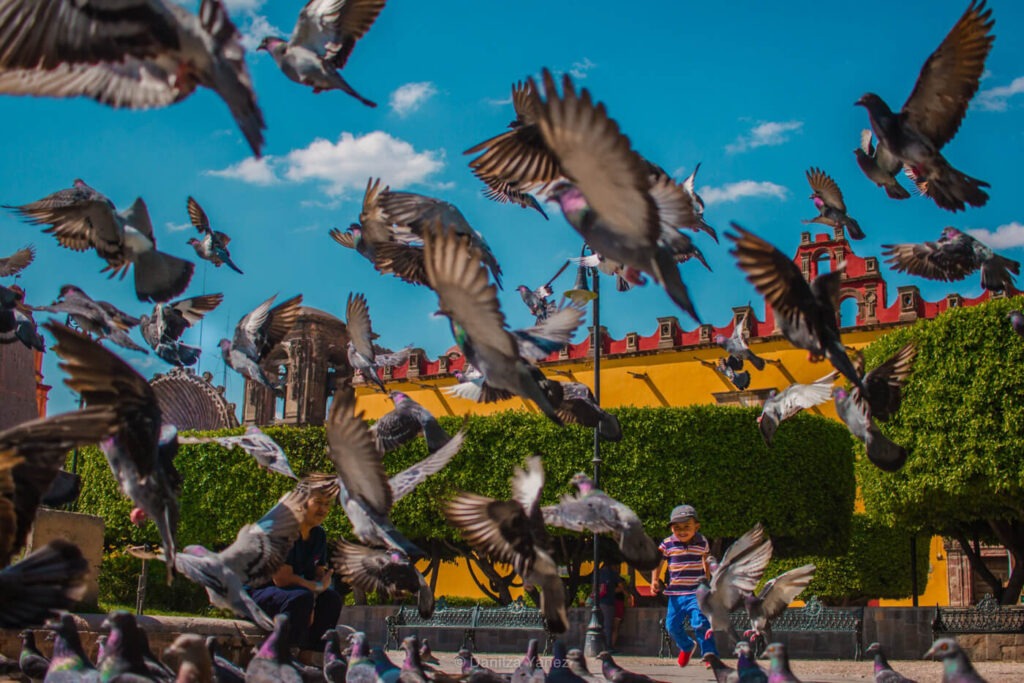
That was twelve years ago and the featured photo of this article is still one of my favorite photographs I’ve ever taken. I had no technique and no expensive gear plus it was not an exotic location. I love it because every time I look at it I remember exactly who I was that day. Some girl who knew nothing about travel photography, but was already learning to observe the world.
San Miguel de Allende is one of the most photographed towns in Mexico, and if you’ve seen a picture of it, you’ve seen its pink church. Everyone shoots that church, but the image that stayed with me for twelve years is of a woman, a kid and some pigeons.
The reason I’m telling you this right now is that I’ve been traveling full time for over four years, and I’ve spent a lot of that time crediting my photography to “slow travel”. But I also you don’t need to move to another continent or quit your job to shoot this way. As I’m writing this, I’m realizing that what changed my photos was never the number of stamps in my passport or how long I stay anywhere. It was actually just dropping the rush.
What changes in your travel photography when you slow down
There’s a pattern that happens to me in every new place, and I only recently noticed it.
The first few days I photograph buildings, landscapes, wide shots. They’re like “I made it” photos, and I think it’s how I process arriving somewhere new. Some of them I like, but they’re photos taken by someone still looking at a place from the outside.
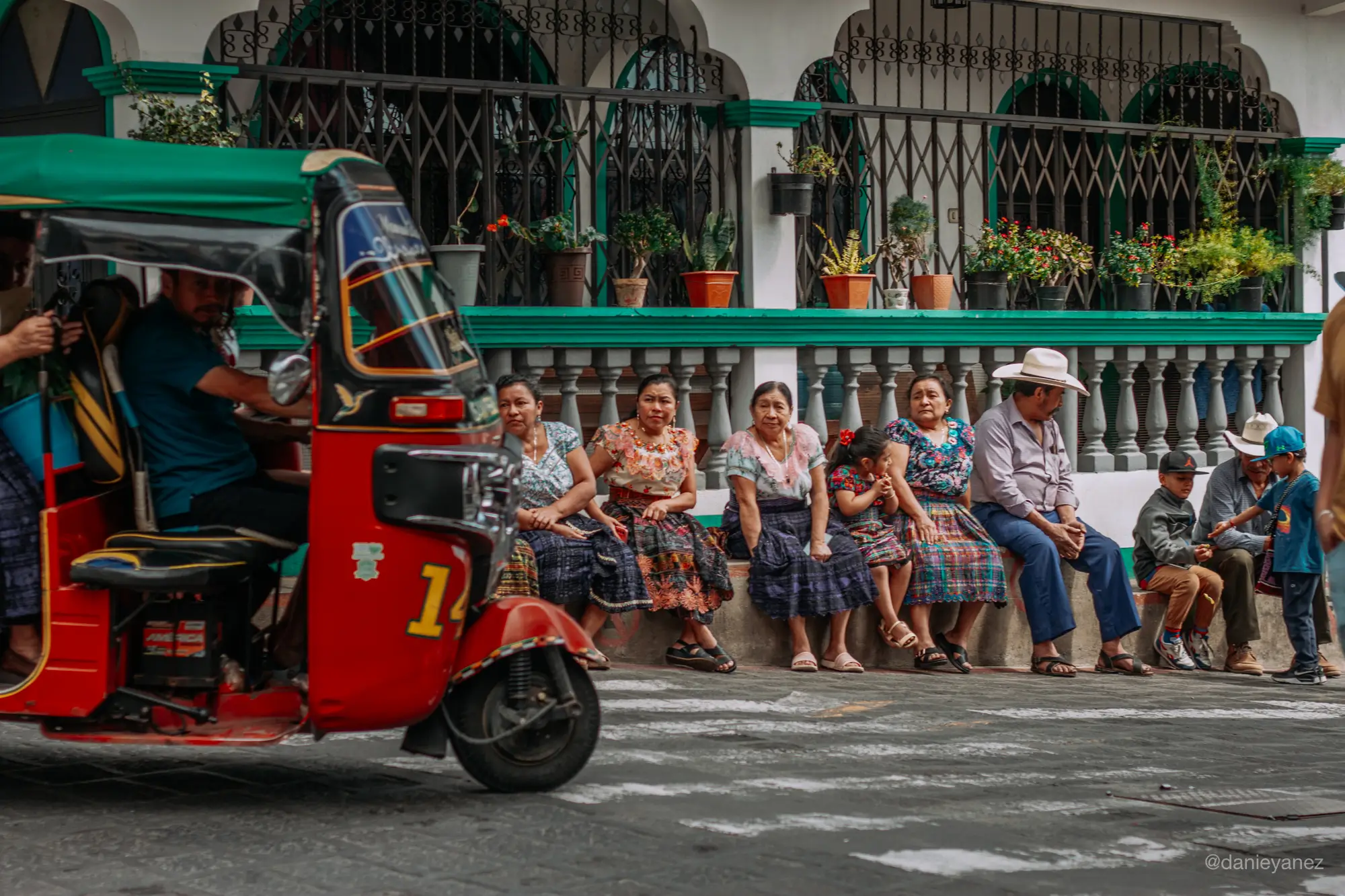
Then, after I’ve spent a while in the same town (sometimes weeks, sometimes two days), I start seeing other things. The hands of the woman selling fruit at the market, or the way four o’clock light hits one specific wall and no other. And mostly, I start seeing the people who live there and walk the same routes at the same hours. You’ll notice as you read that I love ordinary people doing ordinary things.
I don’t think that shift is caused by time exactly, I think it’s caused by the feeling of not having something specific to do. When you travel fast, everything moves past you in a blur and you’re chasing an itinerary made of pre-arranged experiences. There’s a clock ticking under everything, and even if you’re not thinking about it, some part of you knows there are four more things on the list. That urgency gets into how you look at the world.
Going slow buys you the luxury of walking with no purpose beyond watching the world go by. Without a destination or an idea of the perfect shot of whatever monument is next. My favorite travel photographs exist because I gave myself the time to notice something that had been sitting there the whole time, waiting for someone who wasn’t in a hurry.
The same place is never the same place
Here’s what happens when you walk the same streets at different hours. You go to the store at nine, you go out for coffee at four, you walk home from dinner at eleven, and without trying to you’re like scouting the place.
Every corner of the world has a thousand versions. Some of them depend on light, like the hour the sun drops behind a building and half the street goes dark, or the light at six in the evening, which makes even a parking lot look good.

But the other versions have nothing to do with light. A market on a Tuesday at eleven in the morning is not the same market on a Saturday at eleven in the morning, even with the sun in the exact same spot in the sky. What changes is who’s there, whether people came to shop or came to hang out, or whatever is going on at that exact time. On Tuesday the stalls are serving the same regulars and there are long conversations happening between one stand and the next, but maybe on Saturday there are strollers, families, noise, someone arguing about a price. It could be the same light, but the place is different.
I think that’s exactly what you get when you see somewhere once. You don’t take the place home with you, you take one of its thousand versions, the one you happened to find, which is usually the same one everybody else got who showed up that day at that hour on that same tour.
Let me say there’s nothing wrong with that. Sometimes you get one shot at a place and that’s just how it goes. But if you’re walking around a city and life offers you the chance to pass down the same street at a different hour, take it.
Slow travel doesn’t mean staying a month
I know it sounds contradictory to talk about slow travel and then tell you that you don’t need a month. I talk about routines and months because that’s my actual life, but it isn’t the requirement.
Going slow has much less to do with how much time you have and much more to do with how much you cram into that time. You can have three days and travel slowly. You can also have three months and move at a horrible pace, and I know because I’ve done it.
The only thing that really changes is leaving gaps. The photo almost never happens at a point on the itinerary, it happens in the dead time you didn’t plan.
A few years ago in Istanbul, some friends and I had been circling the same neighborhoods for a while and one day we said “what if we just walk toward somewhere that isn’t touristy?” No destination, just walking until the signs stopped being in English. And suddenly we were in a completely different Istanbul. Women in hijab walking with a kid on each hand. Others fully covered in black with only their eyes showing, carrying a school backpack. Men with grocery bags. People standing in their shop doorways watching life go by, which I’ve come to understand is a universal sport.
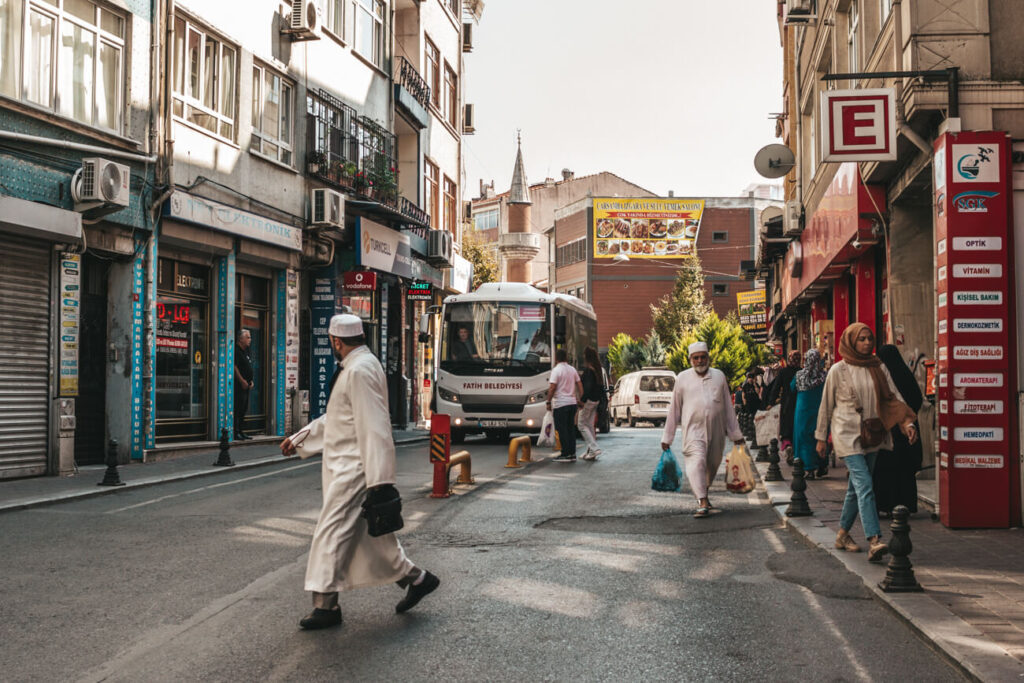
I took one of my favorite photos of that trip that day and it didn’t require living in Turkey for months. It required one afternoon with no plan and the decision to walk in the opposite direction.
So if you have limited time and you want to know how to take better travel photos without rearranging your entire itinerary, these are the things that actually move the needle.
- Pick fewer places. Three days in one city instead of three cities in three days.
- Go back. If you liked a street in the morning, return in the afternoon. It’s the express version of what I do over months, and it works just as well.
- Walk home. The taxi saves you twenty minutes and charges you everything that was inside those twenty minutes.
- Leave one morning empty. With nothing booked, to see or to check off.
- Sit for twenty minutes without taking a single photo. Just to see what happens, something usually does, especially somewhere interesting like a market or a café with a balcony.
- Sacrifice one thing on the list. The one you wanted least, that loose time is worth more than stuffing in one last thing.
The difference between someone who spends four days in a city and comes home with the same photos as everybody else, and someone who comes home with photos that are theirs, is almost never the gear or the talent. It’s that they gave themselves one afternoon to look around.
The problem with the perfect travel photo
There’s a style of travel photography you already know even if you’ve never picked up a camera. The most iconic street in a city completely empty at six in the morning, with that orange and teal edit that makes Morocco and Vietnam look the same. The shot from behind with the long red dress catching the wind in front of a monument at sunset, or the specialty coffee with the ceramic cup and a plant in the background, which could be Lisbon or Ubud or Mexico City and there’s no way to tell without a tag.
A lot of those photos are technically incredible and I know there are people with an enviable eye pulling this off with a consistency I admire. And maybe neither you nor I will ever take some of those shots, but when I see them all together they start looking the same to me, as if one person took all of them in one place.
It’s like there’s an agreement about what a travel photo is supposed to look like and everyone is busy fulfilling it, photographing the idea of a place instead of the place. I don’t know, I like it when it looks real. I want my lens to reflect what I’m actually living through, with its mess, its people, its ordinary human chaos.

What good is an empty cathedral
You go to a cathedral, you get up at six so nobody’s in the frame, you wait for the last person to clear out, you shoot, and you end up with something clean and symmetrical… and then what?
What good is a perfect photo of a cathedral if it has no life in it and shows nothing of where it actually stands? The people who live there, who walk past it every day on their way to work, who’ve been selling something on that corner since before the doors opened or the kids running around the square with balloons. That cathedral isn’t floating in a void, it’s in the middle of a city and that city has owners. We pass through, they live there, the place is actually theirs.
If I photograph somewhere by erasing the people who live there, what I’m doing is keeping the supposedly pretty part of a space and leaving out the people holding it up. Something about that way of seeing bothers me deeply and it took me years to learn how to like name it. It’s a photo that treats a place like a set, as if the city exists to look good in your camera and the people walking through it were an obstacle you have to wait out. That idea doesn’t sit well with me.
The photos that are worth it, in my opinion
Here’s an example. A photo I took in Cavtat, Croatia, a small town a short ride from Dubrovnik. I was only there a couple of days, so there was no building a routine or spending hours in the same spot.
My favorite photo from that trip is a very calm scene with boats in the water, people sunbathing and people swimming further out, with the sun scattering on the surface in a way I find almost magical. There’s no famous medieval wall or dreamy sunset. The photo is just an ordinary afternoon of people in the sea.
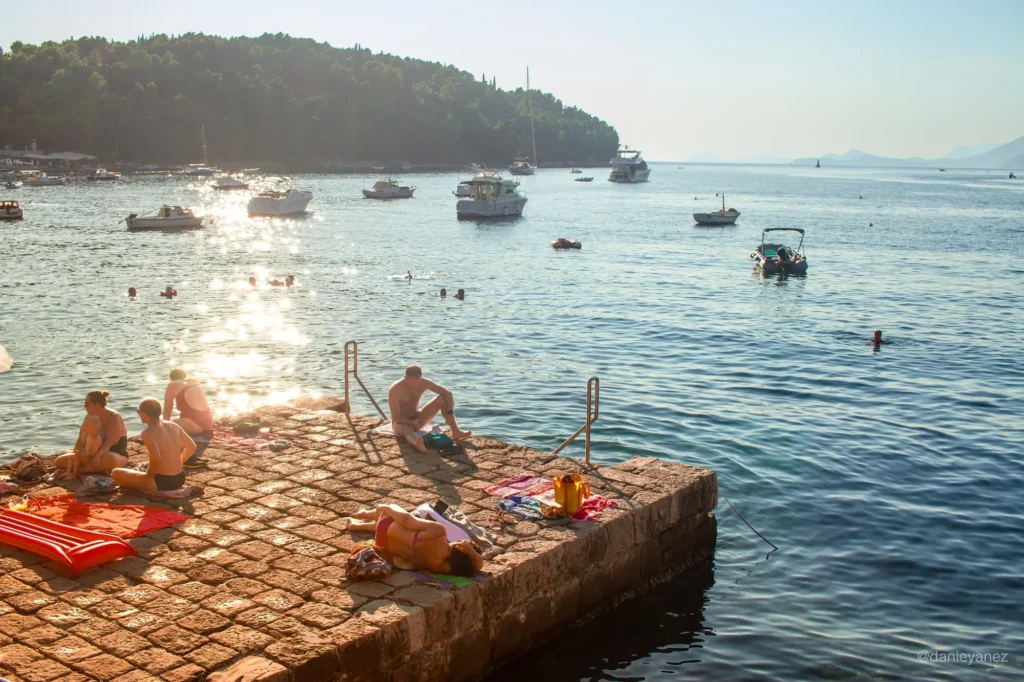
If you removed the people from that photo it would be boring. And that’s the opposite of the idea of the cathedral at six in the morning. In one you get up early to avoid everybody, in the other the people are the ones holding the image up, it literally exists because they’re there.
Next time you’re about to shoot, ask yourself: Am I taking this photo because I saw something I liked, or because I already know what a photo of this place is supposed to look like?
Learning to disappear
I’ve figured out that I have a skill not too many people really talk about in photography, and it has changed the way I take my travel photos. The trick is basically becoming invisible. I don’t mean hiding or shooting from behind bushes lol, I mean that my presence with a camera in my hand feels normal to others.
When you show up somewhere with a camera people register it immediately. They shift their posture, they lower their voices, they get stiffer, or they smile even though they’re not looking directly at you. In that moment people stop behaving naturally, and what I want to photograph is someone behaving like nobody’s watching. So the job here is literally to stop mattering.
I think the ability to disappear into a crowd, or to become part of the furniture of a room, is something I picked up working in a photo studio and later in film production. On a set the job is basically to be present without being the focus. Don’t cross the frame, don’t make noise, move along the edges without your presence weighing on anyone.
And when you spend years watching how a fictional image gets built, with the light placed and the frame carefully thought out, you start seeing scenes everywhere. You picture a scene before it happens, or you develop a sharper sense of where the light and shadows are falling.
You know that if the kid turns around it would be an incredible frame, so you wait to see if he does. Sometimes it happens, sometimes it doesn’t. What I like about this next image is that it’s half of what I’m describing, because almost nobody is looking at the camera, and half the opposite, because the one who makes the photo work is the kid who did turn. The art is in the contradictions, I guess.
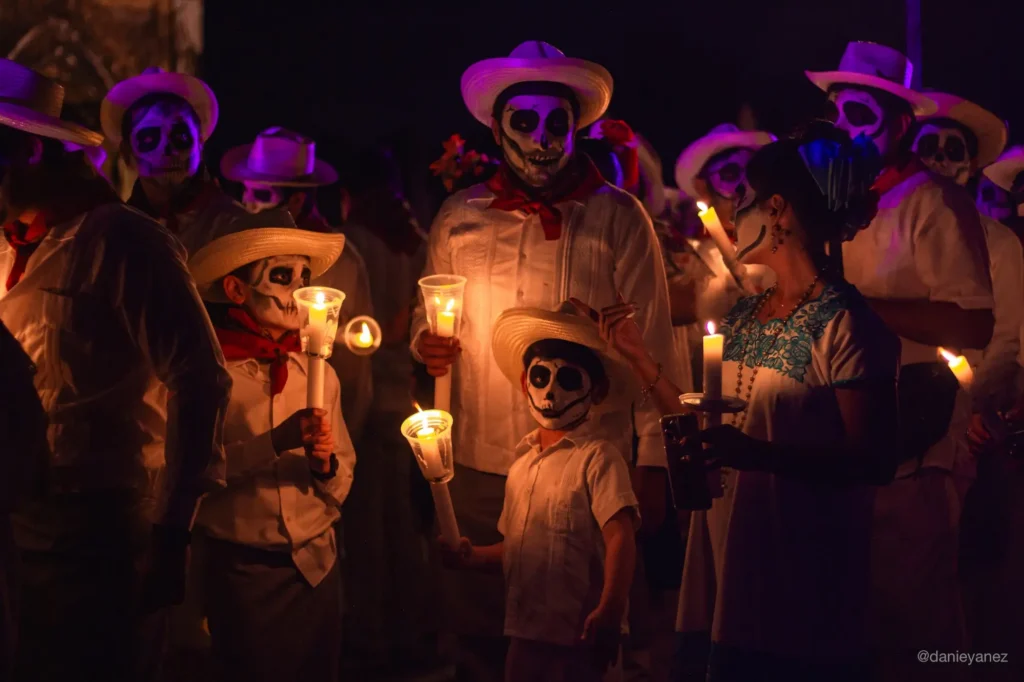
What this looks like in practice
The trick is slipping through without embarrassment, but with a lot of respect. What I literally do is get in among people, smile a sorry-about-this smile and keep going, lose myself for a while, let everyone get used to me being around, smile humbly if someone gives me a look, and then come out wherever is most convenient to take the shot I came for.
When I arrive I don’t raise the camera in the first second. I walk, I stay, I let time pass, sometimes I shoot the surroundings, and by the time I finally point it at what I actually came for, I’m not quite the tourist who just showed up anymore. I’m someone who’s been around a while. You can build a kind of familiarity in just a few minutes of standing there.
It surprises me that when I slip into events (processions, marches, festivals) I very often end up at the very front, first or second row. All I do is move forward little by little while everyone else is settling in, I don’t push or rush. I just keep going until I have the open space I need. I never run into an annoyed face. The opposite, actually.
Among the people
Holy Week, San Pedro La Laguna, the fruit procession.
Picture a sunny morning where a crowd moves through the streets of a town on the shore of Lake Atitlán to hear mass in Tz’utujil, drink atole, and then head out on the traditional fruit procession.
Mass happened in an alley with a tarp strung overhead. Under its shade, dozens of plastic chairs and little stools filled up with local people in traditional clothes. Whoever got there first got a chair, and the rest of us stayed at the back, some sitting on the curb around the edges.
I walked over with everyone thinking the procession would start soon. Little by little I realized the mass was going to take much longer than I’d planned for. I did consider leaving, telling myself I’d basically seen it, but I decided to wait the whole thing out standing in the shade of a light pole.
When it ended and the women came back to line up for the procession, I was already there with my camera, watching.
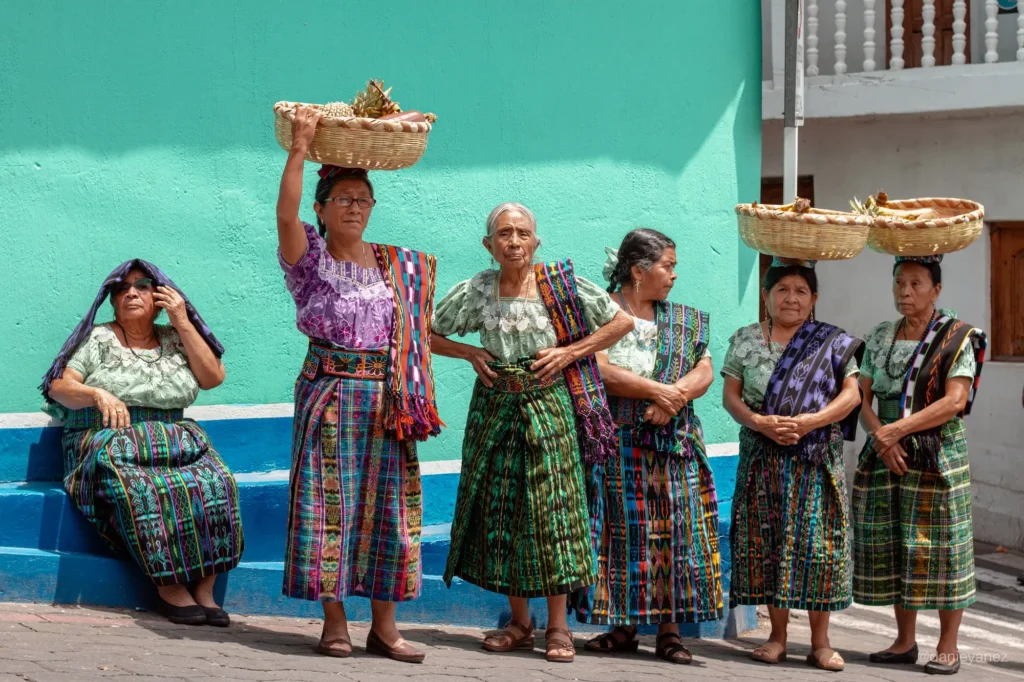
Before it started, some of them lined up with their fruit baskets on their heads, which kept their hands free and doubled as shade. The photo is of six women in front of a turquoise house, dressed in mint and lilac with lace, some with a woven band wrapped around their head to hold the palm basket steady.
On photographing people on the street
This is a big topic and I’m planning a whole article on it, because I don’t have the room here to do it justice. But I want to be clear about one thing.
Photographing people is a privilege. It’s given to you, and it can be taken away.
It’s happened plenty of times that I raise the camera and someone signals no. Sometimes with a hand, sometimes with a look, sometimes just by turning around. And that’s it, I lower the camera and keep walking. I don’t insist, I don’t circle around to get it from further away, and I definitely don’t pretend I didn’t understand.
Losing that photo costs me nothing, and taking it against someone’s will is not okay.
The invisibility I’ve spent this whole section describing is for not interrupting, never for stealing. The difference between those two things is enormous, especially when you’re photographing somewhere you’re the foreigner and the camera already carries meaning of who gets to portray whom.
My travel photography routine in a new place
Let me tell you what I actually do when I arrive somewhere, with the warning that this sounds like anything but a photography method. It’s the logistics of someone who’s going to stay a few months and needs to sort out her life. The thing is that inside the chaos of living on the road, I make sure photography ends up in the routine somehow.
The first day
I arrive, I check in, and if it’s still a decent hour I go out to eat.
That first walk is one of the things I love most about traveling. It’s the first time you set foot in a completely unknown place and everything is still to be discovered, even the most suple stuff. Where the supermarket is, whether there’s a produce shop nearby, where the pharmacy is, where the aesthetic cafés are, whether anything on this block is open after ten…
I know that sounds boring, but for me it’s one of the best parts of the whole trip, and I think anyone who enjoys wandering into a foreign supermarket will get it immediately. If I’m not completely wrecked from the long flight, I’ll pick a restaurant that forces me to cross the touristy part of town. That way I eat and go on my first little adventure at the same time. I almost never bring the camera on this first encounter.
The truth is I arrive somewhere in such a rush that I prioritize settling in, and the camera stays packed for the first few days. Sometimes I regret it, there are countless photos I’ve lost that way, but what I do get from walking around without it is that I’m observing without the pressure to produce. I’m appreciating a place instead of hunting it. You could also call it scouting.
It happens all the time that I’m walking somewhere to buy something and I see someone selling things on a corner with beautiful light on them, or I stumble into a street that’s absolutely full of life, and I don’t have the camera. I still make the mental note right there. When I come back with the camera, I have to come through here.
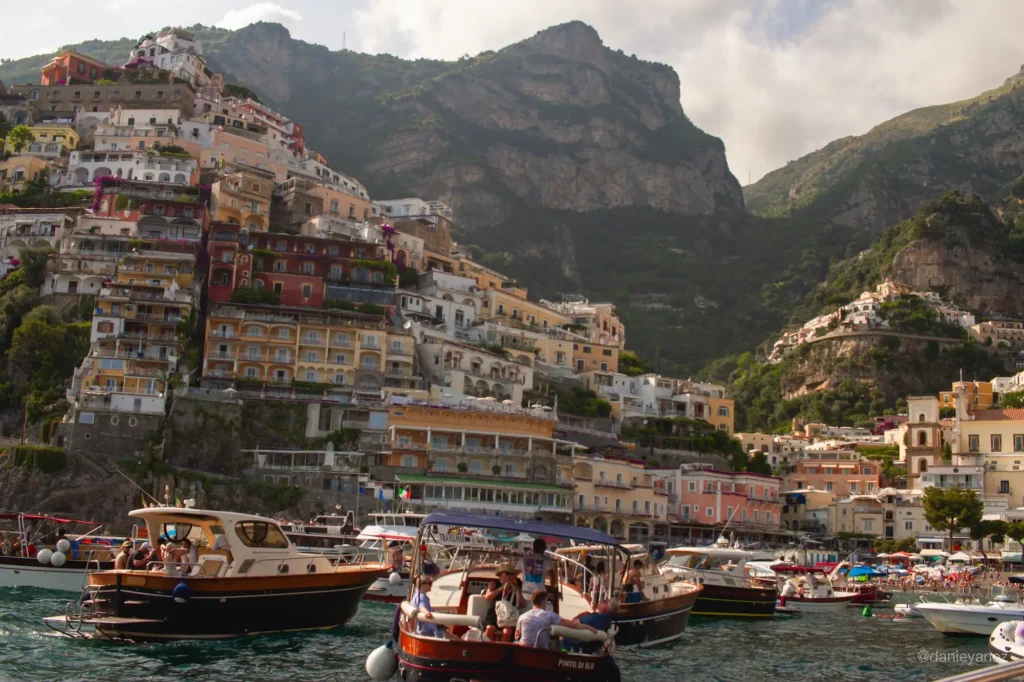
Errands are the best excuse there is
The days after that I get busy sorting out my life, and that’s where I really get to know a place. I look for a gym. I look for where they sell tofu, which depending on the country can be a multi-day quest. I look for cafés where you can work without getting kicked out after two hours.
Every one of those is a walk with a real destination. I’m not strolling, I’m going somewhere specific, and that’s why I cross parts of town no itinerary would ever include. The neighborhoods where local people actually live, not the gentrified streets that are just filled with Airbnbs. The in-between streets. The places that don’t make any list because there’s nothing to see there, aside from all the real life.
Walking to a café is one of my favorite activities on earth and it’s exactly where I see and re-see wherever I am. Same street for the tenth time, and there’s always something I hadn’t noticed.
If you’re only somewhere for a few days you can fake this perfectly, by giving yourself an errand. Buy your water at a different shop every day. Walk to find breakfast instead of eating at the hotel or go get something you genuinely need, even sunscreen, and walk there. The difference between strolling and running an errand is that the errand takes you to real places and gives your hands something to do while you look around.
When I do bring my camera out
I don’t have a rule for this. Sometimes I bring it on the very first walks. Other times I get familiar first and pull it out later, especially if I’m heading to a café to work, because carrying the laptop and the camera at the same time is not good for my back pain and my paranoia.
When I do go out with it, I try not to bring anything else. No errands, nowhere to be, I go walking with no destination, camera around my neck, to see what I find. That walk is sacred and it’s the one that produces most of my favorite photos. It isn’t one more activity in the day, it’s THE activity of the day.
The other half of this is returning when something catches my attention and the light isn’t there, or the scene doesn’t quite come together. I make a mental note of the spot and return later. People assume this part requires months and it doesn’t. If you saw an incredible wall at nine in the morning and you have three days in the city, you have six more chances to walk past it. Most people don’t go back, and it’s almost never about time. It’s that returning doesn’t feel like progress, it feels like repeating yourself. For you an me, returning is exactly the point.
And yes, you can take good photos on a tour
I’m clarifying this because I’ve spent half an article talking about wandering with no plan and I don’t want it to sound like everything has to be done independently for it to count.
One of my favorite photos from Vietnam I took in Tam Coc, on a boat trip, surrounded by tourists, following the exact route hundreds of people do every day. It’s a woman selling flowers while rowing with her feet.

Rowing with your feet is very particular to that area and plenty of people go specifically to see it. But what makes that photo work for me is that I’m looking at the person instead of the landscape. If you google Tam Coc you’ll find a hundred thousand photos of the scenery. The landscape is right there and it isn’t going anywhere, and the other eighty boats are going to photograph it exactly the same way.
The photos that got away
I’ve lost a lot of photos by not having the camera on me, and it’s almost always for the same reason. I’m late somewhere or I just got to town and I don’t want to lug it around yet (as I said before it weighs a ton). Or I simply don’t have it because I went out to do something that had nothing to do with photography.
They’re never spectacular scenes, which as you’ve probably noticed by now is exactly what I love to photograph.
The inside of a laundromat with stuffed animals hanging from a line and a moody light. A woman cutting up a papaya on the ground in the middle of the street. A guy sitting on a bench with three dogs around him and a green and red parrot on his shoulder, chatting with a lady like its the most normal thing in the world.
My favorite scenes are just daily life happening, which is why it stings to lose them. When it happens I do one of two things. If I really can’t stop, I stay a few extra seconds looking, even if I’m late, just to keep it in my memory. And if I can, I go full tourist mode and pull out my phone 😬.
My phone has saved me plenty of times
Taking a photo with your phone doesn’t have to be a consolation prize. I have phone photos I love and they’re fine exactly as they are.
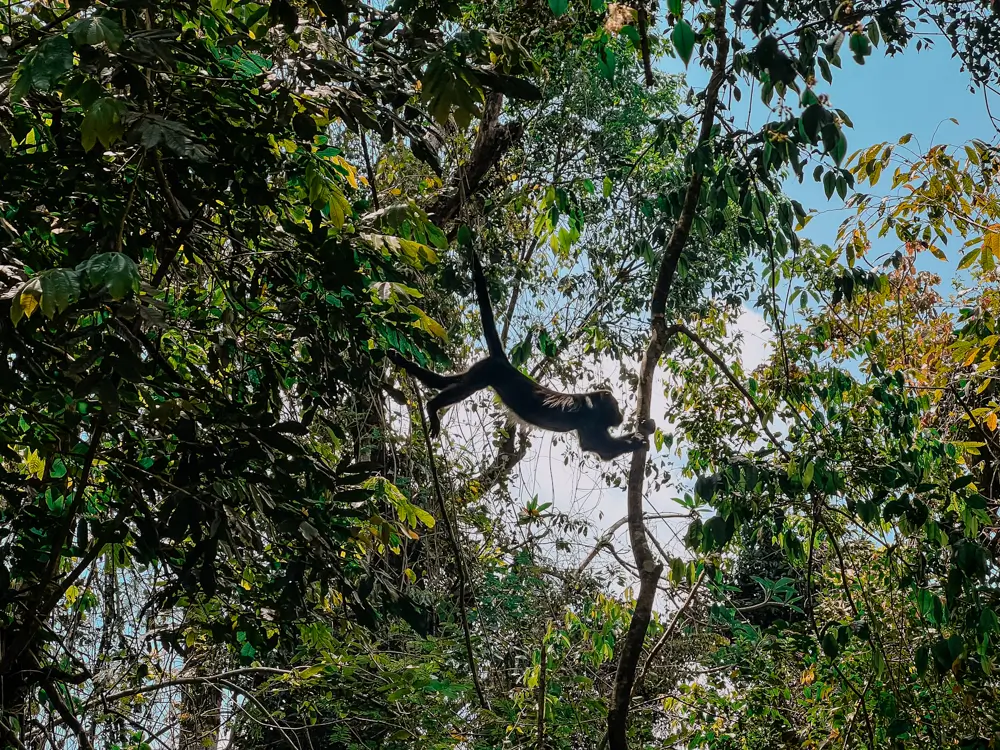
One I like a lot I took in Semuc Champey, Guatemala. We were walking through the jungle, I was melting in the humidity, and someone pointed up. There was a howler monkey hanging horizontally between two branches, back feet gripping one and front hands gripping the other, stretched out like a bridge. Completely relaxed.
I’m not going to tell you to always carry your camera, because I don’t, and it would be a pretty hypocritical thing to recommend. When I don’t have it, I shoot with my phone and I don’t feel bad about it.
Now, go somewhere and wait twenty minutes
It’s been about twelve years since that afternoon in the square in San Miguel de Allende and I’m still doing exactly the same thing, just all over the world now. The country changed, I changed, the way I travel changed, the way I see the world changed, but the gesture is the same. Sit down. Wait. See what happens.
Like I said, travel photography doesn’t depend on your camera or on how many countries you’ve been to. It depends on whether you’re willing to stay twenty minutes longer.
One day the habit sticks and you can’t switch it off. Now I see scenes everywhere, even without a camera. It turns out that learning to shoot this way was never just a technique for improving my art, it became a way of existing in the world that got in through my lens and stayed.
I hope the next place you land makes you sit down on the hot ground and wait for a kid to run.
Find me on Instagram. And if you have questions about travel photography, or want to tell me about a photo that got away from you, write to me over there.