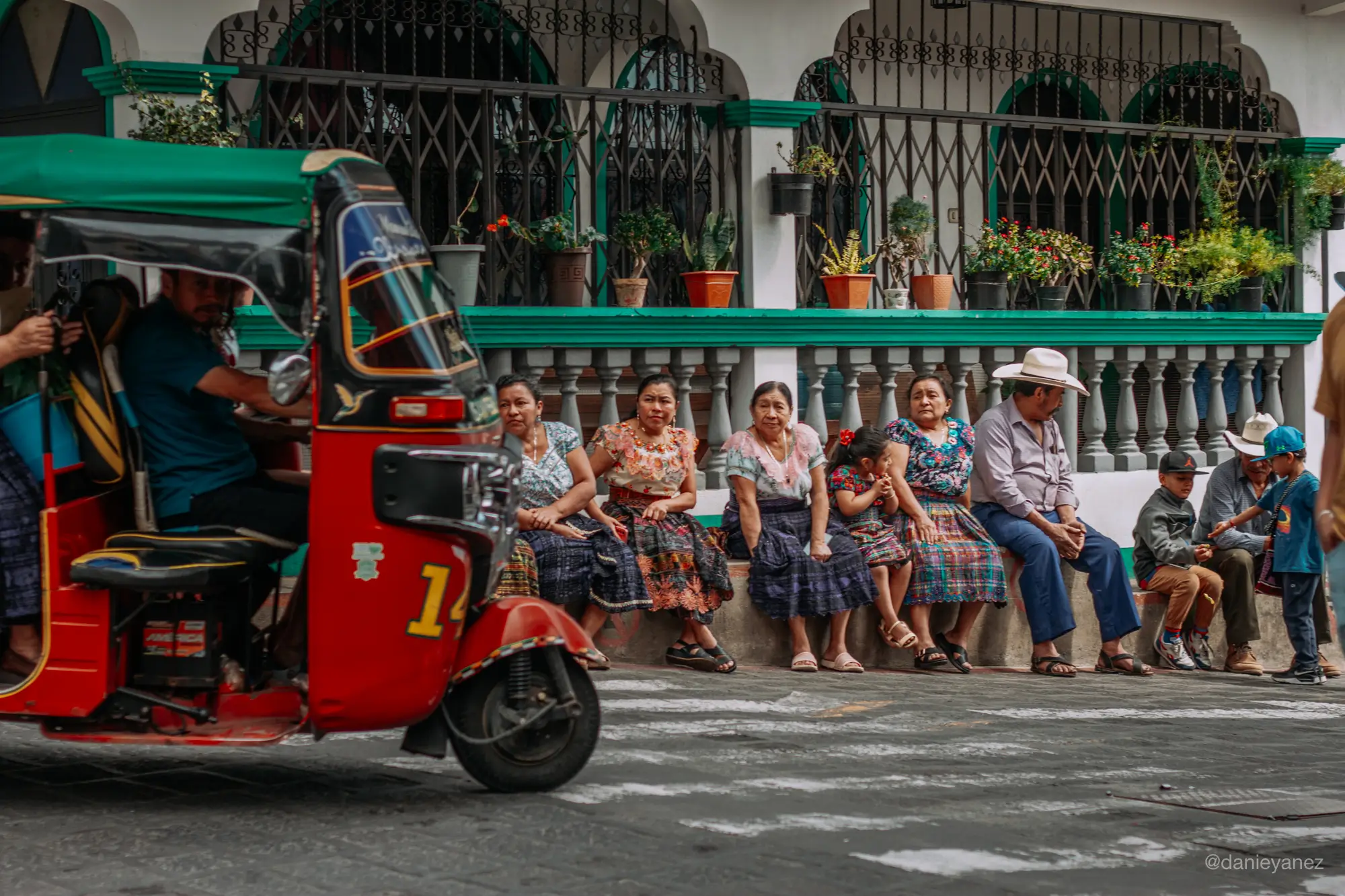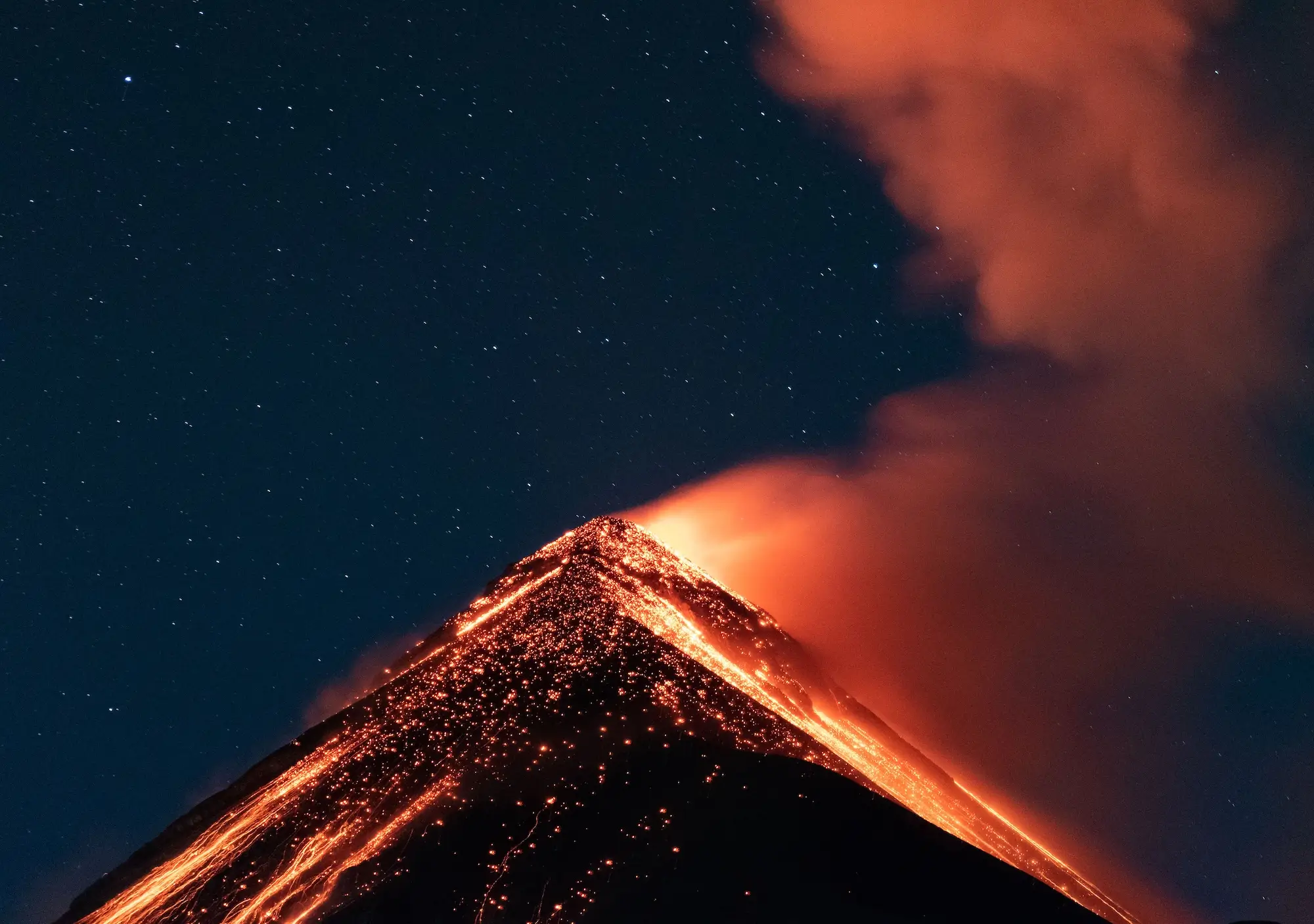
I left San Pedro La Laguna on Lake Atitlán first thing in the morning, and by the time I got to my hotel the entire day was gone. A boat to Panajachel, an endless shuttle to Lanquín, then one more ride from Lanquín to the hotel.
All of it to go see a river.
Hi! I’m Danitza. I’m Mexican, a writer, traveler and photographer, and I’ve spent the last four-plus years moving around the world as a digital nomad. Welcome to my blog!
Here you’ll find practical info about the places I’ve been to, what they actually feel like once you’re standing in them, and texts about my ongoing search for some balance between my life and travel
Most people stay near Semuc Champey for a night or two, do the standard tour and move on. We (my bf and I) stayed five days, working from Utopía in Lanquín, with one of the best “office” views I’ve had in my years of doing this.
So with my newly acquired level of expertise about Semuc Champey, let me walk you through all of it.
What it actually is and why it’s so geologically interesting, how to get there without losing your mind, where to stay, what it costs, whether the tour is worth it, and whether you can really work from out there.
Ready or not, here we go!
What is Semuc Champey?
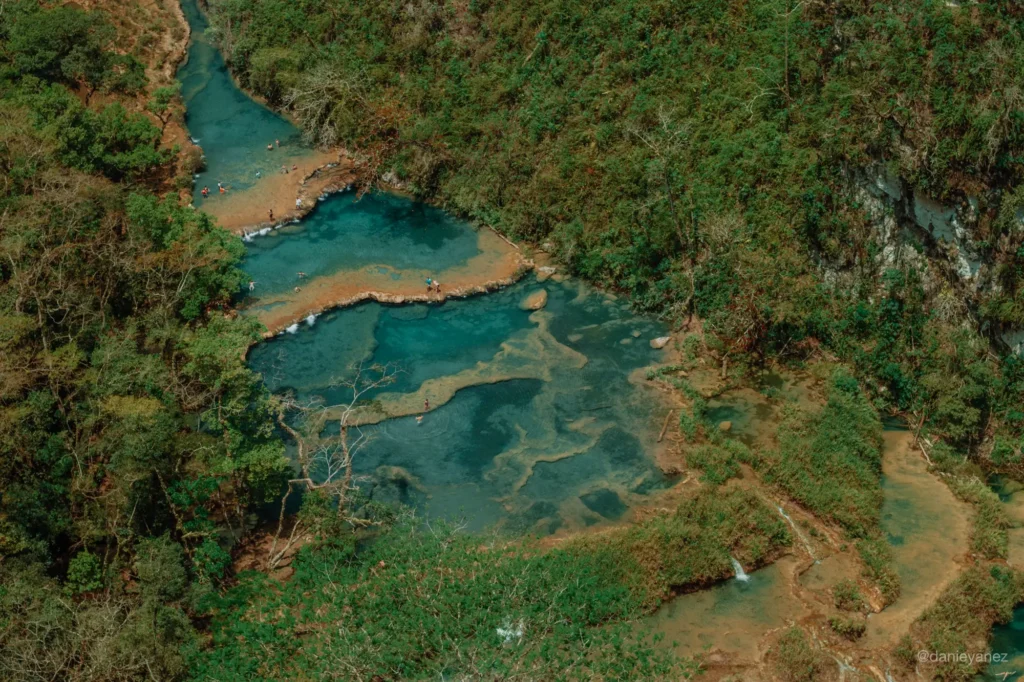
Semuc Champey is a natural monument in the municipality of Lanquín, in the department of Alta Verapaz, deep in the Guatemalan jungle. It’s part of the Guatemalan System of Protected Areas, and it’s one of those places where you see the photos and assume somebody went heavy on the editing (to be honest they may have but it’s still just as pretty when you see it).
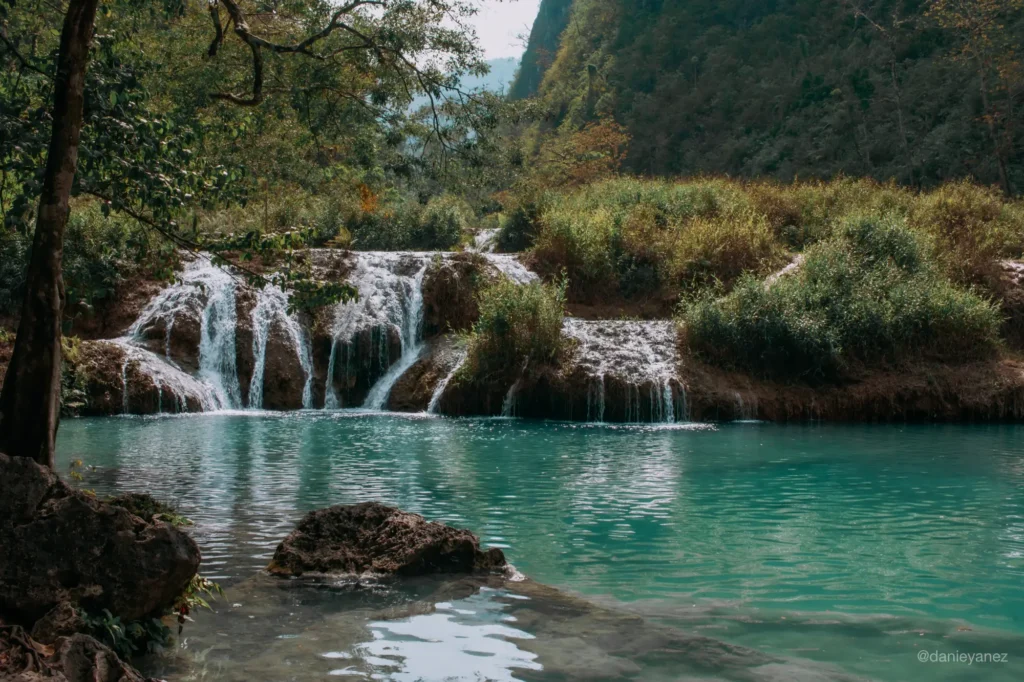
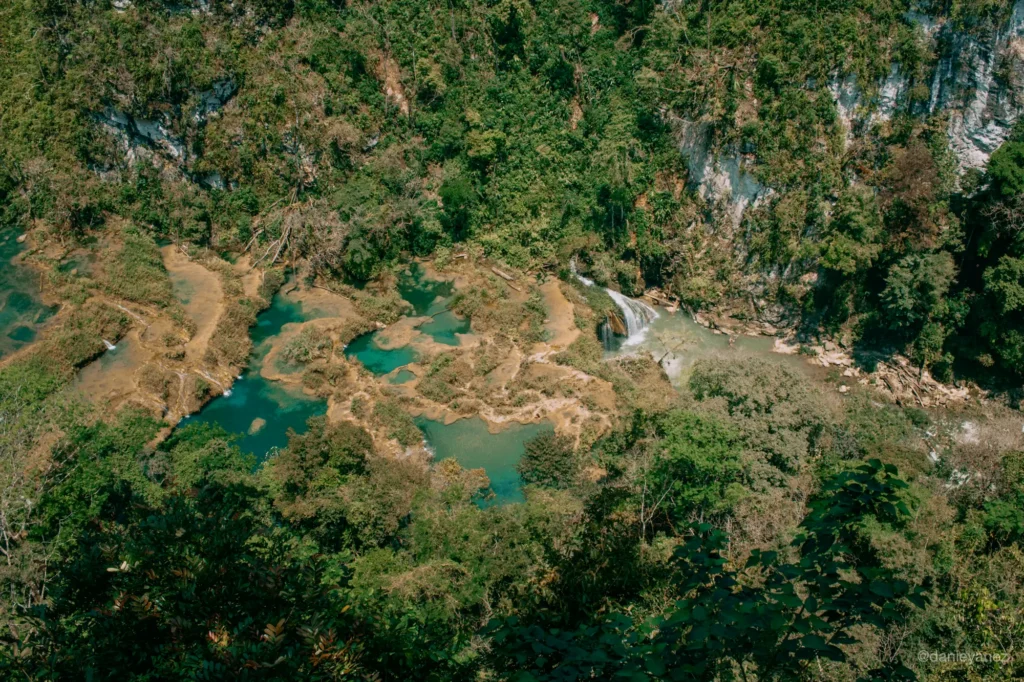
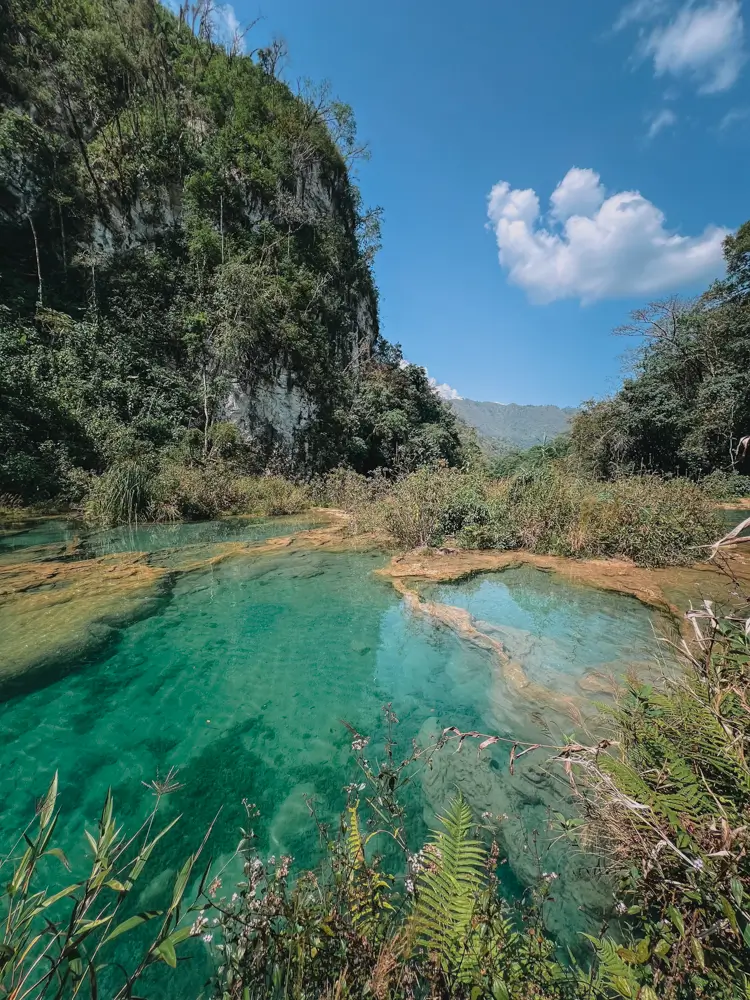
What you’re looking at is a staircase of turquoise pools, stacked one after another across about 300 meters, with jungle closing in on every side. The color shifts with the light, the season and the mineral content, so it swings anywhere from jade green to bright turquoise depending on the day, sometimes even the hour.
The genuinely cool part of Semuc happens underneath.
The hidden river and how Semuc Champey formed
The name comes from q’eqchi’, the Mayan language of this region, and it usually gets translated as “where the river hides beneath the earth.”
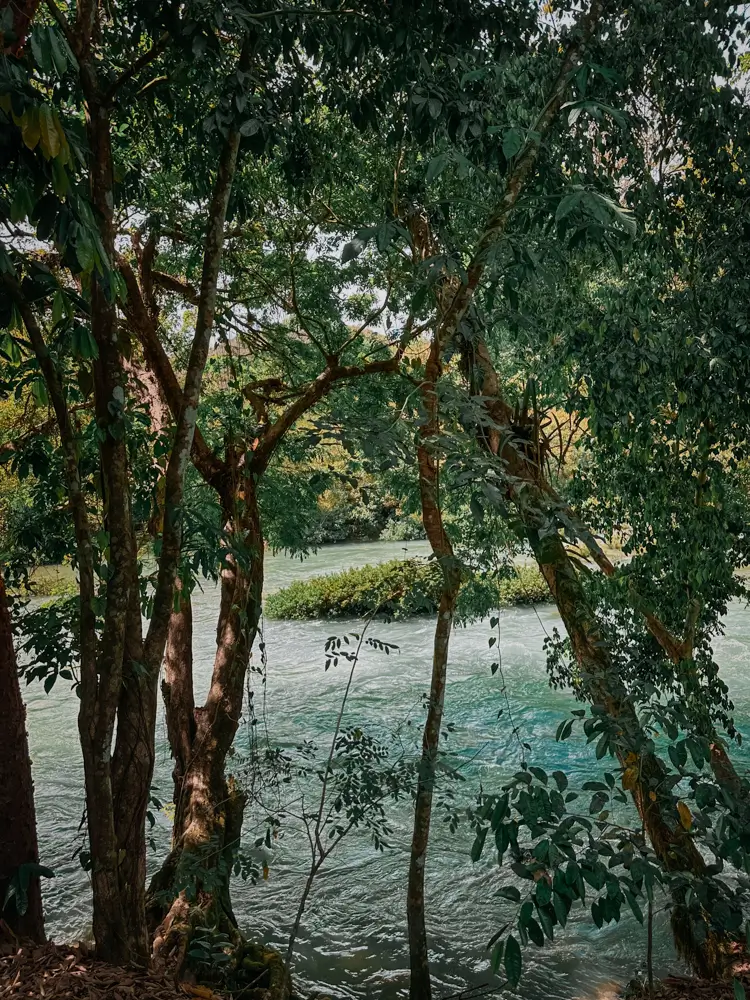
This whole area sits on a karst system or limestone, a rock that water slowly dissolves over thousands of years. That process carves out caves, sinkholes, underground tunnels and, in rare cases, natural bridges. Which is what happened here. Limestone blocks collapsed over the canyon of the Cahabón river and formed a bridge across it, and the river, instead of continuing along the surface, went under.
So the Cahabón, a real river with real force behind it, vanishes underground for several hundred meters and comes back out the other side. The spot where it goes under is called a sinkhole, and the water roars into the mouth of the cave and then it’s just gone.
Meanwhile, up on top of that bridge, water running down from mountain springs, filtered through the jungle and loaded with minerals, has been carving the limestone for centuries into this run of stepped pools. Two completely separate bodies of water. The angry, murky river below, and these calm, clear pools right above it where everyone swims. At the end of the run, the pool water drops back into the river as a waterfall about 40 meters high.
This isn’t just a tourist destination
Worth holding onto something before you arrive. This is a q’eqchi’ Maya region, and Semuc Champey was never anybody’s “discovery.” Local communities have been swimming here, fishing here and living around this water for generations, long before the word backpacker meant anything to anyone.
These days the conservation work and a good chunk of the local tourism economy are held up by the surrounding q’eqchi’ communities, who work as guides, run the comedores and the lodges, and manage the park.
I mention it because it’s easy to roll into Semuc in postcard mode, take the photo, and never register that you’re standing on somebody else’s land. Buy local, hire local guides, and pack your trash back out ✨
How to get to Semuc Champey
The hard part is that getting to Semuc Champey is a commitment. There’s no fast option and no shortcut, and it doesn’t matter where you’re coming from, it’s going to eat a full day of travel. The reference town is Lanquín, about 11 km from the reserve, and basically all transport routes through it.
From Lake Atitlán (my route)
I was coming from San Pedro La Laguna, where I’d spent a month (I wrote everything about San Pedro here), and the route went like this.
- Boat from San Pedro to Panajachel, about 40 minutes across the lake.
- Shuttle from Panajachel to Lanquín, the long brutal stretch of the day, with a few stops along the way for bathrooms and food.
- Transport from Lanquín to the hotel, which in our case came included with the booking.
Nearly twelve hours door to door. Brace yourself and don’t plan anything else for that day.
From Antigua or Guatemala City
There are tourist shuttles running direct to Lanquín, and the ride takes somewhere between 7 and 9 hours depending on traffic and road conditions. It’s doable, but I wouldn’t try to see Semuc and come back the same day. If you’re going to Semuc, connect it to wherever you’re headed next.
From Flores or Tikal
Coming from Petén, or heading there like we were, the shuttle between Flores and Lanquín runs about 7 to 9 hours. It’s a very common combination on the backpacker route because it strings Atitlán, Semuc and Tikal into one line.
From Lanquín to your hotel
The shuttle drops you at the Lanquín station, and you’ll see a bunch of hotels and hostels waiting there for their guests with their own vehicles. Utopía was already waiting for us, since we’d arranged it ahead of time, and the transfer came with the booking. About 15 minutes in a van.
So if you’re staying near Semuc rather than in Lanquín town itself, sort the transport out with your accommodation before you arrive. You do not want to be figuring that out after dark, on a dirt road, possibly with no phone signal.
Where to stay near Semuc Champey
🏨 Find places to stay near Semuc Champey 🎟️ Tours and experiences in Semuc Champey
You’ve got two options, and the choice shapes your trip more than you’d think.
Staying in Lanquín gets you an actual town, with more food options, shops, patchy phone signal and easier transport.
Staying near the park, where places like Utopía, Greengos and El Portal are, puts you minutes from the pools and deep in the jungle, with one consequence. You eat whatever your hotel is serving, end of story. No restaurants nearby, no corner shops. And phone signal is essentially nonexistent.
My stay at Utopía
First things first, this is NOT a paid recommendation. I’m literally just writing about my stay and I have no relationship with the hotel.
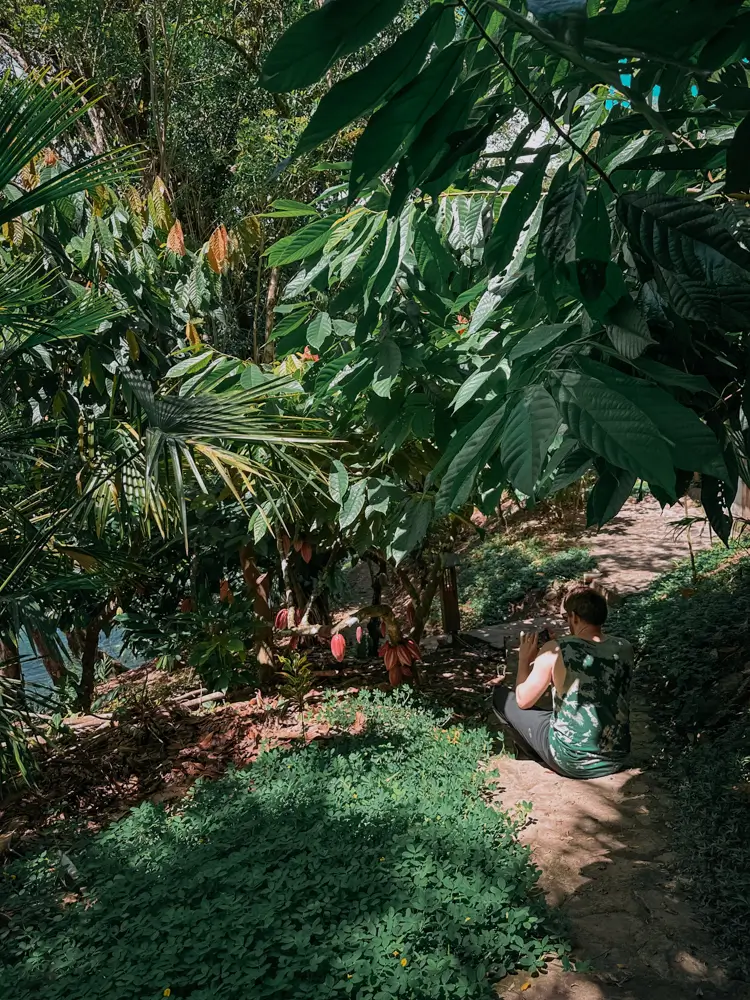
We spent five days at Utopía, an eco hotel tucked into the jungle right on the bank of the Cahabón, and it ended up being one of my favorite calls of the whole Guatemala trip. It sits about 3 km from the park and has roughly 220 meters of river frontage, so you can go get in the water whenever you feel like it. Watch the current though. If it’s rained recently it can be seriously strong.
The food
The food is vegetarian with vegan options, which for me was an enormous luxury. After weeks of negotiating my way through every single menu, landing somewhere the whole thing is already plant-based and I don’t have to ask three times whether the broth has chicken in it felt like a vacation inside the vacation.
The way meals work is a bit different from other hotels. Lunch and dinner are family style, meaning everyone eats the same thing and you have to sign up before a certain hour because they cook exactly for whoever’s on the list.
Sounds rigid but something nice happens in exchange. The menu changes every night and dinner ends up pulling the whole hotel together. We made friends at those dinners who we ran into again later on our trip to Flores (writing about that one soon).
Breakfast works differently, with a regular menu you order from within the time window, no sign-up needed. The vegan breakfast options struck me as pretty basic, and since I’m not into mush-style oatmeal, I mostly ended up with a fruit smoothie and a bagel with hummus. Which is totally fine for a few days. Lunches and dinners were much better and usually came with some protein, sometimes soy patties or a lentil dish.
A tip I apply on every trip is to travel with protein powder and it saves me in exactly these situations, where the options are thin. If you’re like me, get it before you reach Lanquín. Guatemala City or Antigua, no problem. If you’re curious what else I carry as a digital nomad, it’s all here.
The setting (the real reason to stay)
I worked five days with the river below me and jungle in front of me, and I don’t think I’ve had an office like that since.
Utopía is also an organic cacao farm, so you’re surrounded by cacao plants. You can walk among them, and they run a paid activity where they explain how it’s grown, the history of cacao in the region and how chocolate gets made from the pod. Given that cacao is native to Mesoamerica and was sacred to the Mayan, doing it here must be lovely. I skipped it because I’d come from Costa Rica and had just done one there.
There are also hammocks and hanging chairs in the common areas, free yoga classes and trails through the cacao farm.
The ceiba
And then there’s the tree. From the terrace you can see an enormous ceiba that completely steals the landscape. What I love is that it comes with more than branches. The ceiba has a history that’s always fascinated me, starting with the fact that it’s the national tree of Guatemala.
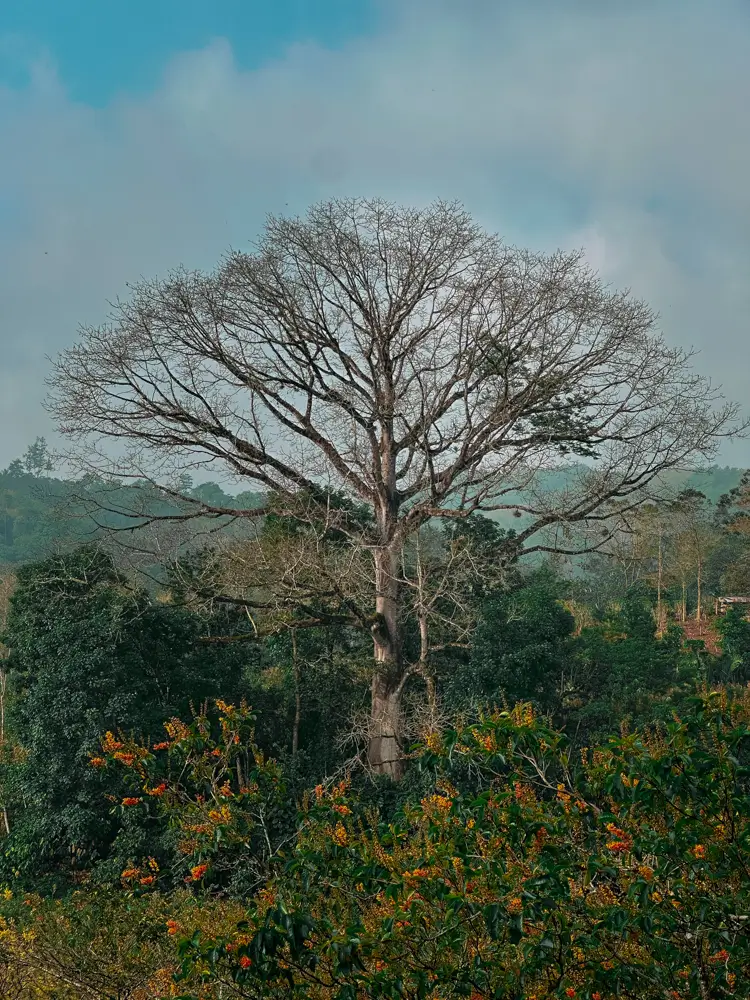
To the Mayans it was far more than a big tree, and I say that as someone lucky enough to grow up in the Maya region of Mexico, where this is something you learn about in school.
They called it Yaxché, and they believed it held up the entire universe. Its branches, reaching toward the four cardinal directions, held up the sky. The trunk stood for life here on earth. And the roots reached all the way down into Xibalbá, the underworld.
The decree that made it Guatemala’s national tree acknowledges that Indigenous peoples had been holding their ceremonies beneath its canopy since pre-Columbian times, and in many parts of the country it’s still forbidden to cut one down.
You’re in a place whose name means “where the river hides beneath the earth,” watching a river physically disappear into the ground, looking at the tree the Maya understood as the bridge to that world below. Everything about Semuc points downward, and that ceiba is the same idea in tree form.
What to know before you book there
Staying at Utopía means disconnecting from the world to a real degree. You’re far from everything, the connection is limited, and if you get a craving for something other than what’s on the menu, there’s nowhere to go.
That said, you’re not trapped. You can go into Lanquín, and reception will arrange a tuk-tuk for you. The only thing is that it isn’t instant, so if you need to head out, ask ahead of time rather than when you’re already running late.
Semuc Champey for digital nomads, can you actually work from there?
If you’re backpacking, twelve hours on the road isn’t a hard decision, it’s just part of the adventure and that’s that. As a digital nomad, the math running through your head is completely different. Yes you travel and you explore incredible places, sure, but the truth is most of your time goes to working, and dropping into an area with sketchy internet and no phone signal for several days stops being a fun anecdote and becomes a scheduling problem. Semuc Champey was a genuine conversation before we committed.
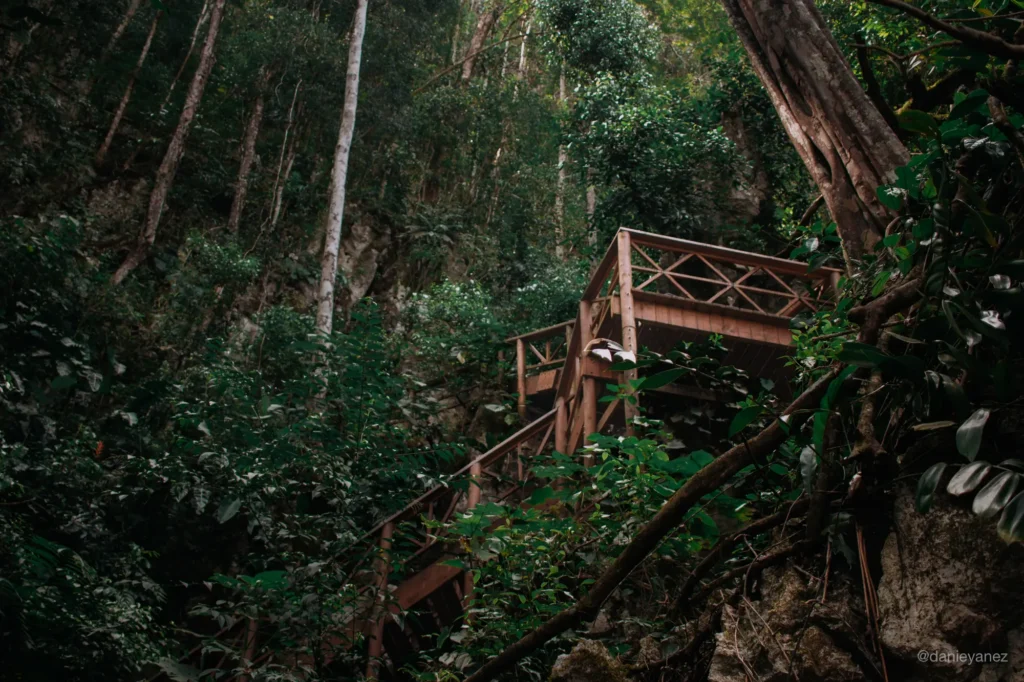
Most people stay a night or two, do the standard tour and move on. We stayed five days working from Utopía, with one of the best office views I’ve had in four years of nomading, and that’s how we clawed back some of the time the journey ate.
So short answer, yes you can work from here, and that’s what we did for five days. But it’s worth understanding what you’re walking into.
Internet and phone signal
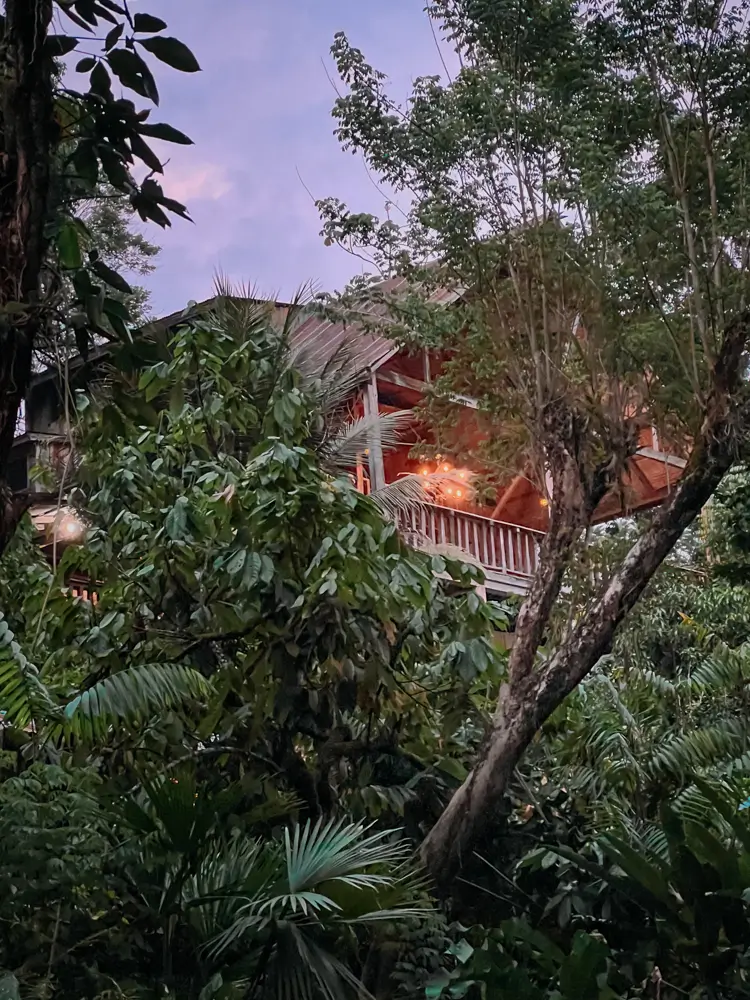
Around the park and its surroundings, phone signal is either very limited or flat out nonexistent. I had a Claro SIM and it simply didn’t work, so for five days we ran entirely on hotel wifi. You might have better luck with Tigo, which generally holds up better in rural Guatemala, but I can’t confirm that from experience.
That sets up a single point of failure worth being clear about. If the power had gone out, taking the wifi with it, we’d have had no way to get online at all, since there was no mobile data to fall back on. We got lucky and it never happened, but the backup plan would have been heading into Lanquín to hunt for signal.
How we handled it
We do web design and development, and we worked online the entire time we were there. Nothing had to be offline. What made it work is that we have flexible hours, so we just didn’t schedule a single call during those days. If the internet dropped for a while, nothing was riding on it.
One small thing that always saves me is bringing my power strip. Outlets are scarce, and with the strip I could work from the terrace and the dining area, which is where the view is, instead of parking myself wherever the one plug happened to be.
My summary for nomads. Semuc works well if you have flexible hours and your work can survive slow or patchy internet. Download whatever you’ll need ahead of time, don’t schedule anything important, and show up mentally prepared for the connection to drop at any moment. In my case it never did and I got through everything I needed to, so let’s not oversell it as some forced digital detox either.
Tour or go on your own?
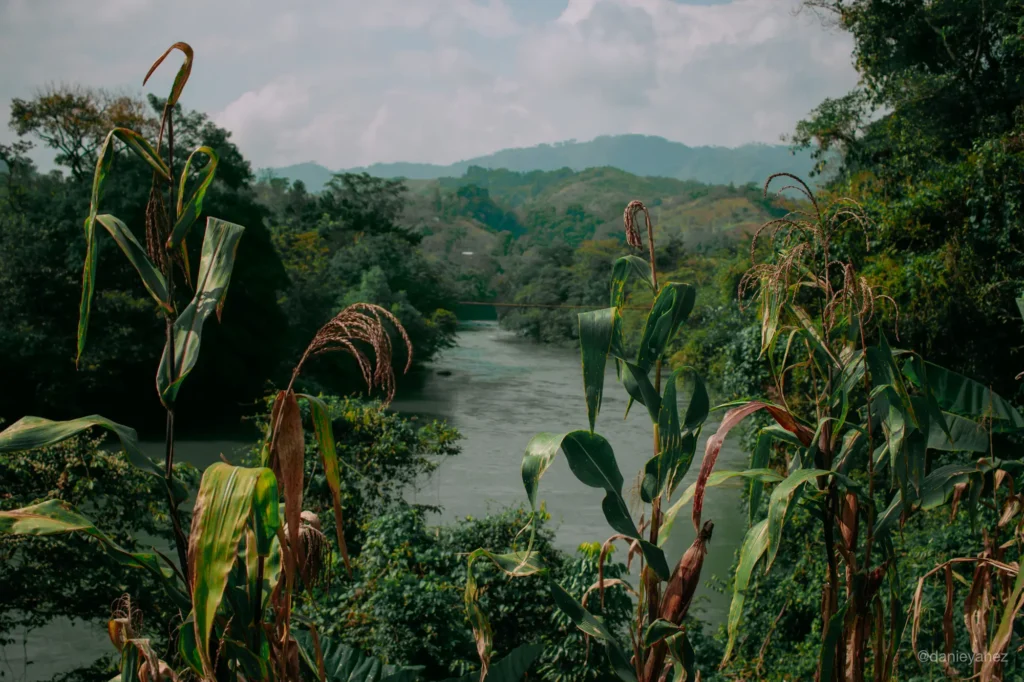
Almost everyone visits Semuc Champey on a tour, and it makes sense. Tours handle the transport, come with a guide, and pack several activities into one day, which is exactly what you need if you’re here for a night or two and want to squeeze the time.
What the standard tour includes
The standard tour runs around Q200 (like $25 USD) and lasts about seven hours. It usually covers transport, a guide, the K’anba caves by candlelight, tubing on the Cahabón, the hike up to the viewpoint and free time in the pools. You book it through your accommodation or in Lanquín.
Why we went on our own
Two reasons. First, we had five days and nowhere to be, so we didn’t need anyone organizing our schedule. Second, and this was the decider, I don’t like caves, and the K’anba caves are basically the heart of the tour. Take that out and what’s left is transport and company, both of which we could handle ourselves.
Going independently has real upsides. You show up when you want, stay as long as you want, nobody rushes you out of the pools, and you don’t pay for activities you don’t care about. The downside is that transport is on you, and if you do want the caves, you’ll need a guide anyway.
So here’s how I’d put it. If the caves appeal to you, take the tour. If they don’t, go on your own and go early.
Walking to Semuc (and the tuk-tuk that saved us)
Semuc is about 3 km from Utopía to the park, which sounds like nothing. We said “let’s walk” with total confidence.
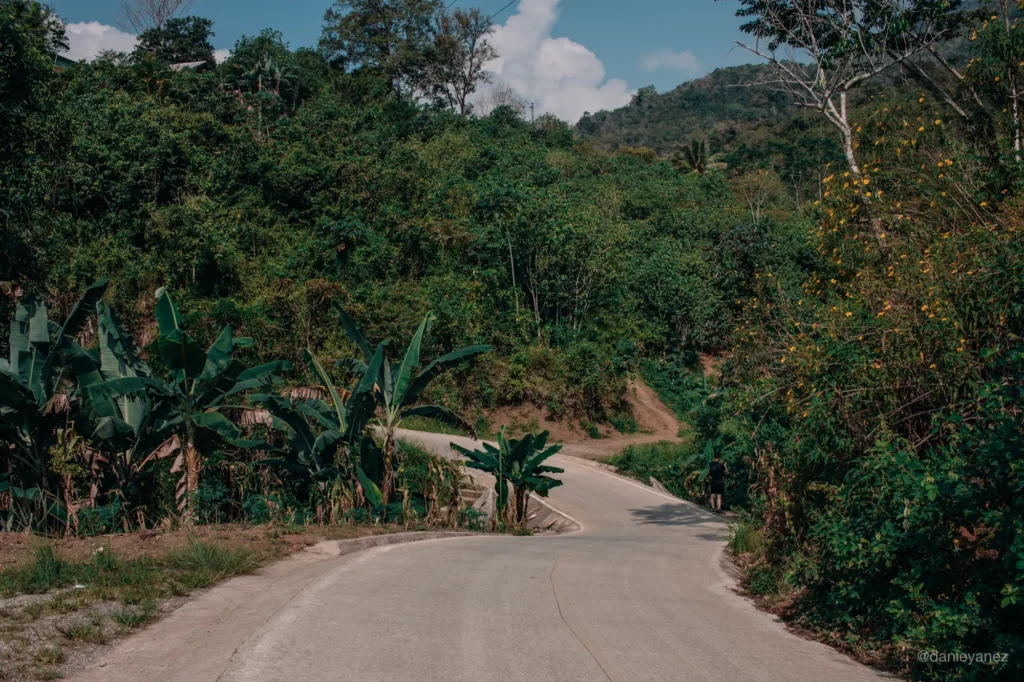
The first stretch is lovely, following the river with plenty of shade. The trouble starts when you hit the road, where there isn’t a single tree and the humid heat lands on you with no mercy. Half an hour in we were overheating and reconsidering our life choices.
Then a tuk-tuk appeared. I don’t think there are many along that road, so it was pure luck that one came by and pulled over to offer us a ride while we were melting in the sun. We climbed in, and the second we saw how much further we still had to go, we celebrated the decision. We hadn’t even made it halfway.
From Utopía a tuk-tuk runs around Q50 ($7 USD). From where we flagged ours, halfway down the road, it was Q15 ($2 USD). Though if you try that, you’re gambling on one showing up at all, and you might end up having to walk the rest of the road.
What to do at Semuc Champey
Hike to the viewpoint (do this first)
If you’re asking how to structure your day, my answer is start at the top. We hiked up to the viewpoint before getting in the water and it worked perfectly.
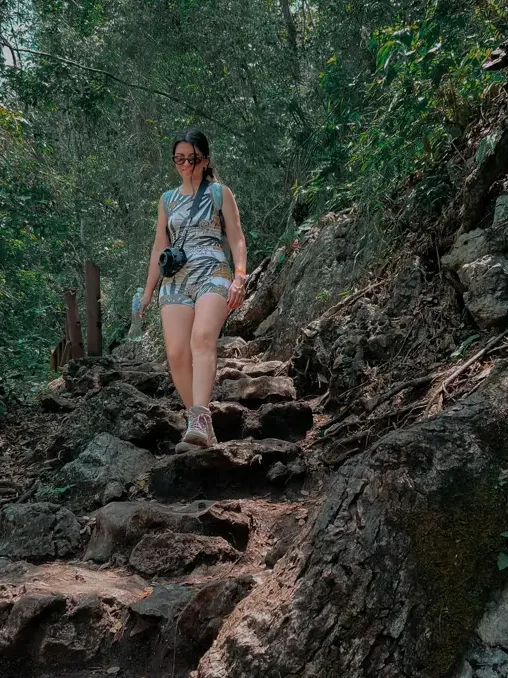
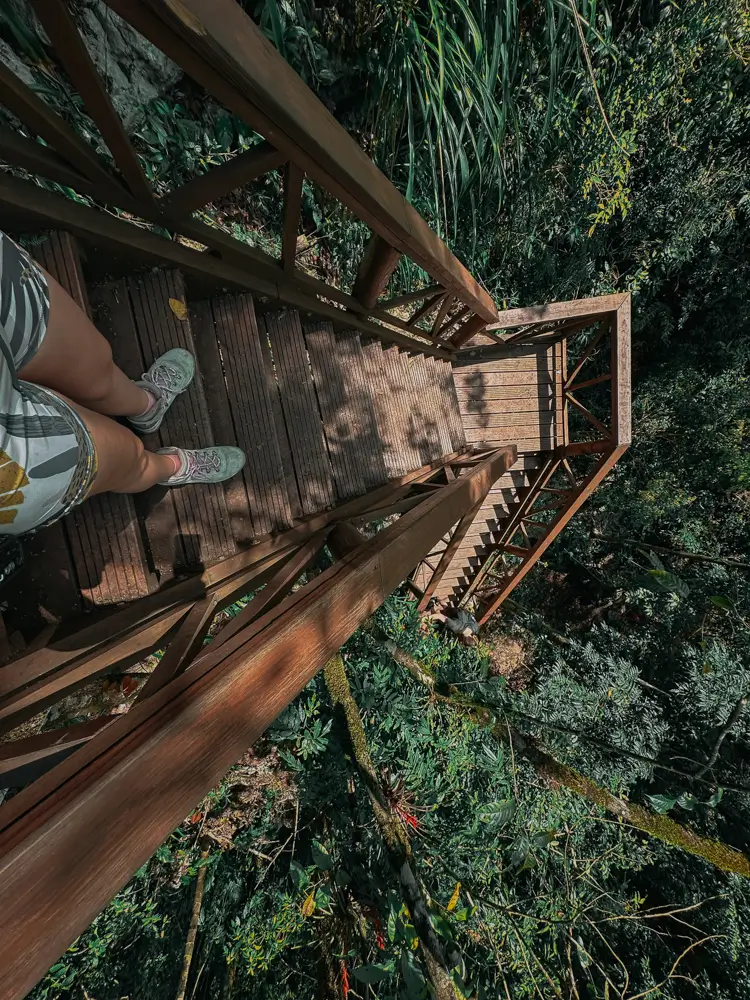
The climb takes 30 to 45 minutes, it’s steep, and the heat makes it feel heavier than it is. The stairs are old and some of them were muddy, so don’t assume that because this is a water destination you can do it in flip flops. Bring sneakers. Most people in normal shape can handle the climb, just take it slow and bring water.
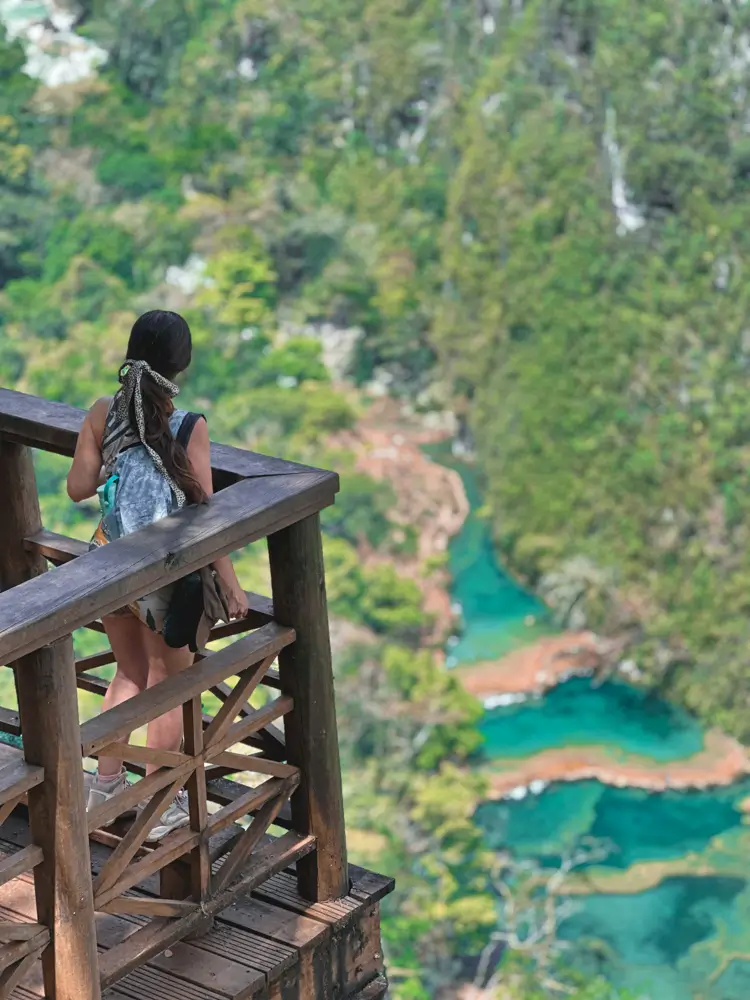
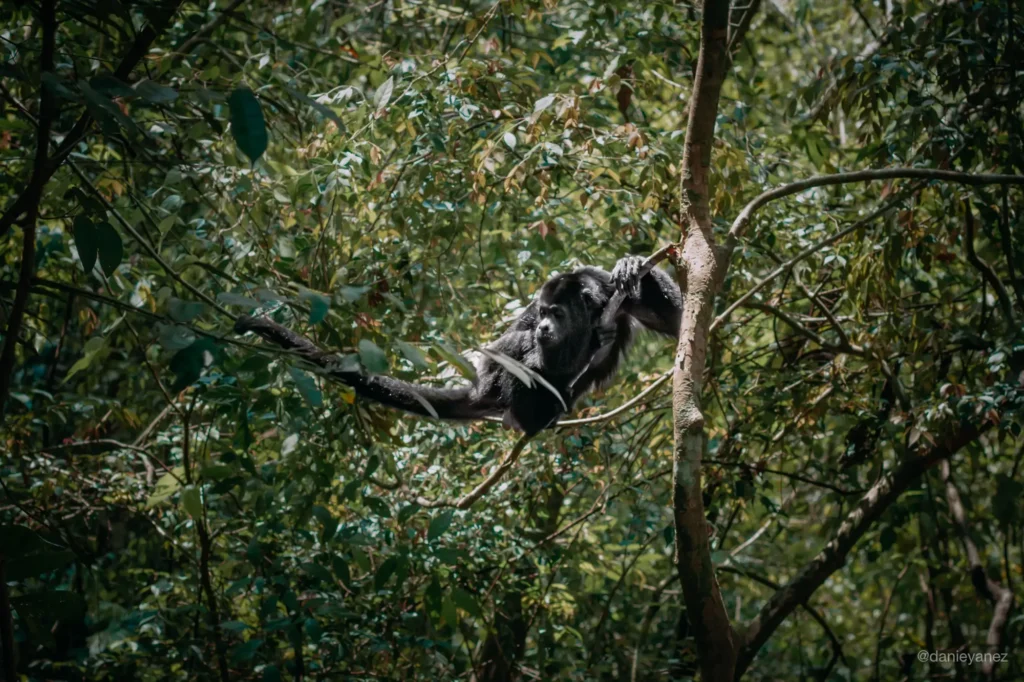
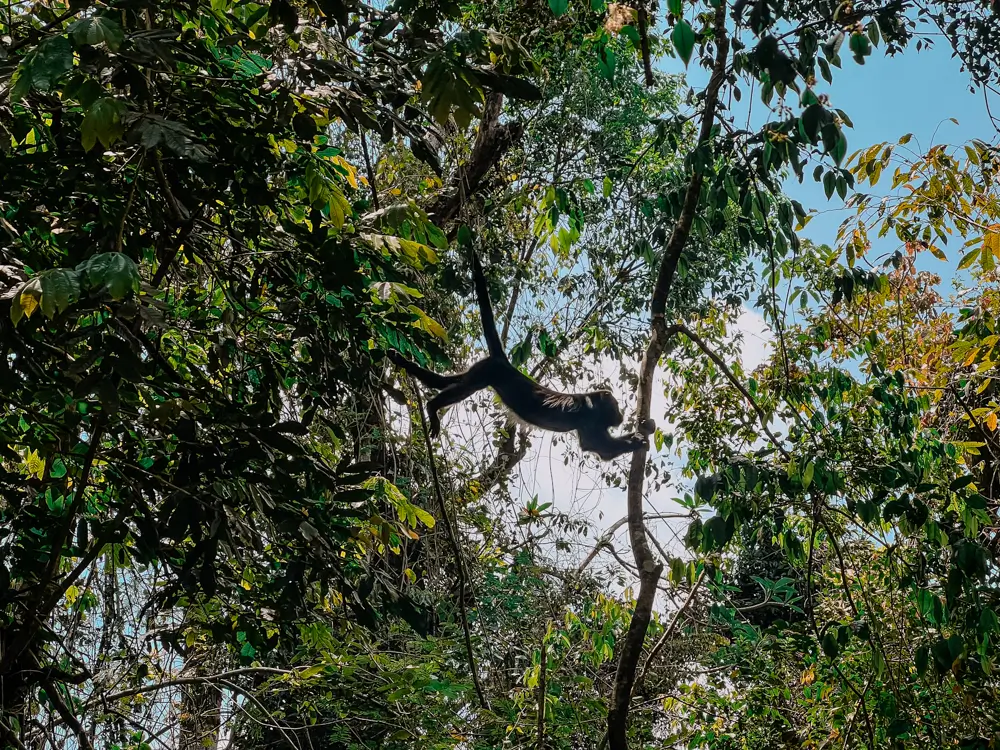
On the way up we ran into howler monkeys, which gave the whole thing a jungle-adventure vibe I’ll never forget. And getting to the top is worth every drop of sweat. As you approach the viewpoint the blue of the pools starts revealing itself through the vegetation, and then suddenly the entire thing is laid out in front of you. We bought a coconut up there and drank it looking out at the view, and that was one of the best moments of the trip.
Swimming in the pools
After the climb down, the water feels glorious. There are several stepped pools at different depths, the water is cool and clear, and there are little fish that come nibble at your feet (heads up if you’re ticklish, I found them mildly annoying, though they’re not everywhere).
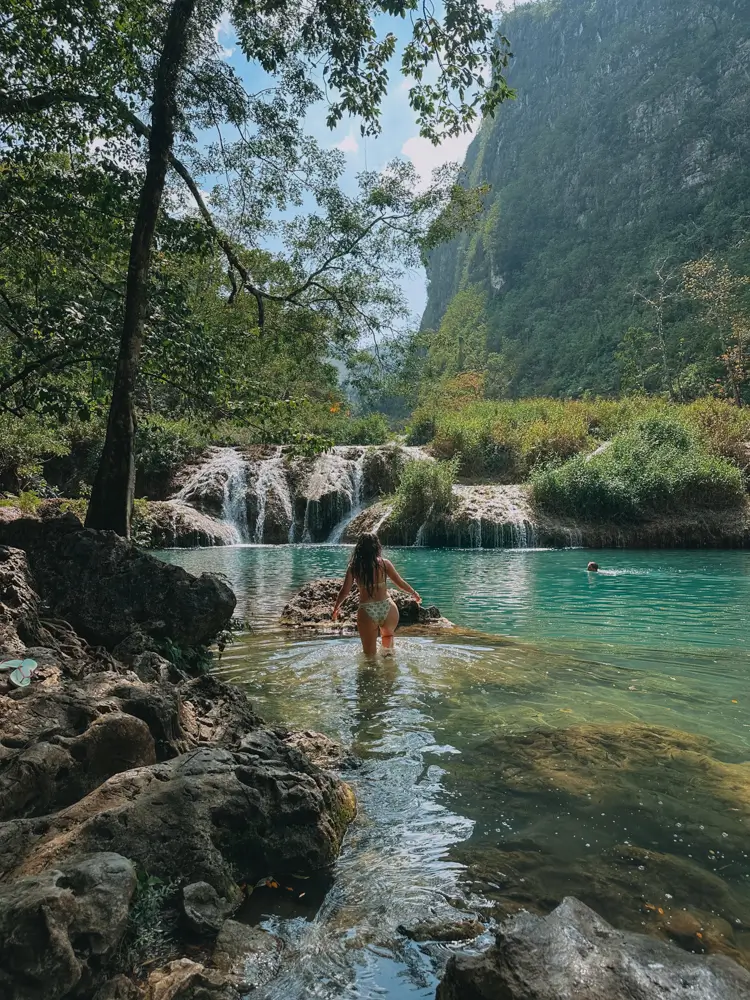
Nearly everyone piles into the first pool, us included at the start, and it took us a while to notice the others were almost empty. So enjoy the first ones for a bit, then walk further along and have the rest more or less to yourself.
Two more things. Go early, because the tours all arrive around the same time and the pools fill up. And bring bug spray, there are mosquitoes.
A word about the lockers
There are supposedly lockers near the water, but most of them are broken. Don’t count on having anywhere secure to leave your things. Better to bring nothing valuable and keep whatever you do need in a dry bag you can have next to you the whole time.
The K’anba caves
I didn’t do these, since caves aren’t my thing. But here’s what they involve in case they’re yours, because this is the headline activity of the area.
You go into a natural cave with a river running through it, lit by nothing but a candle in your hand, and make your way forward swimming, climbing and squeezing through narrow gaps while trying to keep the flame alive. A local guide is mandatory. If you’re claustrophobic or not a strong swimmer, think it over, because this is not a tourist cave with a walkway and a handrail.
Tubing on the Cahabón
You throw yourself into the river on an inner tube and let the current do the work. It’s the most relaxed thing on offer and it’s usually bundled into the tours. If you’re staying at a place on the river, some of them will even let you float back after a day at the pools. Keep an eye on water levels, since the river moves a lot harder in rainy season.
The Lanquín caves
Near the town you’ll find the Lanquín caves, a limestone system full of stalactites and formations. The good part happens at dusk, when thousands of bats pour out of the cave all at once. It’s a genuinely great natural spectacle and far more accessible than K’anba.
Nothing. Literally nothing.
The rest of our days we did essentially nothing. I worked, I ate, I lay in a hammock staring at the river and that enormous tree. I want to make a case for this, because every bit of information you’ll find about Semuc Champey is built around squeezing the place into 24 hours, and it turns out this is a beautiful place to simply exist in.
What to pack for Semuc Champey
| What | For what | Note |
|---|---|---|
💵 Cash in quetzales |
Absolutely everything | The single most important thing on this list. No ATMs in the area. |
👟 Sneakers with grip |
The climb to the viewpoint | The stairs are old and sometimes muddy. No flip flops. |
👙 Swimsuit |
The pools and the river | Wear it from the start, changing facilities are limited. |
🎒 Dry bag |
Phone, camera, money | The park lockers are usually broken. |
🦟 Insect repellent |
Mosquitoes at the pools | They’re there, and they bite. |
🧴 Biodegradable sunscreen |
The sun and the ecosystem | You’re swimming in a protected area, let’s look after it. |
💧 Water |
The hike and the heat | Alta Verapaz humidity dehydrates you faster than you’d think. |
🩴 Water shoes |
The caves, if you do them | I got talked into buying some and barely needed them. Judge by your plan. |
🔌 Power strip |
Working from the terrace | Nomad tip. Outlets are scarce and never where you want them. |
🔦 Power bank and a light |
Outages and dark paths | Electricity out here is a scarce resource. |
🥤 Protein powder |
If you eat plant based | Buy it in Antigua or Guatemala City. Not happening in Lanquín. |
🗑️ A bag for your trash |
Everything in, everything out | Non negotiable. |
Practical tips for visiting Semuc Champey
Prices and hours
Park entry runs around Q50 ($7 USD) for foreigners plus about Q20 ($3 USD) if you arrive in your own vehicle. Full tours go for around Q200 ($26 USD). A tuk-tuk from Utopía is about Q50. The park is open every day from 8 in the morning to 4 in the afternoon. Treat all of it as a reference, since prices shift.
Seriously, bring cash
This is the tip most likely to save your trip. There are no ATMs and no card machines in the area. We paid in cash for five days of accommodation plus every meal and drink. Some places take PayPal, but they tack on a fee steep enough that I wouldn’t bother.
So take your money out beforehand, in Antigua, Guatemala City or wherever you’re coming from, and pull more than you think you need. Don’t count on sorting it out once you get to Semuc. Everything here runs on cash.
Best time to go
Dry season runs roughly November to April and gives you better road conditions and clearer water in the pools, which is when you get those postcard turquoises. In rainy season the river runs harder, the water can look murkier and the dirt roads get complicated. If the color of the water is your priority, go in dry season. I went in April.
How many days to stay
The conventional answer is a night or two. Factoring in a day to get there and a day to leave, that already eats three days of your itinerary.
I’d say something different. If you travel slowly and you can afford it, stay longer. Five days let us go to the pools without rushing, skip the early alarms, work with an incredible view, and not feel like a twelve hour journey had bought us one afternoon of photos. Though to be clear, that only applies to a certain kind of traveler. If you’ve got two weeks for all of Guatemala, two nights is perfect.
Travel insurance
Between caves, rivers, steep climbs and dirt roads, this is not the part of Guatemala where you want to be uninsured. Check that your policy covers adventure activities. I recommend Genki, which is built for digital nomads, with two plans depending on what you need. Genki Native if you don’t have coverage back home, or Genki Traveler if you just need additional travel cover.
So, is Semuc Champey worth it?

Yes, even knowing exactly how much time and effort it takes to get there.
Semuc Champey is one of those places Guatemala doesn’t make easy for you, and I think that’s precisely what keeps it special. No airport nearby, no comfortable highway, no way to end up there by accident. Everyone standing there decided to cross half a country to do it, and you can feel that in the air.
What I liked most wasn’t the shot from the viewpoint, even though it delivers everything it promises. It was the rest of it: The days without signal, the sound of the river while I worked, long dinners with strangers who turned into friends, eating without having to ask whether something had animal in it, watching the water change color depending on the hour. Crossing all of Guatemala to reach a place where a river hides beneath the earth, and staying long enough that it stopped being a destination and became, for a few days, you know… home.
Headed to Semuc, or putting a Guatemala route together? I’ve also written about San Pedro La Laguna for digital nomads and about hiking the Acatenango volcano. And if you want to follow my slow travels around the world, I’ll be over on Instagram at @danieyanez. See you there 🪐